
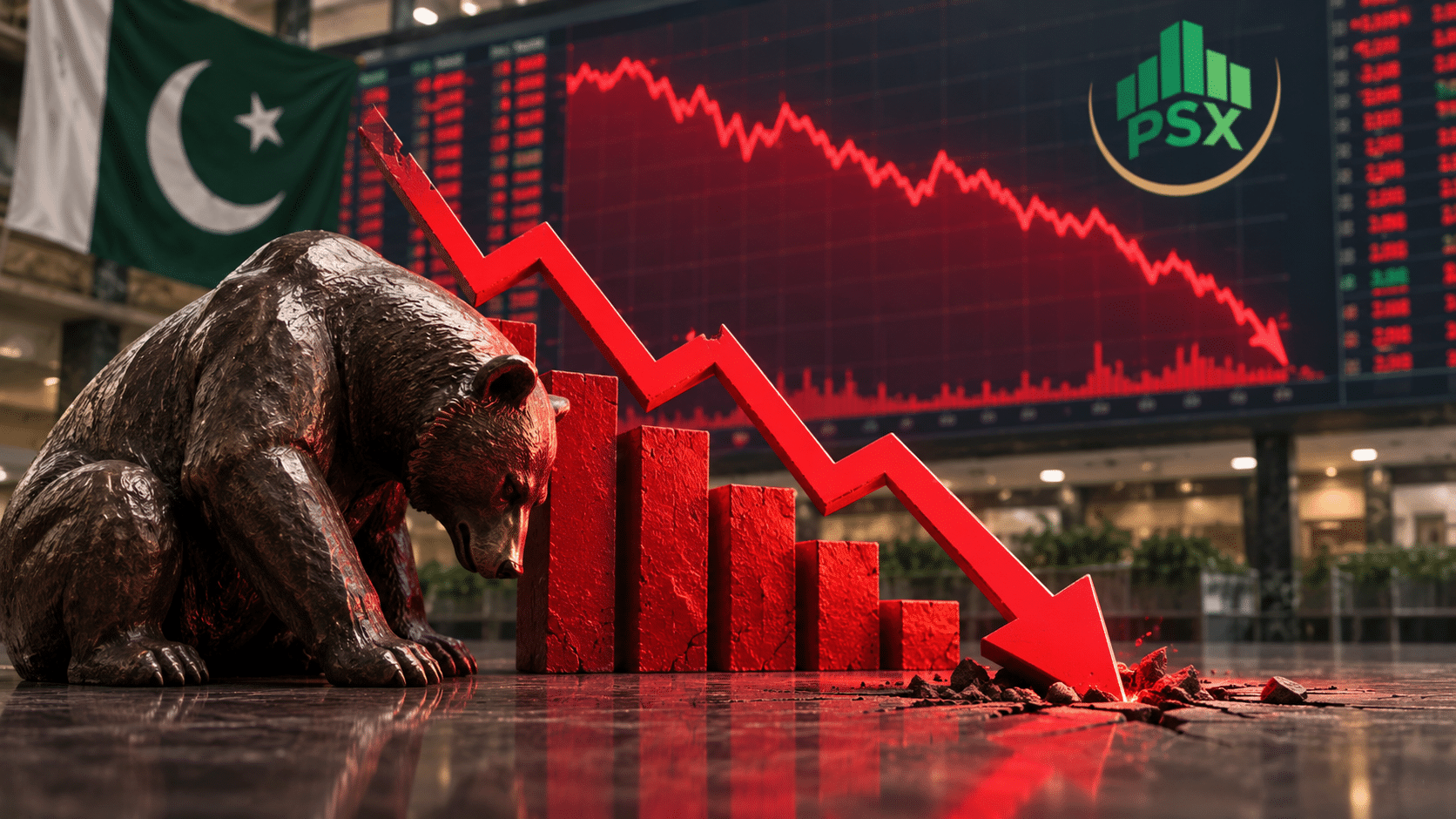
The Pakistan Stock Exchange witnessed a severe PSX market crash on Tuesday, as the benchmark index plummeted by 6,402 points. This 3.56% contraction reflects a strategic pivot in investor sentiment following the termination of the US-Iran truce. Consequently, the KSE-100 closed at 173,519, signaling a calibrated reaction to heightened geopolitical instability in the Middle East.
Geopolitical Catalysts and Structural Market Pressure
Market analysts identify renewed US military action and naval blockades as the primary catalysts for this decline. Furthermore, reports of attacks on oil tankers in the Strait of Hormuz have intensified fears regarding global oil supply chains. These disruptions created a precision sell-off across multiple sectors as investors sought to mitigate risk in a volatile environment.
Several high-cap stocks exerted significant downward pressure on the index during this PSX market crash. Specifically, United Bank Limited (UBL), Engro Holdings, and Fauji Fertilizer Company (FFC) led the retreat. Together with Lucky Cement and Meezan Bank, these entities collectively erased 2,057 points from the benchmark index.
Resilient Liquidity Amidst Index Volatility
Despite the broad-based decline, trading activity demonstrated structural resilience. Investors traded 913 million shares with a total value of Rs. 45.6 billion. OGDC emerged as the volume leader, followed by Maple Leaf Cement and Pakistan Petroleum Limited. This robust participation suggests that while prices are calibrated lower, the market’s underlying liquidity remains intact.
The Situation Room Analysis
The Translation: Breaking Down the Logic
The PSX market crash is not merely a local phenomenon; it is a reaction to energy security. Pakistan is an energy-importing nation. Therefore, any threat to the Strait of Hormuz—a vital corridor for global oil—increases the baseline cost for our entire industrial sector. Investors sold off shares to hedge against the anticipated rise in production costs and potential currency devaluation.
The Socio-Economic Impact: Daily Life in Pakistan
For the average Pakistani citizen, this stock market volatility serves as a leading indicator of inflationary pressure. Rising oil prices typically translate to higher transport and electricity costs for urban and rural households. Additionally, individuals with retirement funds or mutual fund investments may see a temporary reduction in their net worth as equity values stabilize.
The Forward Path: Architect’s Perspective
This development represents a Stabilization Move. While the point drop is historic, the high trading volume indicates that institutional buyers are still active. We expect the market to find a new baseline once the geopolitical friction reaches a stalemate. Precision monitoring of regional energy corridors is now essential for all strategic stakeholders.








