
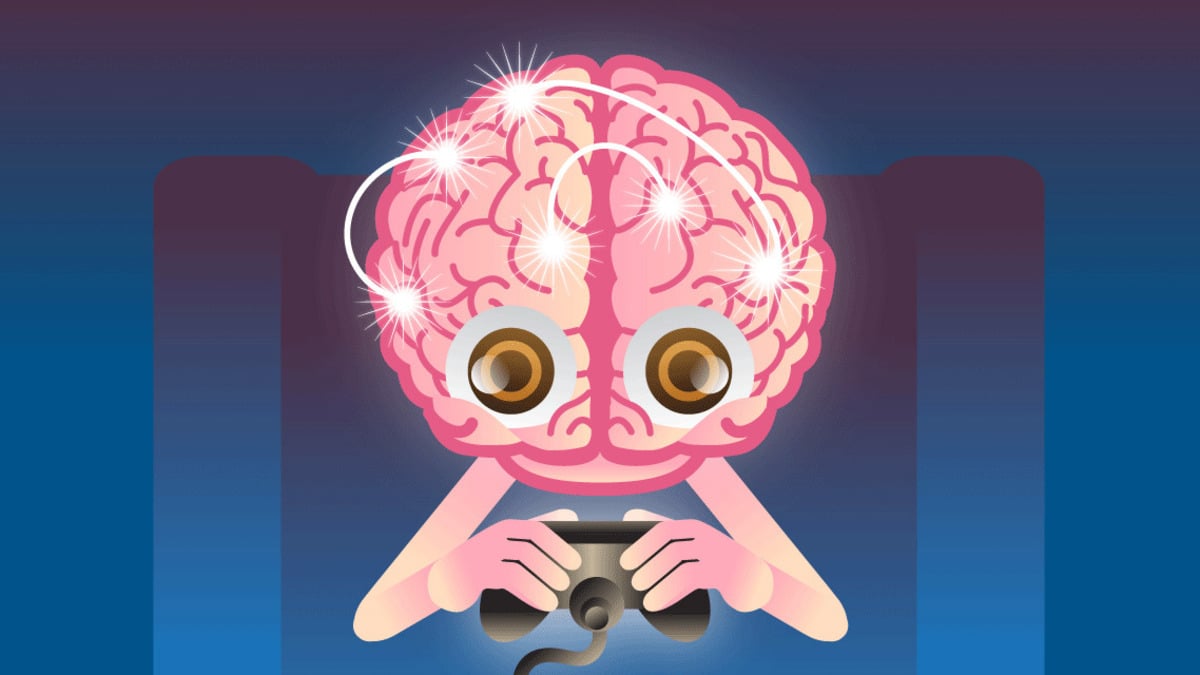
The correlation between gaming and brain health is no longer a matter of casual debate but a subject of rigorous scientific calibration. A comprehensive meta-analysis published in Acta Psychologica indicates that video game players exhibit enhanced performance across memory, spatial reasoning, and intelligence metrics. Consequently, gaming serves as a high-density cognitive stimulus that outperforms traditional passive media consumption.
Analyzing the Data: Cognitive Metrics and Performance
Researchers conducted a structural review of 133 studies involving 14,245 participants between 2005 and 2025. This calibration focused on five critical pillars of cognition:
- Visual Attention: The ability to filter and process environmental stimuli.
- Spatial Reasoning: Precision in mental rotation and environmental mapping.
- Memory: Enhanced retention of complex objectives and data points.
- Cognitive Control: Strategic switching between diverse tasks.
- Intelligence: Efficient problem-solving in dynamic environments.
Furthermore, controlled trials confirmed a causal link. Participants assigned to gaming intervals showed measurable gains in memory. Specifically, the interactive nature of modern titles acts as a catalyst for neuroplasticity.
The Translation: Contextualizing Interactive Mental Effort
In “Next Gen” clarity, gaming is not “playing”; it is interactive cognitive training. Unlike social media scrolling, which encourages passive dopamine consumption, gaming requires active decision-making under pressure. Therefore, the brain must adapt structurally to meet these high-precision demands. This neuroplasticity allows the brain to reorganize itself through repeated, challenging practice.
Socio-Economic Impact: Gaming and Brain Health in Pakistan
How does this development impact the daily lives of Pakistani citizens? For a nation with a dominant youth population, this data validates gaming as a potential tool for digital skill acquisition. Students and young professionals who engage in strategic gaming are essentially practicing system efficiency and spatial logic. These cognitive advantages translate directly to high-demand sectors such as software engineering, architecture, and logistics. Consequently, a moderate gaming habit can serve as a baseline for developing a more resilient, tech-savvy workforce.

The Forward Path: Our Strategic Assessment
This study represents a Momentum Shift for digital culture. We view gaming as a structural catalyst for national advancement. While moderation remains vital, we must shift the narrative from “mindless entertainment” to “cognitive optimization.” Strategic gaming environments offer a unique, scalable method for improving the collective intelligence and problem-solving baseline of our digital frontier. Pakistan must embrace this precision-driven perspective to stay competitive in the global knowledge economy.








