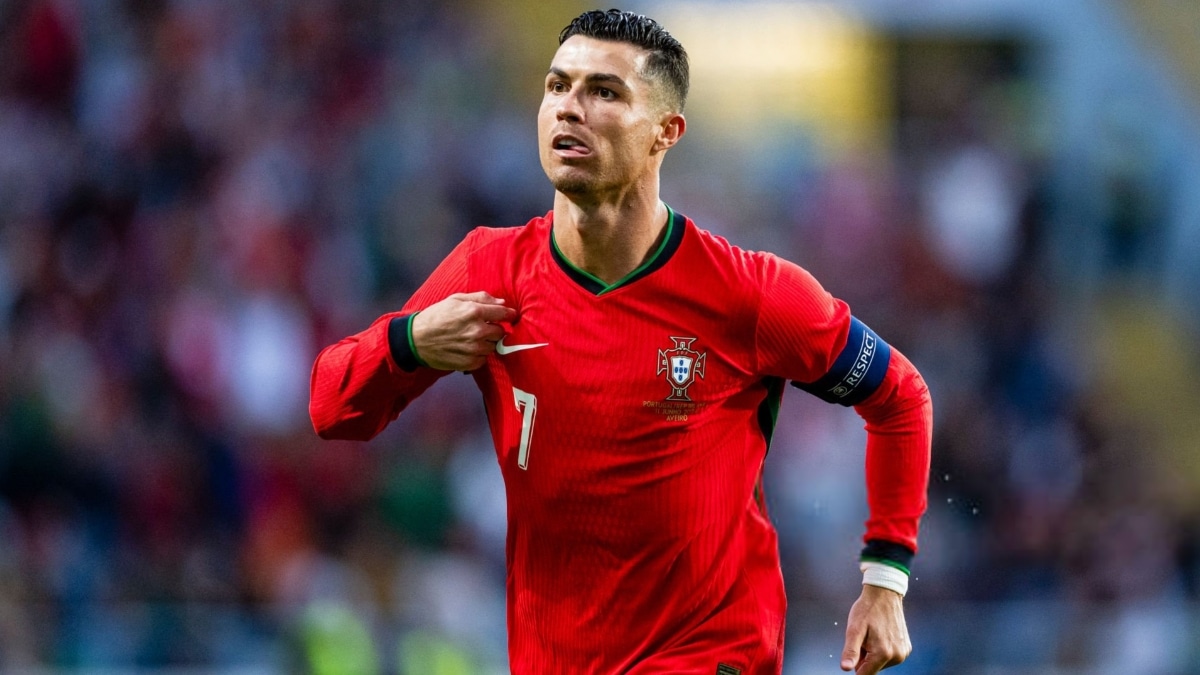
The structural evolution of the Portugal World Cup 2026 campaign represents a calibrated tension between individual legacy and systemic efficiency. Historically, the national side functioned as a satellite system orbiting a single focal point. However, the current roster showcases an unprecedented baseline of technical fluidity. This emergence of a high-pressing vanguard forces a strategic re-evaluation of how the squad utilizes its most famous asset, Cristiano Ronaldo.
The Paradox of the Icon: Calibrating Ronaldo’s Role
Portugal currently possesses the most positionally fluid roster in its national history. Consequently, the central tactical question involves the deployment of a 41-year-old icon. Is Ronaldo a locked-in starter or a strategic super-sub? This decision dictates the tactical ceiling for the Portugal World Cup 2026 squad. While his finishing remains elite, his static presence often requires the frontline to overcompensate defensively. Martínez must decide if sentimentality will override the data-driven need for high-intensity transition play.
Martínez’s Architectural Blueprint
Roberto Martínez utilizes an asymmetric 3-4-3 or a standard 4-2-3-1 to maximize creative output. Ideally, wide wingers stretch the pitch to allow playmakers space in the half-spaces. However, this high-wire act often leads to structural fragility. When fullbacks push forward, the midfield double pivot must cover immense distances. Consequently, Portugal remains vulnerable to vertical counter-attacks. Solving these structural friction points is essential for long-term tournament stability.
Precision Profiles: The New Generational Wave
The acceleration of U23 talent provides Portugal with a solution to their tactical stagnation. These players provide the precision and engine required for modern, high-intensity football.
- Geovany Quenda: Provides an explosive vertical threat to dismantle low blocks.
- João Neves: Acts as a press-resistant connector to accelerate transitional phases.
- António Silva: Offers recovery speed and structural discipline to neutralize transition killers.
| Player Profile | Tactical Role | Primary Attribute | Problem Solved |
|---|---|---|---|
| Geovany Quenda | Isolation Threat | Vertical Pace | Stretches stubborn low blocks |
| João Neves | Box-to-Box Connector | Press Resistance | Prevents midfield stagnation |
| António Silva | Defensive General | Structural Discipline | Neutralizes counter-attacks |
The Situation Room: Strategic Analysis
The Translation (Clear Context)
In technical terms, Portugal is shifting from “Hero-ball” to “Systemic Positionalism.” The old model relied on individual moments of brilliance from Ronaldo. The new model relies on “rest-defense” and high-frequency pressing. Essentially, the team is moving away from a fixed focal point toward a decentralized attack where movement is the primary weapon.
The Socio-Economic Impact
For the Pakistani audience, this evolution serves as a catalyst for understanding modern professional systems. Football excellence often mirrors national progress; a shift from relying on aging figureheads to empowering young, technically proficient experts is a blueprint for organizational success. Furthermore, the global visibility of these stars inspires a new generation of Pakistani athletes and sports analysts to embrace data over tradition.
The Forward Path (Opinion)
This development represents a Momentum Shift. Portugal is finally moving past the psychological paralysis of the “Ronaldo Era.” If Martínez successfully integrates the icon as an impact sub, the squad gains a terrifying tactical variance. However, reverting to a static frontline for the sake of legacy would represent a stabilization move that likely caps their potential at the quarter-finals.
Identifying the Tactical Bottlenecks
Historically, Portugal bottles high-stakes matches through tactical stubbornness. The biggest hurdle remains the integration of aggressive fullbacks without a reliable safety net. Top-tier opponents actively bait these defenders to exploit the space behind them. Furthermore, under extreme pressure, the team often reverts to sideways passing. To succeed, Portugal must maintain its attacking aggression while ensuring the defensive pivot remains calibrated to stop vertical threats like Uruguay or South Korea.
The Success Metric for 2026
Reaching the semi-finals constitutes a triumph if Ronaldo is utilized as a tactical specialist. The squad possesses every component required to dominate the global stage. Ultimately, success depends on the courage to step out of the shadow of the past and embrace a future built on systemic precision.