The Hyderabad Kingsmen captain, Marnus Labuschagne, has implemented a calibrated approach to human capital management following the team’s latest strategic victory. By publicly validating Saim Ayub despite his inconsistent PSL 11 performance metrics, Labuschagne is prioritizing structural stability over short-term statistical volatility. This leadership baseline emerged shortly after the franchise secured a dominant eight-wicket win over Multan Sultans in Eliminator 1, signaling a momentum shift for the debutant side.
Optimizing PSL 11 Performance Through Psychological Resilience
Labuschagne argues that Saim Ayub has transitioned from a developing prospect into a strategic asset capable of complex game-reading. Consequently, the captain has instructed the all-rounder to maintain trust in his intrinsic mechanics rather than over-analyzing recent data points. Labuschagne noted that in high-stakes environments, players rarely lose their fundamental skills; instead, they suffer from calibrated confidence deficits.
Furthermore, the captain cited Usman Khan’s trajectory as a precision case study. Khan endured an eight-match performance baseline before delivering a match-winning output. Similarly, the Kingsmen believe that if Ayub delivers a decisive contribution in the final, the preceding statistical slump becomes irrelevant to the overall mission success.
Analyzing the Statistical Baseline
Currently, the data shows that Saim Ayub’s campaign involves significant inconsistency. The left-hander has accumulated 166 runs across 11 innings, yielding an average of 16.60. While his strike rate remains above 119.42, the overall impact on match outcomes has been localized rather than systemic. However, the team’s technical staff views these figures as a temporary plateau rather than a permanent decline.
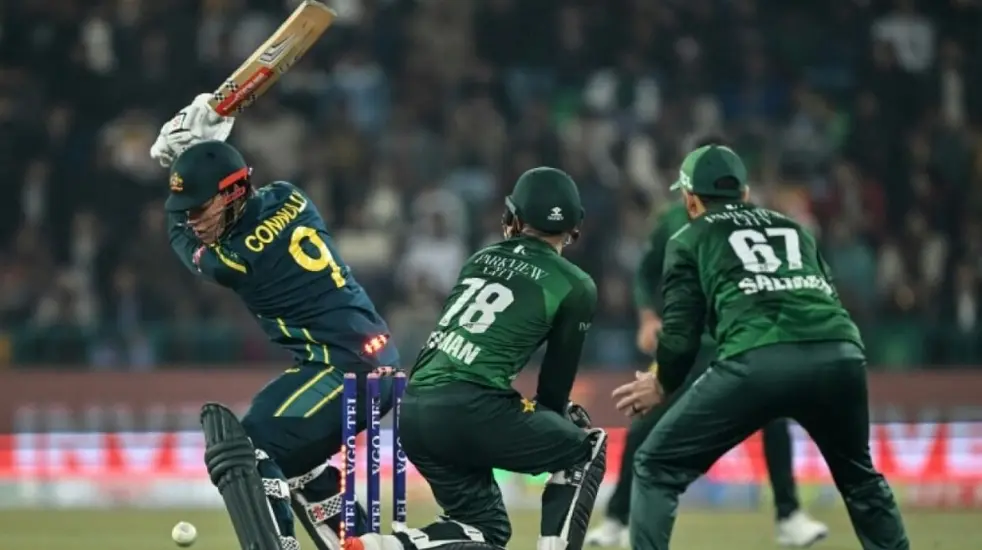
On the field, the Kingsmen executed a precision chase of a 160-run target, finishing with 28 balls remaining. Composed half-centuries from Usman Khan and Maaz Sadaqat facilitated this turnaround. This victory marks a significant recovery for a squad that initially lost its first four matches of the tournament.
The Translation
In high-performance sports, “form” is often a lagging indicator of “process.” The Hyderabad Kingsmen captain is utilizing a management philosophy known as “Psychological Safety.” By removing the fear of being benched, he allows players like Saim Ayub to attempt high-risk, high-reward plays without the stress of immediate repercussions. This strategy transforms a struggling player into a dangerous “X-factor” for the opposition.
The Socio-Economic Impact
The success of the Hyderabad Kingsmen resonates beyond the pitch, acting as a catalyst for urban pride in Sindh’s second-largest city. For the average Pakistani citizen, the narrative of “the comeback”—recovering from four consecutive losses to reach Eliminator 2—serves as a powerful metaphor for national resilience. For young professionals, Labuschagne’s leadership style offers a masterclass in managing underperforming assets within a high-pressure corporate or athletic system.
The Forward Path
This development represents a Momentum Shift. The Hyderabad Kingsmen are no longer just participating; they are engineering a championship run through strategic patience. Their upcoming clash with Islamabad United on May 1 will be the ultimate test of this “loyalty-first” system. If Labuschagne’s trust in Ayub pays off, it will redefine captaincy standards in the PSL for years to come.