
The Strategic Friction in US-Pakistan Diplomatic Relations
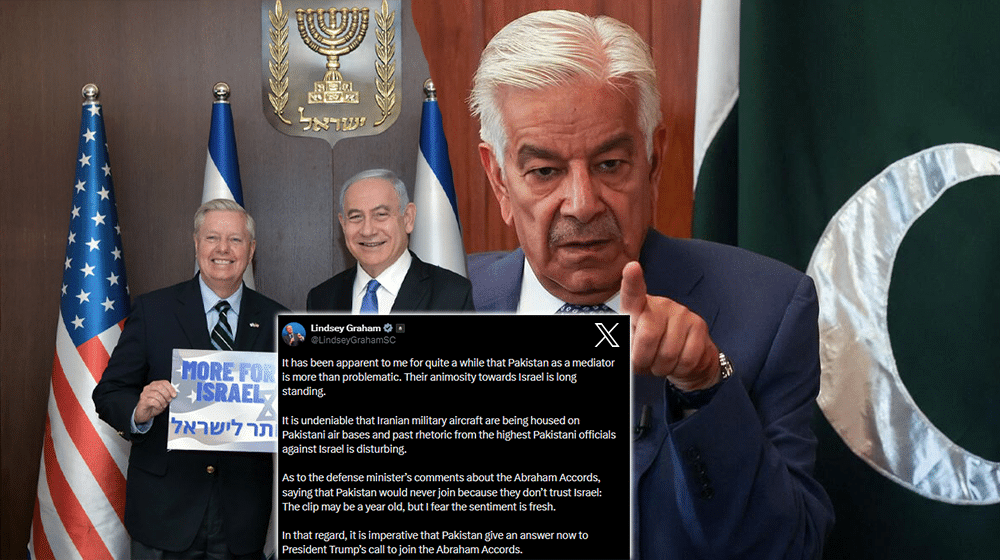
A calibrated shift in US-Pakistan diplomatic relations emerged following Senator Lindsey Graham’s recent demands regarding Islamabad’s mediation role. Graham explicitly urged Pakistan to withdraw from US-Iran negotiations, citing the country’s refusal to acknowledge the Abraham Accords. Consequently, this development highlights the structural tension between Washington’s Middle East objectives and Pakistan’s traditional foreign policy baseline.
The Senator described Pakistan’s role as a mediator as “problematic,” pointing to the nation’s long-standing diplomatic stance toward Israel. Furthermore, Graham alleged that Iranian military assets were being housed within Pakistani territory. He demanded that Pakistan provide a definitive response to the call for normalizing relations under the Abraham Accords framework. This precision-focused critique signals a potential pivot in how the US manages its South Asian alliances.
Defence Ministry Responds to Normalization Pressures
These remarks follow a series of anti-Israel statements by Defence Minister Khawaja Asif. Asif has consistently reiterated that Pakistan’s recognition of Israel remains contingent upon the establishment of an independent Palestinian state. Therefore, the current administration maintains its rejection of the 2020 Abraham Accords, prioritizing ideological consistency over external diplomatic pressure.
The Translation: Contextualizing the Conflict
The core logic behind this friction involves a strategic trade-off. Senator Graham views Pakistan’s refusal to recognize Israel as a barrier to regional integration and “System Efficiency” in the Middle East. While Pakistan maintains its sovereign stance on Palestine, the US perceives this as a misalignment with the Abraham Accords’ objectives. Effectively, this is a clash between long-term ideological baselines and immediate geopolitical catalysts.
The Socio-Economic Impact: Impact on the Citizen
For the average Pakistani citizen, these diplomatic ripples often translate into economic precision. US-Pakistan diplomatic relations influence bilateral trade agreements, international financial support, and regional security stability. A shift toward diplomatic isolation or increased pressure could impact the professional landscape, particularly for those in export-oriented sectors or technology-driven industries that rely on international collaboration and market stability.
The Forward Path: Strategic Momentum
This development represents a Momentum Shift toward increased diplomatic friction rather than a stabilization move. It signals a departure from collaborative mediation toward a more transactional relationship based on specific regional recognitions. Moving forward, Pakistan must balance its sovereign principles with the necessity of maintaining structural efficiency in its most critical Western alliance.








