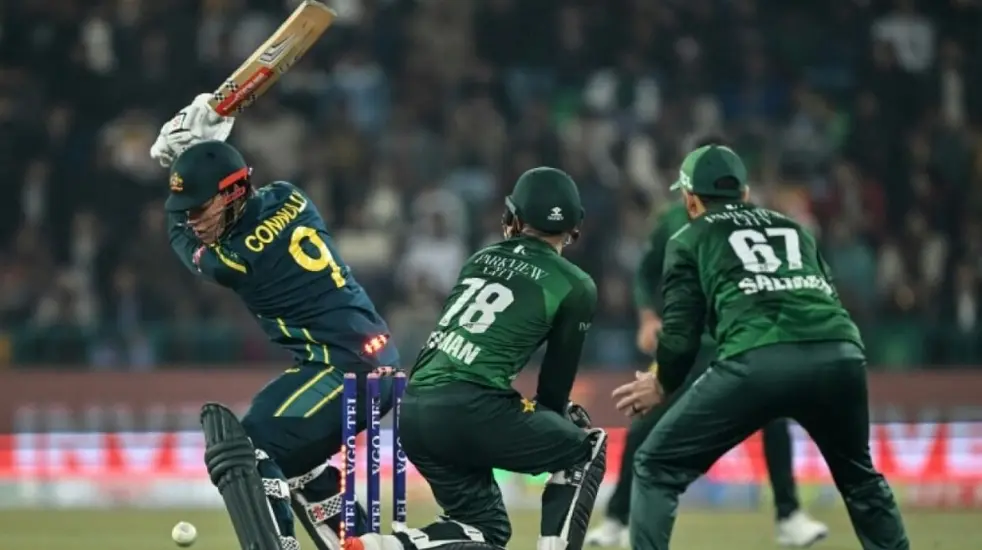
Quetta Gladiators secured a decisive Quetta Gladiators victory by defeating defending champions Lahore Qalandars by six wickets at the National Bank Stadium. This performance serves as a baseline for tactical resilience, as the team successfully chased a target of 135 despite an early structural collapse of the top order. Consequently, Quetta moves forward with significant momentum in the PSL 11 standings.
Strategic Execution Behind the Quetta Gladiators Victory
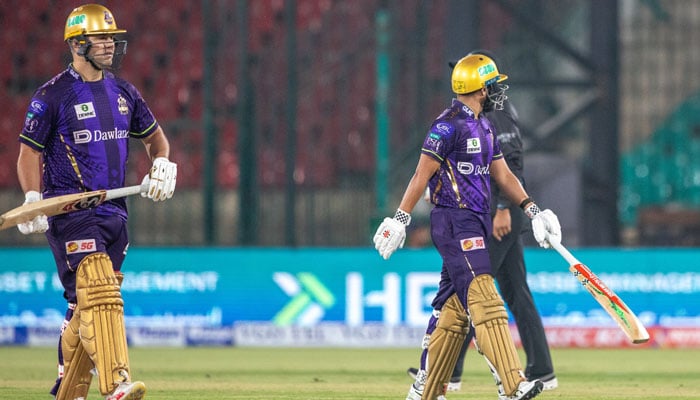
The match logic shifted when Rilee Rossouw and Mohammad Nawaz initiated a calibrated 104-run partnership for the third wicket. Initially, Quetta faced a precision deficit, slipping to 11-2 within the first three overs. However, Rossouw anchored the innings with an unbeaten 60 off 49 balls. Furthermore, Nawaz contributed a high-impact 49, striking six boundaries and two sixes to dismantle the Lahore defensive grid.

Lahore’s defensive unit struggled to maintain pressure once the Rossouw-Nawaz catalyst took effect. Bevon Jacobs finalized the chase with a rapid 14 not out, ensuring Quetta reached the target with 22 deliveries remaining. This efficiency highlights a stabilized middle-order system that can absorb high-pressure scenarios.
Structural Collapse: Lahore’s Batting Baseline
Earlier in the day, Lahore Qalandars failed to establish a competitive total, collapsing for 134 in 19.5 overs. Quetta’s bowling department utilized precision-based lengths to exploit Lahore’s aggressive approach. Usman Tariq and Jahandad Khan emerged as the primary disruptors, claiming three wickets each. Notably, Alzarri Joseph provided secondary support by securing two critical dismissals.
While Haseebullah Khan attempted to rebuild the innings with 33 runs, the lack of a sustained partnership prevented Lahore from achieving a par score. Usama Mir’s late-inning surge—22 runs off just seven balls—offered a temporary boost, yet it proved insufficient against Quetta’s calculated pursuit.
The Situation Room Analysis
The Translation (Clear Context)
In high-stakes cricket, a “low-scoring chase” often reveals more about a team’s psychological infrastructure than a high-scoring shootout. The Quetta Gladiators victory was not merely a win; it was a demonstration of “systemic recovery.” By losing openers early and refusing to panic, Quetta utilized a data-driven approach to batting, prioritizing high-percentage shots until the required run rate became negligible.
The Socio-Economic Impact
The continued success of PSL 11 acts as a catalyst for urban economic activity in Karachi. High-attendance matches at the National Bank Stadium drive significant revenue for local transport, hospitality, and retail sectors. For the average Pakistani citizen, these events provide a necessary psychological baseline of national pride and a boost to the digital sports economy, which employs thousands in content and data analytics.
The Forward Path (Opinion)
This development represents a Momentum Shift for Quetta. By defeating the defending champions with tactical precision, Quetta has calibrated its roster for the playoff grind. Conversely, Lahore Qalandars must address their structural vulnerabilities in the top-order batting. If Quetta maintains this level of bowling discipline, they are a primary candidate for the championship final.