

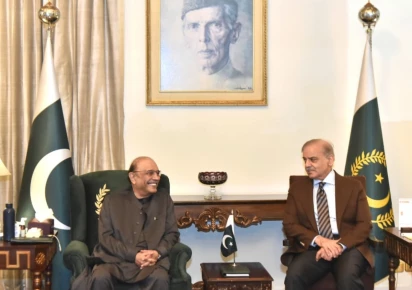
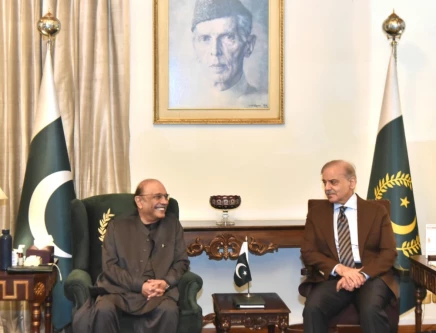
National advancement requires a stable economic baseline. Consequently, President Asif Ali Zardari has identified a strategic imperative to reduce inflationary pressure across Pakistan. During a high-level alignment with Prime Minister Shehbaz Sharif at Aiwan-e-Sadr, the President directed the government to deploy all calibrated measures to shield the public from rising costs.
Strategic Alignment for Economic Stability
The consultative session included key architects of national policy, such as Deputy PM Ishaq Dar and Interior Minister Mohsin Naqvi. The participants analyzed the structural challenges posed by Middle Eastern tensions and volatile global supply chains. Consequently, the President emphasized that the government must maximize public relief despite these complex geographical disruptions.
Calibrated Actions to Reduce Inflationary Pressure
The directive specifically targets the availability of essential goods. As fuel prices climbed by Rs. 15 per litre recently, the administration seeks to neutralize the secondary effects on the common citizen. Furthermore, the meeting addressed regional security concerns, paying tribute to the armed forces for maintaining the baseline of national defense.
Addressing the Fuel Price Catalyst
Recent surges in petrol and high-speed diesel prices have sparked concerns regarding operational costs for businesses. High-speed diesel remains a critical input for the transport and agriculture sectors. Therefore, the current price hike could potentially escalate farming expenses during the active sowing season. To mitigate this, the Prime Minister reaffirmed a Rs. 100 per litre subsidy for targeted motorists.
The Translation
In technical terms, the government is attempting to manage “cost-push inflation.” This occurs when the rising costs of raw materials, like fuel, force prices up across the entire supply chain. By directing steps to reduce inflationary pressure, the President is calling for aggressive market intervention. This includes preventing price gouging and ensuring that subsidies reach the intended demographic effectively.
The Socio-Economic Impact
For the average Pakistani household, this development is a critical survival signal. Higher diesel costs traditionally lead to more expensive groceries due to increased logistics fees. If the government successfully implements these directives, students and professionals will see a stabilization in transport fares. Moreover, rural farmers may receive the necessary support to maintain crop yields without passing costs to the consumer.
The Forward Path
This development represents a Stabilization Move. While the government cannot control global oil markets or the Strait of Hormuz disruptions, it is focusing on internal precision. The success of this directive depends on the execution of the relief measures. We view this as a necessary defensive strategy to maintain social cohesion during a period of global economic volatility.








