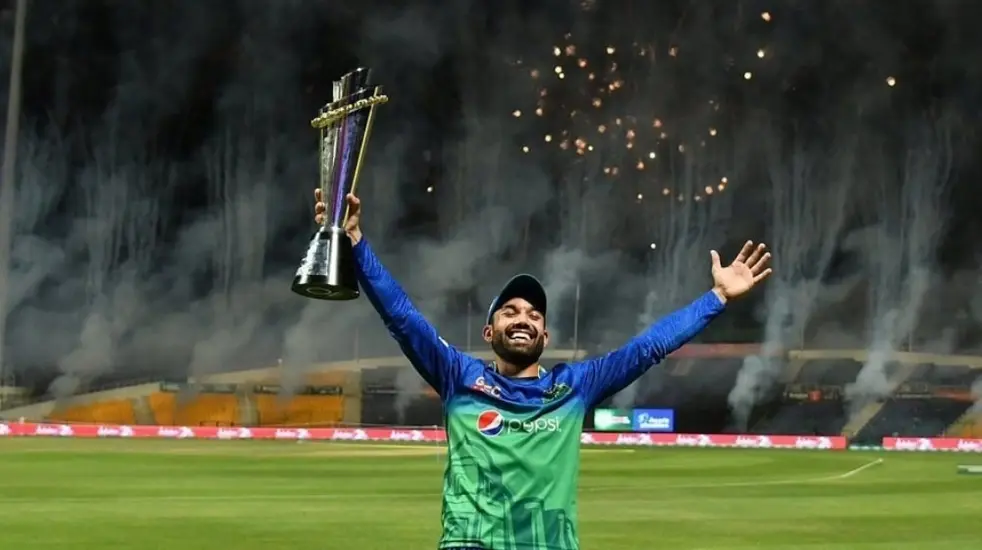
Peshawar Zalmi secured a high-precision Peshawar Zalmi victory over Karachi Kings at Gaddafi Stadium, extending their flawless winning streak to eight matches in PSL 11. The disciplined chase, calibrated by Kusal Mendis and Farhan Yousaf, neutralized Karachi’s defensive maneuvers. Consequently, Zalmi successfully reached the 183-run target in just 18.5 overs with seven wickets to spare.
Strategic Dominance: The Peshawar Zalmi Victory Analysis
The match began with a baseline of aggression from openers James Vince and Babar Azam. Although Karachi’s bowling unit briefly disrupted the top order, Kusal Mendis stabilized the structural integrity of the innings. Specifically, Mendis delivered a superb 80 off 43 deliveries, effectively anchoring the chase while maintaining a high strike rate.
Furthermore, Farhan Yousaf acted as the ultimate catalyst for the finish. He remained unbeaten on 54, accelerating sharply to secure his maiden PSL fifty. This partnership ensured that the Peshawar Zalmi victory remained inevitable despite Karachi’s early powerplay breakthroughs.
Precision Bowling: Ali Raza’s Structural Impact
Earlier in the evening, Karachi Kings posted 182/9, driven by Jason Roy’s 85-run contribution. However, the Kings failed to maintain their scoring trajectory during the death overs. Young pacer Ali Raza executed a masterclass in precision bowling, dismantling Karachi’s lower order with a sensational hat-trick.
Notably, Raza became the youngest Pakistani to achieve a T20 hat-trick, finishing with figures of 4/41. This late-inning collapse forced Karachi into a sub-optimal defensive position, ultimately setting the stage for the eighth consecutive Peshawar Zalmi victory.
The Situation Room
The Translation (Clear Context)
In high-stakes cricket, “structural integrity” refers to the batting side’s ability to prevent a collapse during transition phases. While Karachi lost their momentum in the final over, Zalmi utilized a “low-risk, high-reward” tactical approach. Ali Raza’s hat-trick was not just a statistical anomaly; it was a calibrated exploitation of Karachi’s desperate need for quick runs, forcing technical errors from the tail-enders.
The Socio-Economic Impact
The continued success of PSL 11 serves as a significant economic catalyst for urban centers like Lahore. High-attendance matches drive revenue in the hospitality and local transport sectors. Moreover, for the Pakistani citizen, the emergence of young talents like Ali Raza provides a psychological baseline of national pride, signaling that the domestic talent pipeline remains robust and globally competitive.
The Forward Path (Opinion)
This development represents a definitive Momentum Shift. Peshawar Zalmi is no longer just competing; they are establishing a blueprint for systematic dominance in T20 leagues. Their ability to find new match-winners in every game—from seasoned veterans like Mendis to emerging stars like Raza—suggests a franchise model built for long-term sustainability rather than short-term luck.