
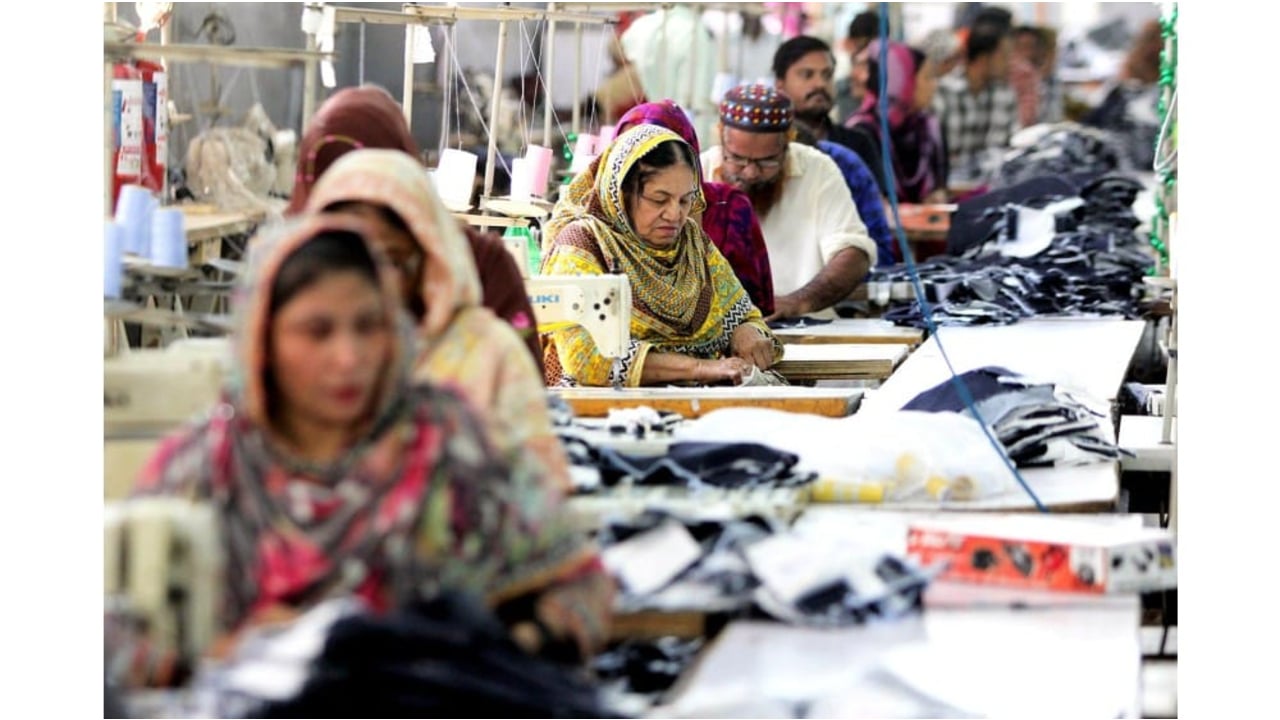
The Pakistan textile sector is currently navigating a high-friction economic landscape, demanding a calibrated strategy to ensure long-term industrial viability. Pakistan Textile Council (PTC) Chairman Fawad Anwar has issued a precision warning to the government regarding the upcoming federal budget. He asserts that the industry cannot sustain its global position without a 10-year fixed-rate financing facility and the immediate restoration of the Final Tax Regime (FTR). Consequently, these structural adjustments are essential to catalyze investment and stabilize the nation’s primary export engine.
Overcoming Structural Hurdles in Global Trade
Currently, the export sector faces a complex matrix of challenges that stifle potential. High financing costs and elevated energy tariffs have created a restrictive environment for manufacturers. Furthermore, liquidity constraints and an increasingly intricate tax regime discourage new capital influx. Fawad Anwar emphasized that industrial projects require a baseline of predictability. Therefore, a dedicated financing facility with a fixed markup for a decade would empower technology upgrades and the expansion of export-oriented manufacturing units.
The Demand for Fiscal Simplification
Exporters frequently encounter multiple advance tax deductions that disrupt operational cash flows. These deductions increase the overall cost of doing business, making Pakistani goods less competitive. By restoring the Final Tax Regime, the government can simplify the taxation system and improve documentation standards. This move would allow leaders within the Pakistan textile sector to focus exclusively on production efficiency rather than navigating administrative tax burdens.
The Translation: Contextualizing the Crisis
In technical terms, the textile sector is asking for “Fiscal Certainty.” When the PTC mentions the Final Tax Regime (FTR), they are advocating for a system where tax is paid as a fixed percentage of export proceeds. This eliminates the need for complex audits and unpredictable tax demands later. Similarly, a 10-year fixed-rate financing facility removes the volatility of interest rate hikes. Essentially, the sector is seeking a stable environment where they can calculate long-term ROI without the fear of sudden policy shifts.
The Socio-Economic Impact: Life in Pakistan
How does this development affect the average citizen? The textile industry is the largest employer in the manufacturing sector. If these facilities are not provided, we risk a “de-industrialization” trend that could lead to widespread job losses for both urban and rural workers. Conversely, a thriving Pakistan textile sector ensures stable household incomes and strengthens the Pakistani Rupee by boosting foreign exchange reserves. For students and professionals, this represents the difference between a stagnant job market and a frontier of new industrial opportunities.
The Forward Path: An Innovator’s Perspective
This development represents a Momentum Shift. The PTC’s proposal is not a request for a “subsidy” but a demand for “competitiveness.” To align with global supply chain reconfigurations, Pakistan must move from a reactive fiscal policy to a proactive industrial framework. If the government integrates these fixed-rate facilities and tax simplifications into Budget 2026-27, it will act as a catalyst for a sustainable, export-led economic recovery. Failure to do so would be a missed strategic opportunity in a rapidly evolving global market.








