
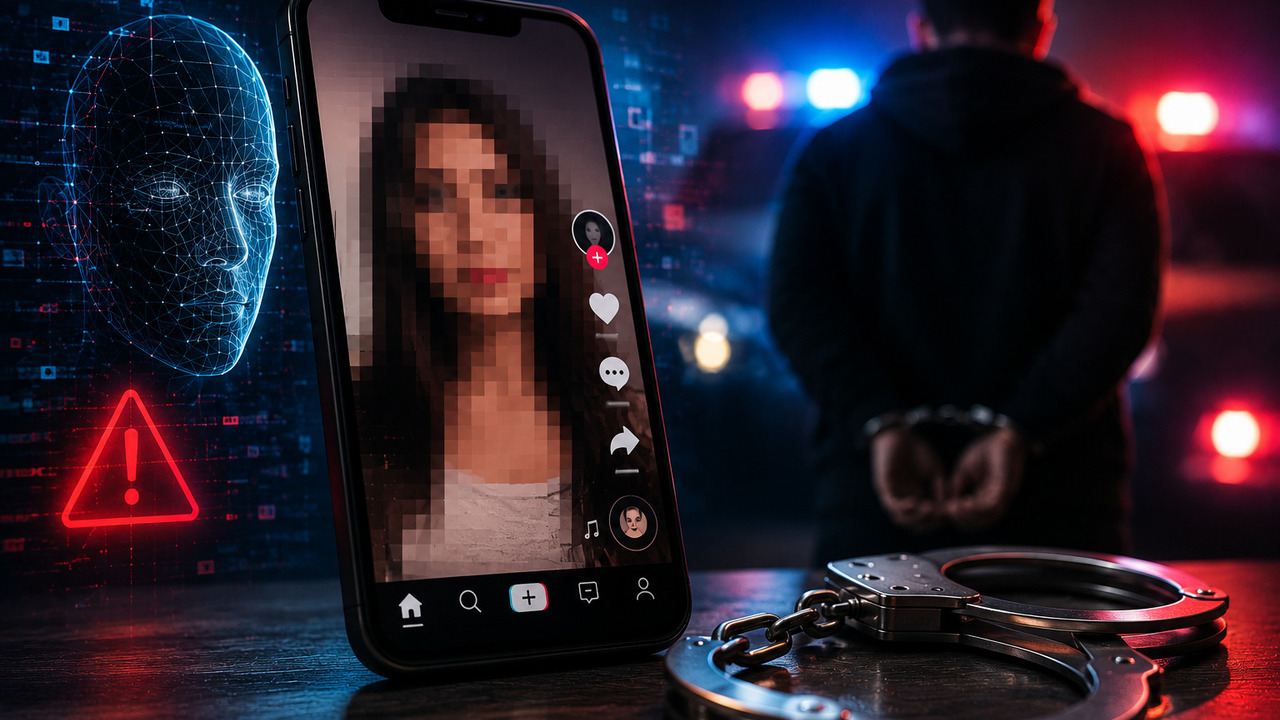
Bahawalnagar police executed a high-precision operation resulting in a TikToker arrested for the creation of an AI fake video. This synthetic media was allegedly weaponized to humiliate a female rival on social platforms. Consequently, this case underscores the urgent need for structural digital defenses against technologically-driven harassment in our evolving digital landscape.
The Threat of AI Fake Video Synthesis
The suspect, identified as Zain, allegedly targeted a beauty salon owner to sabotage her digital reach and professional standing. Police reports indicate that Zain utilized advanced tools to synthesize the content because he was jealous of her higher engagement metrics. Currently, law enforcement is searching for an unidentified accomplice who assisted in this calibrated digital assault. This arrest establishes a new baseline for how the state handles non-consensual synthetic media.
The Situation Room: Analysis
The Translation
In technical terms, this incident involves “Deepfake” technology. This process uses neural networks to swap faces in video content with precision, making the AI fake video appear legitimate. The perpetrator sought to bypass social safeguards to damage the victim’s professional baseline. Therefore, the arrest highlights the transition from traditional cyber-harassment to high-tech character assassination requiring forensic expertise.
The Socio-Economic Impact
This development directly impacts the safety of the Pakistani digital workforce. When a female entrepreneur is targeted, it creates a chilling effect for other professionals in urban and rural areas. Digital security is now a baseline requirement for economic stability. Furthermore, household trust in digital platforms fluctuates when such precise malicious acts occur without immediate consequence. Protecting digital creators is a catalyst for national economic growth.
The Forward Path
We categorize this legal action as a Momentum Shift. The prompt response by the Bahawalnagar police demonstrates a strategic upgrade in forensic capability. To maintain this progress, Pakistan must implement faster legal frameworks to match the rapid evolution of synthetic media tools. Strengthening the Prevention of Electronic Crimes Act (PECA) is the next logical step in securing our digital frontier.
Judicial Accountability: Related Developments
Parallel to digital crimes, the physical safety of citizens remains a critical priority for national stability. A Haroonabad sessions court recently sentenced a man named Arshad to death for the murder of his wife, Tahira Parveen. The prosecution proved that the suspect frequently tortured the victim before the fatal attack on December 25. Consequently, the court ordered a structural fine of Rs500,000 as compensation to the grieving family, reinforcing the baseline of judicial accountability.








