

Pakistan’s digital infrastructure is currently undergoing a structural transformation, calibrated by a massive influx of foreign exchange. Pakistani freelancers earn a record-breaking $1.6 billion in the first 11 months of fiscal year 2026, marking a significant baseline for the nation’s digital economy. Advisor to the Finance Minister Khurram Schehzad confirmed these metrics, highlighting a strategic expansion in our global service participation.
Digital Growth Metrics: Why Pakistani Freelancers Earn More Today
The data reveals a precision-driven surge in the digital services sector. Freelance exports surged by approximately 80 percent year-on-year, showcasing the rising competitiveness of our local talent. Consequently, the reliance on traditional export commodities is shifting toward high-value digital assets. Furthermore, in May 2026 alone, the sector generated $169 million, representing an 87 percent increase compared to the previous year.
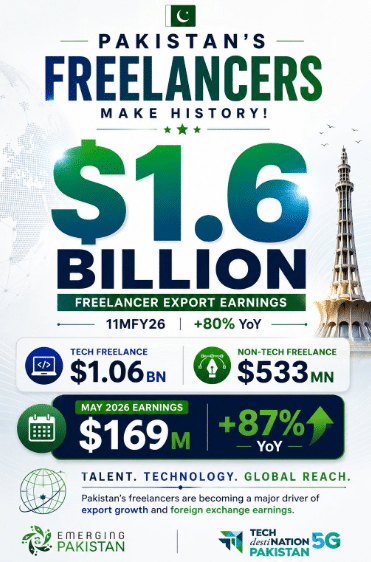
These figures are not merely incidental; they represent a calibrated effort by the workforce to dominate creative and technological niches. Pakistani talent is now a primary catalyst for foreign exchange inflows, stabilizing the national treasury through decentralized labor.
The Situation Room: Analysis
The Translation (Clear Context)
In technical terms, this $1.6 billion milestone indicates that Pakistan has successfully transitioned from a low-skill labor provider to a high-efficiency digital service exporter. The “80 percent surge” reflects that our workforce is securing higher-value contracts in global technology and creative markets. This isn’t just about more people working; it is about the increased market value of Pakistani digital expertise.
The Socio-Economic Impact
This development directly impacts the daily lives of thousands of Pakistani households. By earning in foreign currency, freelancers provide a natural hedge against domestic inflation. This influx of capital stimulates local economies in both urban hubs and rural districts, providing a sustainable roadmap for youth employment without the need for physical migration. It effectively democratizes wealth distribution across the country.
The Forward Path (Opinion)
We categorize this development as a Momentum Shift. The sheer scale of the year-on-year growth suggests that Pakistan is no longer just “participating” in the global gig economy; it is beginning to lead it. To sustain this trajectory, the state must focus on precision-level policy support, ensuring stable internet infrastructure and seamless international payment gateways to maintain this competitive edge.








