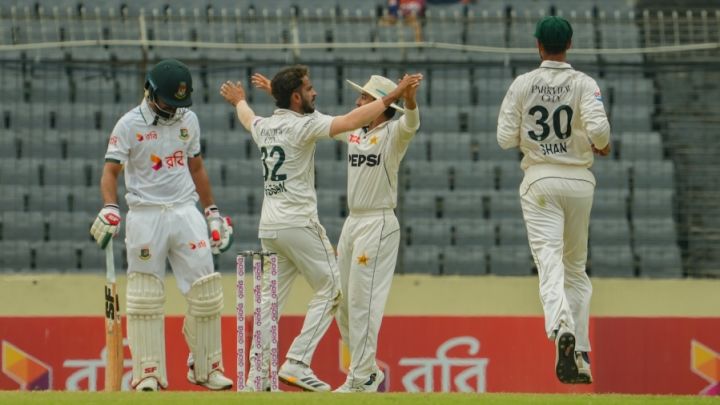
Pakistan’s pursuit of athletic excellence requires both structural resilience and immediate tactical calibration. During the opening day of the second Test against Bangladesh in Sylhet, a sudden Hasan Ali injury momentarily disrupted the national team’s defensive baseline. The pacer landed awkwardly while attempting a return catch, sparking immediate concern across the Pakistani dugout.
The incident occurred in the eighth over of the innings. Debutant opener Tanzid Hasan chipped a short delivery back toward the bowler. Consequently, Hasan Ali dived forward to secure the catch but fell with significant force. He remained stationary on the ground, prompting the team physio to rush onto the pitch for an immediate medical assessment.
Strategic Resilience: Analyzing the Hasan Ali Injury Event
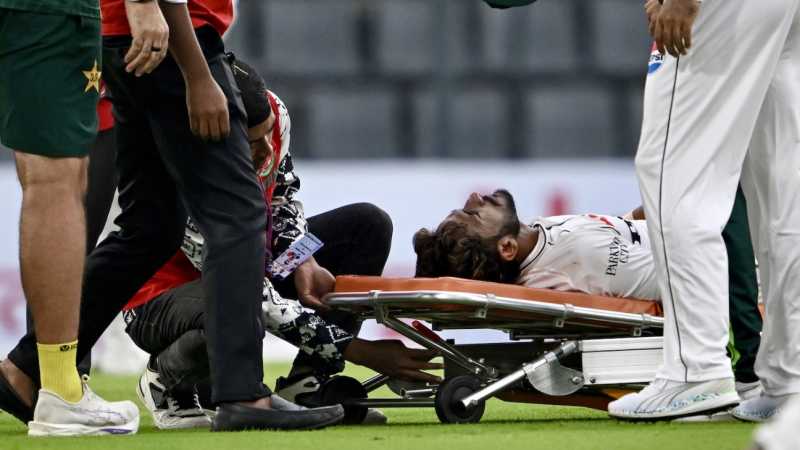
Notably, officials utilized a stretcher to transport the dazed pacer off the field. This development created a temporary void in the bowling rotation, especially since Pakistan had already rested Shaheen Shah Afridi for this fixture. Salman Agha stepped in to complete the over as the medical team initiated emergency protocols in the stadium’s treatment room.
Furthermore, television footage captured fast bowling coach Umar Gul and head coach Sarfaraz Ahmed in deep discussion regarding the structural impact on their bowling strategy. Fortunately, the Hasan Ali injury did not lead to a long-term absence. The pacer demonstrated remarkable recovery, returning to the field later in the first session to resume his bowling duties.
The Translation: Technical Context
In high-velocity sports, an “awkward landing” often indicates a failure in kinetic deceleration. When Hasan Ali dived for the caught-and-bowled chance, his center of gravity shifted unexpectedly. This caused a high-impact collision with the turf that stunned his nervous system. While the use of a stretcher suggests a severe trauma, it is often a calibrated safety protocol to prevent further spinal or muscular aggravation before a full diagnostic check.
The Socio-Economic Impact: Precision Performance
Cricket serves as a major economic and psychological catalyst in Pakistan. For the average household, the fitness of key athletes like Hasan Ali directly influences national morale and the “brand value” of Pakistan sports. From a STEM perspective, the rapid recovery and return of an athlete highlight the efficiency of modern sports medicine and bio-mechanical rehabilitation. This efficiency ensures that the “human capital” of our national team remains operational, minimizing the risk of series-wide performance degradation.
The Forward Path: Momentum Shift
This event represents a Momentum Shift. While the injury initially signaled a potential crisis, Hasan Ali’s rapid return reinforces the team’s physiological baseline. Moving forward, the PCB must integrate more robust “fall-safety” training into the pacer’s conditioning programs. Maintaining the health of our bowling unit is not just a sporting necessity; it is a strategic requirement for Pakistan’s international standing in the ICC World Test Championship.