
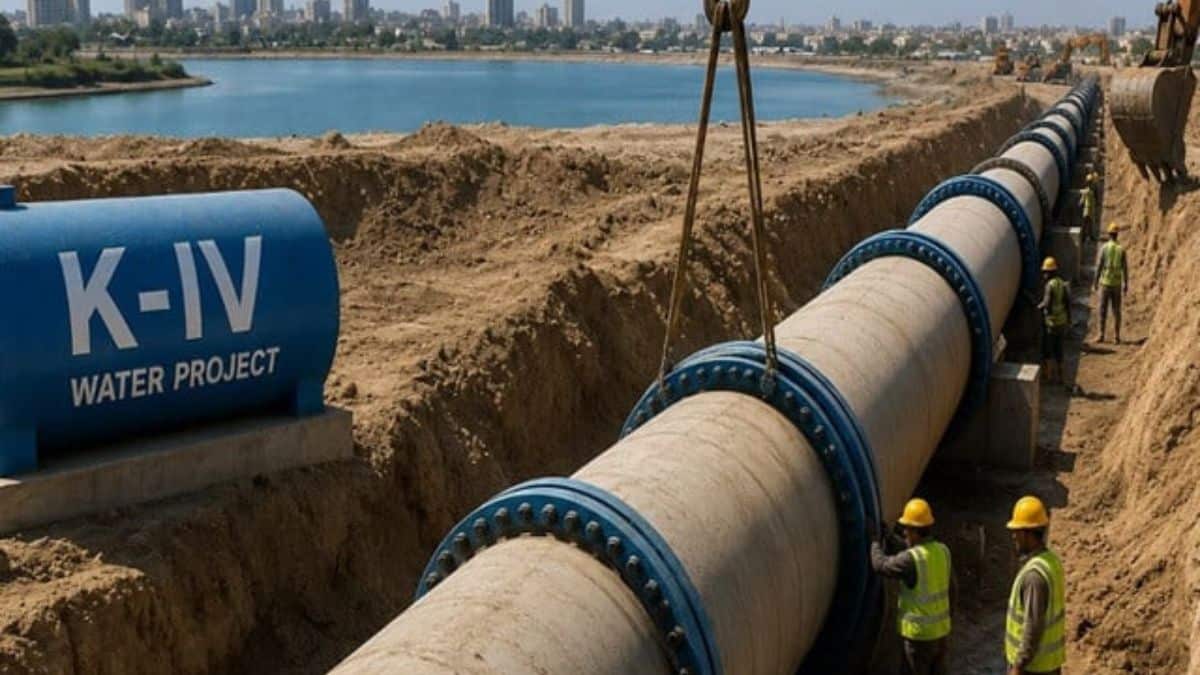
The Karachi K-IV project has secured conditional World Bank approval, marking a strategic pivot toward restoring water security for over two million residents. This critical infrastructure recalibration follows rigorous procurement phases, signaling a shift from systemic delays to active structural execution. Consequently, the project will soon transition into an advanced advertisement stage to invite specialized contractors.
Structural Recalibration: The Karachi K-IV Project Resumes
Engineers designed the augmentation system to transport water from the primary K-IV canal to strategic reservoirs. From these nodes, a calibrated network of pipelines will distribute water to diverse urban sectors. Therefore, this project serves as a vital catalyst for Karachi’s strained hydraulic grid. Officials confirm that the procurement process has reached an advanced baseline, with formal project advertisements expected immediately.
However, the World Bank’s approval includes specific technical mandates. Authorities must conduct a precision inspection of the 96-inch pipeline. Moreover, they must complete essential repairs near major flyovers and the NIPA bridge corridor by August 20, 2026. This timeline ensures the structural integrity of the network before full-scale activation.
The Situation Room: Analysis
The Translation
In “Next Gen” terms, the World Bank’s “conditional approval” means the project has passed the financial and ethical audit but requires physical safety guarantees. “Augmentation” refers to the secondary network needed to actually get water from the main canal into residential taps. Essentially, the primary hardware is ready; we are now building the operating system to deliver the service.
The Socio-Economic Impact
The Karachi K-IV project directly impacts the baseline productivity of the city. For the average citizen, consistent water access reduces the “water tax” paid to private tankers and eliminates hours spent managing water scarcity. Consequently, this stabilizes household budgets and improves public health outcomes in both urban centers and peripheral settlements. For students and professionals, this reliability translates into reclaimed time and improved focus on economic output.
The Forward Path
This development represents a Momentum Shift. While previous years saw the project stalled by weak supervision and environmental concerns, the World Bank’s involvement introduces a disciplined framework of international standards. The Sindh government’s directive to meet these benchmarks suggests a newfound commitment to structural precision. If the August 2026 milestones are met, this project will serve as a baseline for future public-private infrastructure partnerships.








