
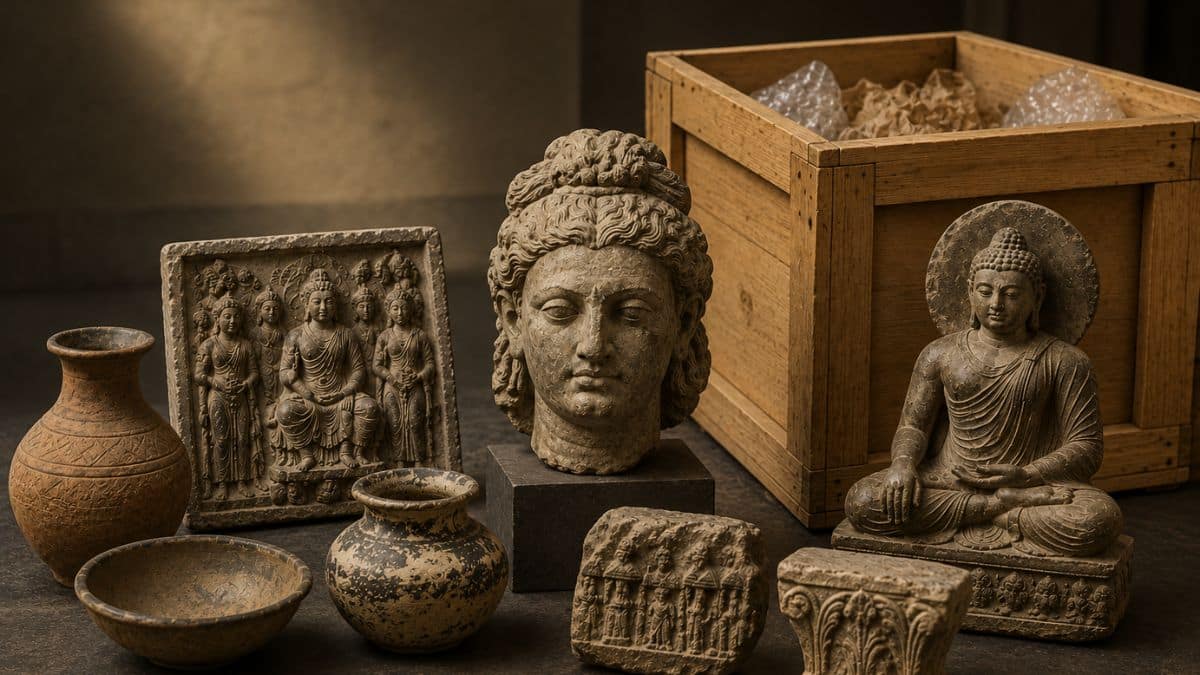
The successful repatriation of 513 smuggled archaeological artefacts from the United States represents a calibrated victory for Pakistan’s cultural diplomacy. This recovery signifies a major advancement in the systematic retrieval of national assets that were illegally extracted over several decades. Consequently, these items, primarily originating from the Gandhara civilization, have transitioned from illicit private hands back into formal government custody.
The Diplomatic Architecture of Heritage Recovery
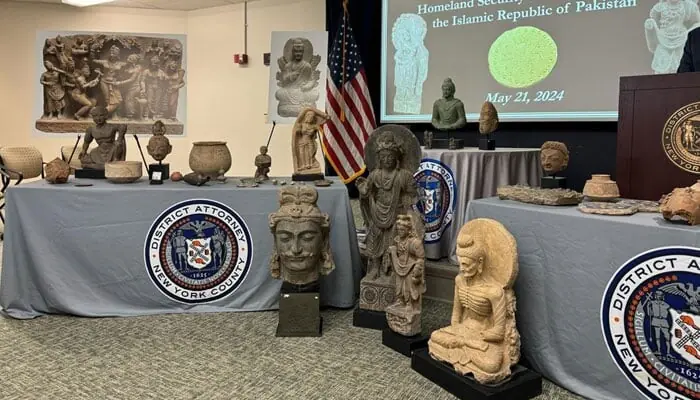
The Senate Standing Committee on National Heritage and Culture recently confirmed that US authorities seized the objects following intensive investigations. Pakistan secured the return through structured bilateral cooperation and legal precision. Furthermore, the Ministry of National Heritage and Culture is currently conducting a comprehensive audit to determine the estimated value and historical significance of each piece.
To ensure these treasures are preserved for future generations, the government is initiating the development of a state-of-the-art museum. The Capital Development Authority is currently identifying strategic land parcels, while the state explores potential private-sector partnerships to fund the infrastructure. In contrast to previous years of neglect, this move signals a structural shift toward proactive heritage management.
The Situation Room: Analysis of the 513 Smuggled Archaeological Artefacts
The Translation (Clear Context)
In technical terms, “repatriation” is more than just returning items; it is a legal and ethical correction of the illicit antiquities trade. These smuggled archaeological artefacts were stolen from our soil, stripping Pakistan of its historical context. The current bilateral cooperation serves as a catalyst for future recoveries, proving that international law can effectively dismantle global smuggling networks when supported by precision-driven diplomacy.
The Socio-Economic Impact
How does this impact the average Pakistani? Firstly, it restores a sense of national pride and identity, particularly for students of history and archaeology. Secondly, the establishment of a new museum creates economic opportunities through tourism and cultural research. By securing our past, we provide a baseline for future intellectual growth and national cohesion in both urban and rural centers.
The Forward Path (Opinion)
This development represents a Momentum Shift. While the recovery is a triumph, it also highlights the historical fragility of our borders. To capitalize on this progress, the government must institutionalize more rigorous anti-smuggling protocols and digital tracking for all archaeological sites. Stabilizing our heritage is the first step; the next is leveraging it as a cornerstone of Pakistan’s global soft power.
- Artifact Count: 513 precision-recovered items.
- Origin: Primarily Gandhara Civilization.
- Mechanism: Pakistan-US Bilateral Cooperation.
- Next Steps: Detailed investigation into smuggling networks and museum construction.








