
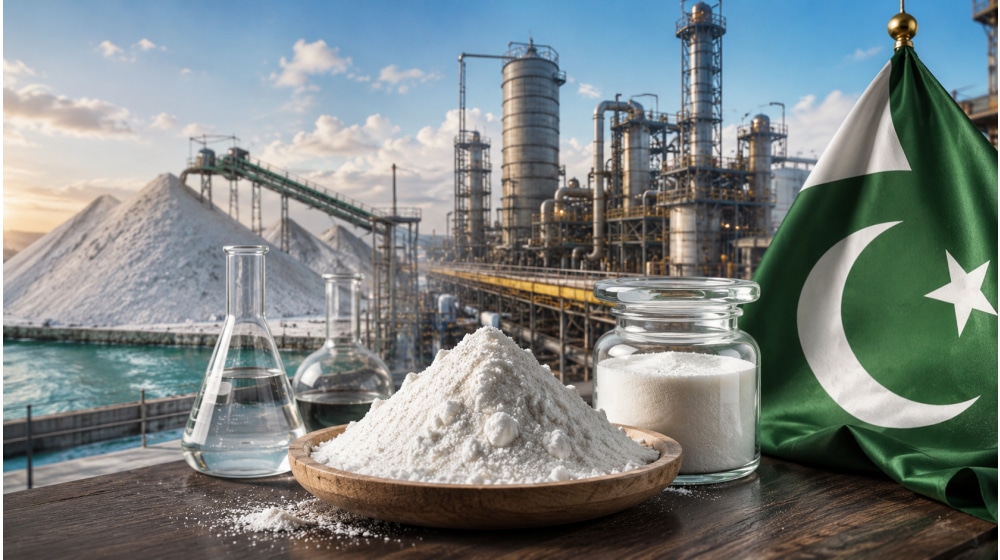
Maintaining a resilient industrial ecosystem demands precise regulatory oversight. Consequently, the recent final determination in the NTC soda ash case has sparked significant friction within Pakistan’s trade landscape. Trade associations argue that the National Tariff Commission (NTC) bypassed established empirical benchmarks, potentially distorting market competition. By ignoring detailed written objections, the Commission has raised critical questions regarding the transparency and impartiality of its investigation protocols.
Analyzing the NTC Soda Ash Case Evidence
Domestic stakeholders emphasize that the local industry remains structurally sound. Currently, domestic producers control over 95% of the local market. Furthermore, major players like Lucky Core Industries Limited and Olympia Chemical Limited reported expanded production capacities and profitable annual results. Despite this data, the Commission concluded that a threat of material injury exists. Industry leaders argue that factors like weak domestic demand and global market shifts influenced sales declines, rather than dumped imports.
Methodological Discrepancies and WTO Jurisprudence
Precision in calculating the Non-Injurious Price (NIP) is a baseline requirement for fair trade. In this instance, the NTC applied a 10% profit margin, doubling the standard 5% benchmark used in previous investigations. Because the Commission provided no adequate explanation for this shift, respondents claim the injury margin was artificially inflated. This departure from established methodology conflicts with World Trade Organization (WTO) jurisprudence, which requires authorities to explain how evidence supports their conclusions.
The Translation: Decoupling Regulatory Logic
In technical terms, anti-dumping duties are designed to protect local industries from unfairly priced imports. However, when a regulator shifts its baseline profit calculations without a strategic explanation, it changes the entire economic equation. Essentially, the industry argues that the NTC is using “protectionist math” rather than objective data. By ignoring the 95% market dominance of local firms, the ruling prioritizes specific corporate margins over broad market health.
Socio-Economic Impact: Precision in Market Dynamics
This decision directly affects the daily lives of Pakistani citizens through the supply chain. Soda ash is a critical raw material for detergents, glass, and paper. Consequently, higher anti-dumping duties increase production costs for these essential goods. For the average household, this could manifest as higher prices for laundry soap and glassware. For professionals in the manufacturing sector, these artificial cost hikes reduce global competitiveness and can lead to structural stagnation in downstream industries.
The Forward Path: Momentum Shift or Stagnation?
This development represents a Stabilization Move for a few domestic producers but a potential Momentum Shift toward protectionism for the wider economy. To achieve true system efficiency, the NTC must recalibrate its decision-making process to align with WTO transparency standards. Without a clear, evidence-based justification for margin hikes, Pakistan risks creating a non-competitive market environment that penalizes innovation and downstream growth.








