
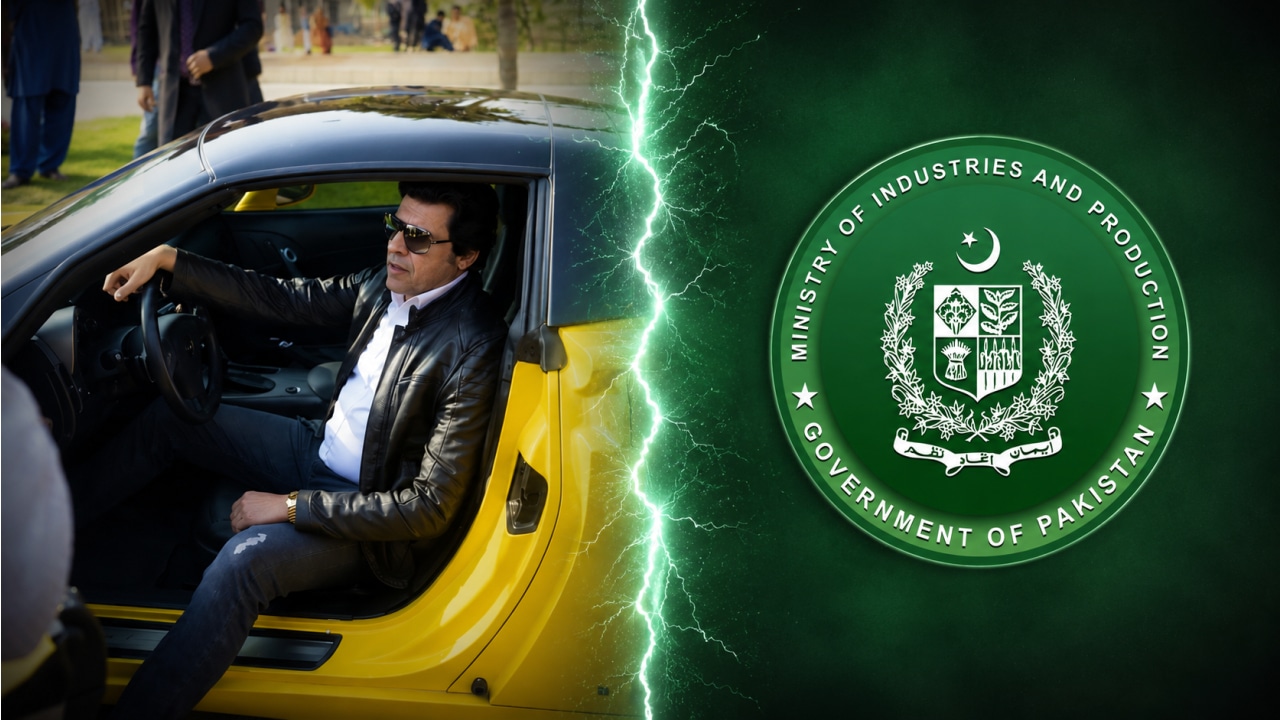
The Strategic Rationale Behind Imported Car Restrictions
The Ministry of Industries and Production recently calibrated its stance on imported car restrictions, dismissing allegations of procedural irregularity. Special Assistant to the Prime Minister (SAPM) Haroon Akhtar Khan presented documentary evidence to the Senate Standing Committee to substantiate the ministry’s regulatory framework. Consequently, the ministry confirmed that all decisions followed the federal cabinet’s baseline approval and complied with established Rules of Business.
The ministry emphasized that its actions prioritize structural efficiency over arbitrary limits. By consulting with diverse stakeholders, the government ensured that every policy move aligned with national industrial goals. This precision-driven approach aims to stabilize the local automotive market while maintaining legal integrity across all import channels.
Calibrating Safety: The UN WP.29 Standards
In 2020, Pakistan became a signatory to the United Nations WP.29 agreement, a catalyst for modernizing vehicle safety regulations. This international commitment mandates the development of rigorous vehicle safety standards. Specifically, the Ministry of Industries now carries the responsibility of implementing these calibrated benchmarks to ensure every vehicle on Pakistani roads meets global safety norms.
To further institutionalize these standards, the government introduced the Motor Vehicle Development Bill. Currently, the National Assembly is reviewing this legislation after receiving approval from the relevant standing committee. Once enacted, the Engineering Development Board (EDB) will wield the implementation powers to enforce these safety protocols across the industry.
Addressing Systemic Misuse in Import Schemes
The ministry identifies significant misuse in historical vehicle import schemes, including the Gift Scheme and Personal Baggage Scheme. To resolve these inefficiencies, the government introduced stricter eligibility requirements. These structural changes prevent commercial entities from exploiting personal import channels, thereby protecting the domestic industrial baseline.
Furthermore, the Ministry of Commerce directed the Engineering Development Board in September 2025 to monitor quality standards for both new and used imports. By enforcing these measures, the government intends to reduce the tragic toll of road accidents, which currently claim approximately 25,000 lives annually in Pakistan.
The Situation Room Analysis
The Translation
Beyond the political friction, this development signifies a shift from a “free-for-all” import environment to a regulated, safety-first ecosystem. The ministry is effectively transitioning from passive oversight to active enforcement of international standards (WP.29). This move decouples automotive policy from personal influence and anchors it in institutional legal frameworks and cabinet-approved mandates.
The Socio-Economic Impact
For the average Pakistani citizen, these imported car restrictions and new safety standards represent a long-term investment in life preservation. The reduction of 25,000 annual road fatalities is a critical baseline for national productivity. While stricter import rules may temporarily limit variety, they ensure that the vehicles entering the market are safer and that the domestic industry remains insulated from the volatility caused by misused baggage schemes.
The Forward Path
This development represents a Momentum Shift. The integration of UN-level safety standards and the formalization of the Engineering Development Board’s role indicate a move toward a more sophisticated automotive infrastructure. The government is successfully shifting the narrative from “restricting trade” to “optimizing safety and system efficiency.”








