
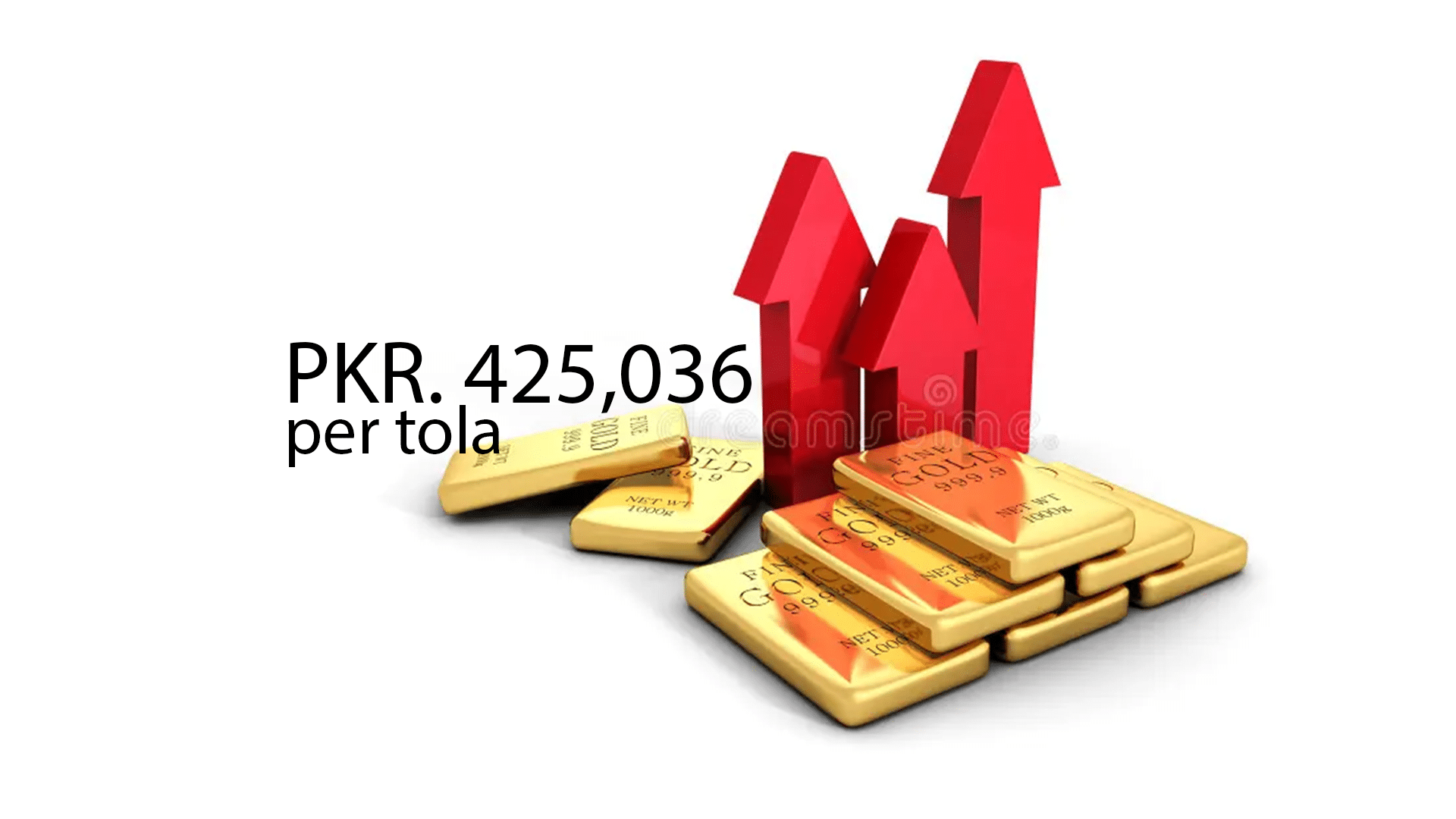
The precision of our national financial baseline relies heavily on the volatility of global commodity benchmarks. On Wednesday, gold prices in Pakistan registered a calibrated recovery, rising by Rs. 900 per tola to settle at Rs. 425,036. This upward movement follows a significant correction on Tuesday where prices shed over Rs. 5,000, signaling a stabilization effort within the local Sarafa market.
Strategic Shifts: Understanding Gold Prices in Pakistan
The All Pakistan Sarafa Gems and Jewelers Association confirmed that the recovery extends across multiple weight denominations. Specifically, the 10-gram gold rate rose by Rs. 900, reaching a closing value of Rs. 364,399. Consequently, these local adjustments mirrored a $9 gain in the international market, where gold settled at $4,026 per ounce. In contrast, silver prices remained static at Rs. 6,289 per tola, maintaining a neutral position amidst the gold fluctuation.
The Translation (Clear Context)
While local factors often influence immediate supply, gold prices in Pakistan remain fundamentally tethered to the international US Dollar-denominated gold market. The $9 international increase acted as a catalyst for local jewelers to recalibrate their pricing structures. After the substantial Rs. 5,600 loss recorded on Tuesday, this Rs. 900 increase serves as a technical “bounce,” preventing a further downward spiral and maintaining the asset’s perceived value baseline.
The Socio-Economic Impact
This market fluctuation directly impacts the purchasing power of the average Pakistani household, particularly those preparing for seasonal wedding expenditures. For the professional investor, the minor recovery suggests a resistance level in price drops, hinting that gold remains a resilient hedge against currency devaluation. However, for the urban consumer, the high entry point of over Rs. 400,000 per tola continues to make physical gold acquisition a strategic challenge rather than a routine saving method.
The “Forward Path” (Opinion)
This development represents a Stabilization Move. While a Rs. 900 increase is marginal compared to the previous day’s heavy losses, it indicates that the market is finding a new equilibrium. We anticipate that as long as international rates hover around the $4,000 mark, the local market will maintain this high-plateau precision. Investors should monitor international geopolitical catalysts, as these will inevitably dictate the next structural shift in local rates.








