
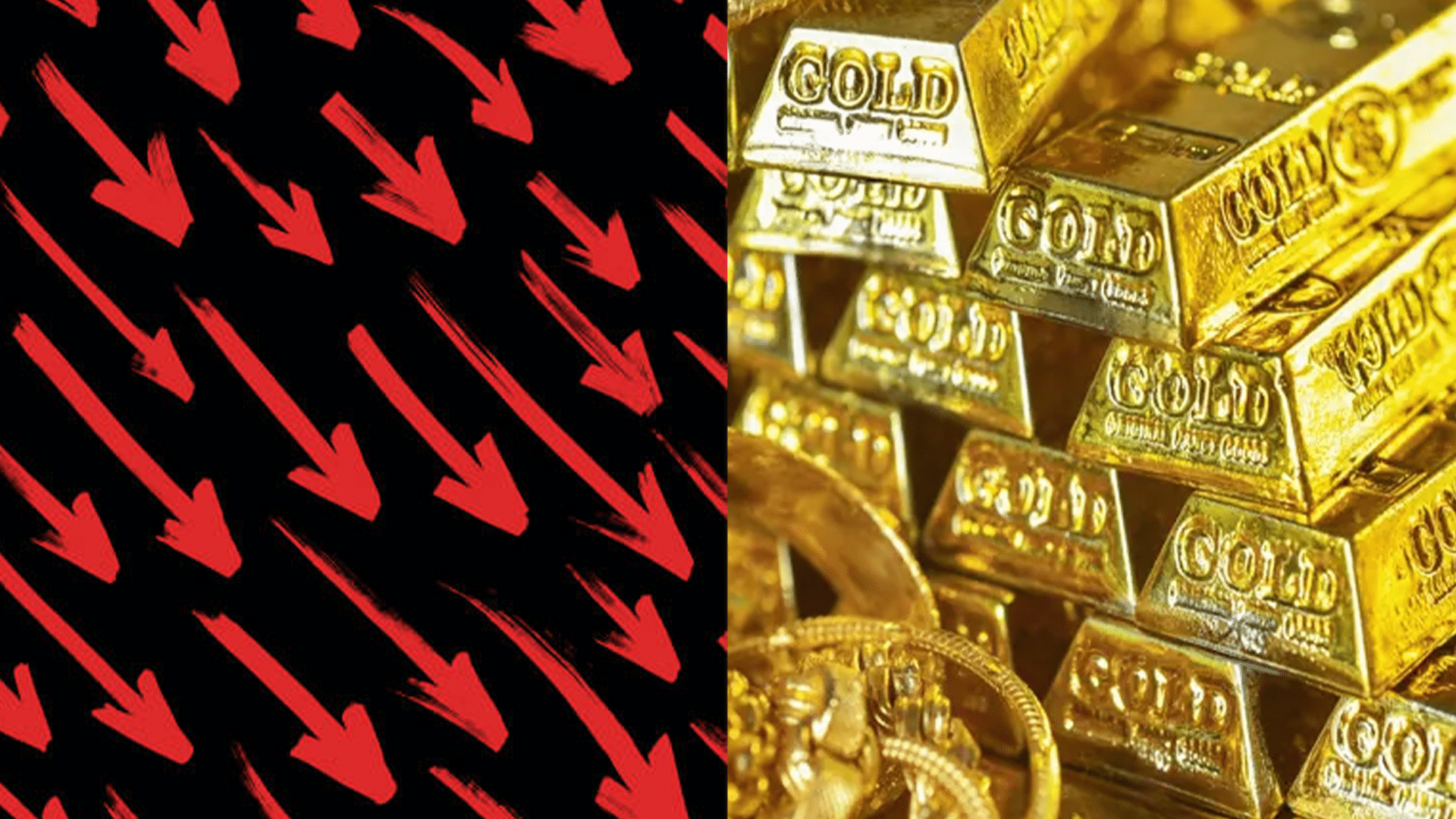
The global commodities market just calibrated a significant correction, sending a shockwave through Pakistan\’s local bullion trade. A dramatic gold prices crash occurred on Friday as international rates experienced a sharp decline during the trading session. According to the All Pakistan Sarafa Gems and Jewelers Association, the price per tola dropped by a staggering Rs. 14,900. Consequently, the new value settled at Rs. 438,036, highlighting the sensitivity of our local economy to international financial catalysts.
The Data Behind the Gold Prices Crash
Specifically, the 10-gram gold segment saw a depreciation of Rs. 13,410, bringing the price down to Rs. 374,205. In the international arena, gold values plummeted by $149 to settle at $4,156 per ounce. Furthermore, the silver market followed this downward trajectory on the same day. Silver lost Rs. 413 in value, eventually settling at Rs. 6,946 per tola by the close of Friday\’s session.
The Translation: Market Mechanics Explained
This sudden correction in bullion value stems from a calibrated international market shift rather than local industrial changes. While Pakistani buyers see a massive price drop per tola, this movement mirrors the $149 decline in the global price per ounce. Such alignment ensures that the Pakistani market remains synchronized with global commodity baselines, preventing arbitrage while providing a precision-driven price reset.
The Socio-Economic Impact
For the average Pakistani household, a gold prices crash of this magnitude offers a strategic window. Gold remains a primary hedge against inflation and a critical asset for the traditional wedding season. Consequently, this drop increases the purchasing power of families planning significant life events. Professionals looking for stable asset diversification may also find this entry point advantageous for long-term wealth preservation in a volatile economic climate.
The Forward Path: Strategic Outlook
This development represents a Stabilization Move. Following a period of aggressive price surges, a structural correction was necessary to maintain market liquidity and investor confidence. While the volatility may cause temporary anxiety among short-term speculators, it serves as a healthy catalyst for long-term market stability. We expect this new baseline to provide a more predictable environment for both jewelers and institutional investors across the country.








