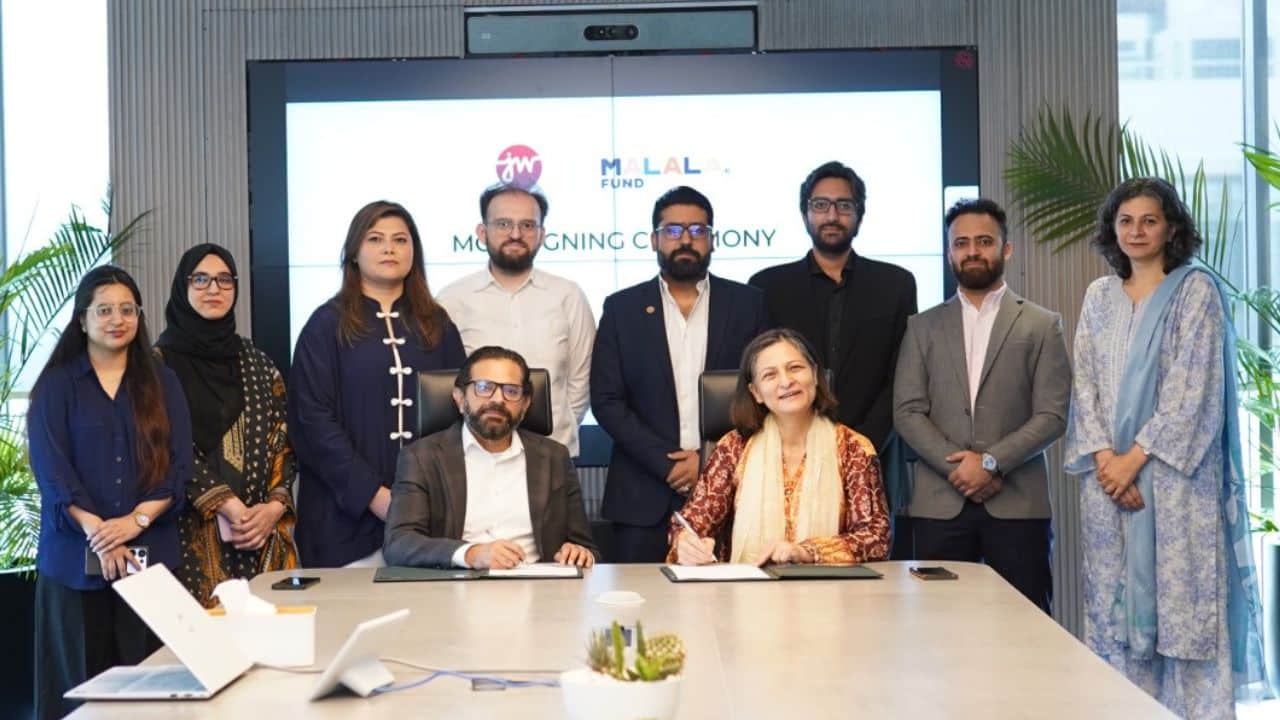
JazzWorld and Malala Fund Pakistan recently signed a strategic Memorandum of Understanding (MoU) to accelerate girls’ education in Pakistan within underserved regions. This precision-driven collaboration represents a significant calibration of corporate resources and advocacy, designed to dismantle structural barriers to learning. By integrating high-reach digital platforms with grassroots engagement, the partnership aims to provide young women with the tools necessary for modern economic participation.
Strategic Framework for Girls’ Education in Pakistan
The joint initiative focuses on community mobilization across specific geographic baselines, including Sindh (Thar), Balochistan (Khuzdar), Punjab (Vehari), and Khyber Pakhtunkhwa (Charsadda and Shangla). Furthermore, the organizations will utilize the Tamasha platform to drive awareness during key international observances, such as the International Day of the Girl Child. This structural approach ensures that educational content developed by Malala Fund Pakistan reaches a national audience, fostering a culture of academic ambition.
Participants in these districts will gain direct access to the JazzWorld ecosystem. Specifically, services like TutorG for education, ApnaClinic for health, and FikrFree for personal development will be deployed to support holistic growth. Consequently, this digital inclusion effort converts standard connectivity into a catalyst for personal and professional advancement.
The Situation Room Analysis
The Translation (Clear Context)
In the current digital landscape, access to a network is insufficient without relevant content. This partnership translates technical infrastructure into “functional equity.” By embedding educational modules into a lifestyle app already used by millions, JazzWorld and Malala Fund are effectively lowering the entry barrier for learning. Advancing girls’ education in Pakistan is not just about providing books; it is about providing the digital infrastructure to access those books anywhere, at any time.
The Socio-Economic Impact
This development directly impacts the daily lives of families in rural Pakistan by reducing the “information poverty” gap. For a student in Khuzdar or Thar, having localized access to health and educational services via a mobile device can bypass physical infrastructure limitations. In the long term, this digital empowerment creates a baseline for increased female labor force participation, which is a critical driver for Pakistan’s national GDP and household stability.
The “Forward Path” (Opinion)
This initiative represents a significant Momentum Shift. Rather than relying on traditional, slow-moving physical infrastructure, this partnership leverages existing technology to scale impact rapidly. While policy changes are necessary, the immediate deployment of educational tools via the JazzWorld ecosystem provides a strategic shortcut to progress. This model should serve as the future benchmark for supporting girls’ education in Pakistan through public-private synergy.