The Structural Challenge for France Nuclear Reactors
Climate volatility is no longer a peripheral threat; it has become a structural constraint on energy infrastructure. EDF recently deactivated several France nuclear reactors as an intensifying heatwave drives river temperatures above calibrated ecological safety thresholds. Specifically, the utility took Unit 2 at Golfech, Unit 3 at Bugey, and Unit 2 at Chooz offline. Together, these units represent approximately 6% of the nation’s nuclear capacity. While grid operator RTE confirmed that electricity supplies remain secure, the move highlights a growing friction between industrial output and environmental stability.
The shutdowns do not stem from mechanical failure or safety hazards within the plants themselves. Instead, they reflect strict environmental regulations regarding the temperature of water discharged back into the Garonne, Rhône, and Meuse rivers. Consequently, when river temperatures approach 28°C, releasing additional warm cooling water becomes a catalyst for aquatic ecological disruption. Consequently, EDF managers prioritize the preservation of fish and aquatic life over immediate energy production peaks.
Environmental Calibration and Grid Precision
Current forecasts indicate that the reactors will resume operations in late July. Specifically, Bugey is slated for July 19, Golfech for July 22, and Chooz for July 25. However, these dates remain dependent on shifting atmospheric conditions. This event marks the second time in recent weeks that extreme heat has forced operational shifts. With more than a third of France under a high-alert heat warning, temperatures are expected to reach a staggering 41°C.
To address this recurring reality, EDF plans a massive €8.7 billion investment to climate-proof its fleet by 2040. Current climate-related restrictions reduce annual production by 0.3%, but data suggests this baseline could climb to 1.5% by 2050 without strategic adaptation. This proactive capital allocation acknowledges that extreme heat is transforming from an exceptional event into a structural summer ritual.
The Situation Room Analysis
The Translation
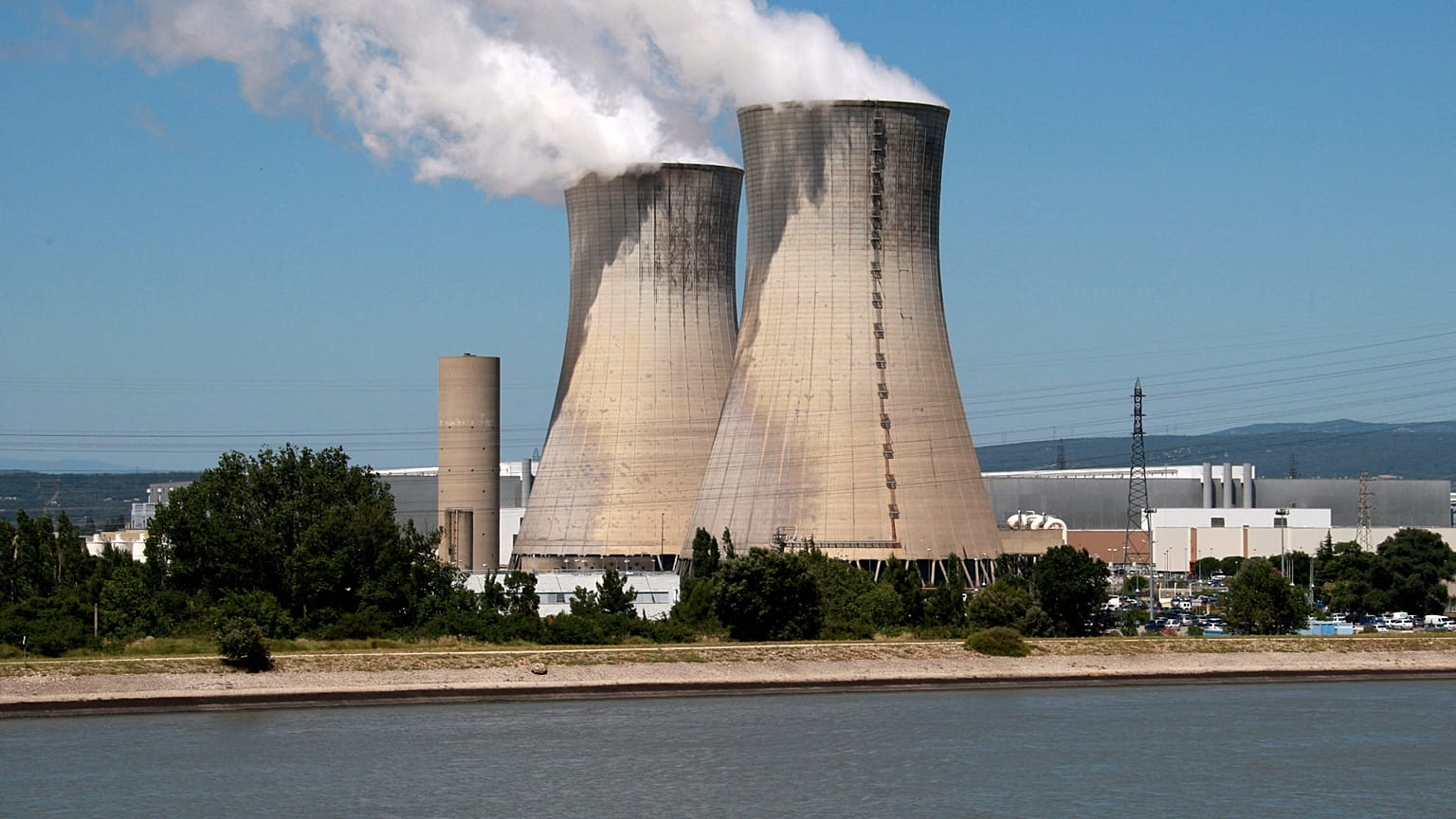
The core logic here is thermodynamic equilibrium. Nuclear reactors require external water to cool their secondary systems. When the source water (the river) is already warm, discharging even hotter water back into the stream creates a thermal plume that can suffocate local ecosystems. France is not “running out of power”; it is precisely managing its France nuclear reactors to honor environmental safeguards that prevent ecological collapse during peak thermal events.
The Socio-Economic Impact
For the average citizen, this development signals a shift in the cost of reliability. While the grid remains stable for now, the recurring loss of 6% capacity during peak demand periods (when air conditioning use spikes) could lead to higher electricity prices. For the Pakistani observer, this serves as a baseline for understanding how climate change creates hidden costs in infrastructure—costs that ultimately manifest in higher utility bills and the need for massive public-sector reinvestment.
The Forward Path
This situation represents a Momentum Shift. It forces a move away from the assumption that nuclear power is weather-independent. The path forward requires a transition to “closed-loop” cooling systems or the strategic integration of solar arrays that peak exactly when nuclear capacity must be dialed back. Precision adaptation is the only way to maintain energy sovereignty in a warming world.