
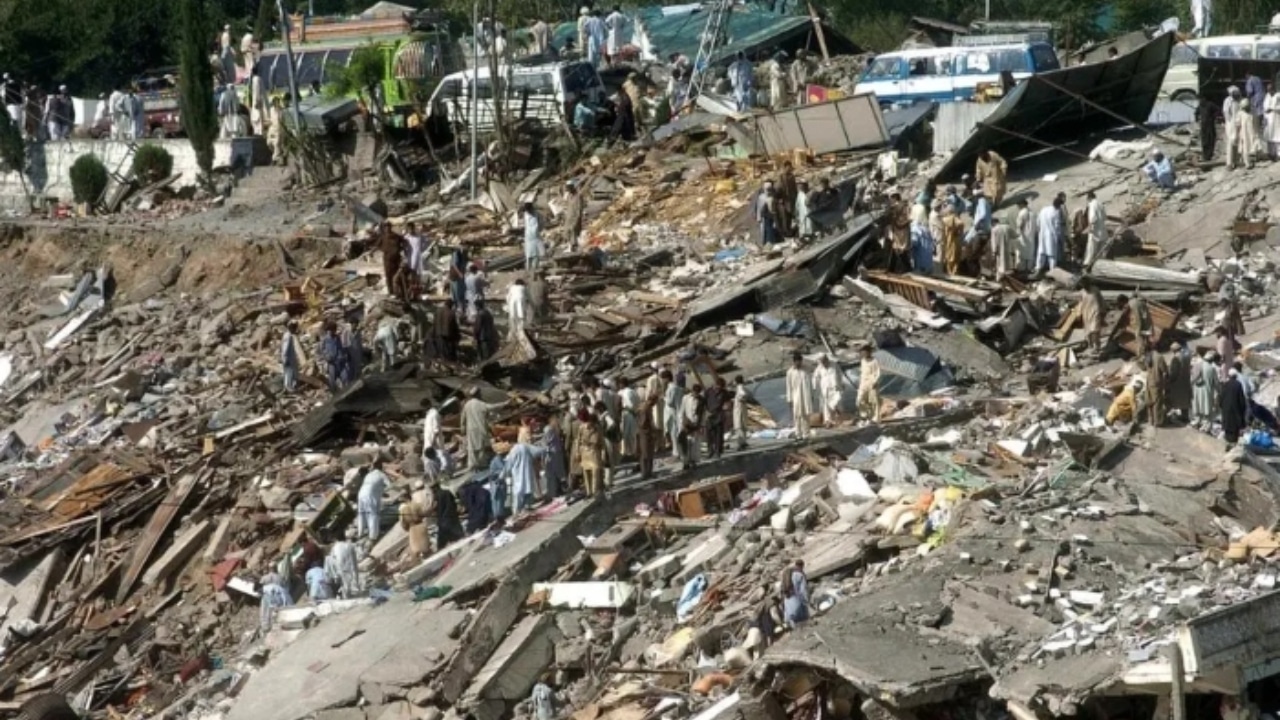
Structural resilience in Pakistan is often measured by infrastructure, but the recovery of 2005 earthquake remains in Balakot reminds us of the human baseline. Recently, workers clearing debris for a family home reconstruction unearthed the remains of four-year-old Jamal Shafiq. Consequently, a mystery that lasted 21 years has finally reached a calibrated conclusion for a grieving father.
The Discovery of 2005 Earthquake Remains
On October 8, 2005, a 7.6-magnitude earthquake acted as a catastrophic catalyst, flattening large portions of Khyber Pakhtunkhwa. Jamal Shafiq disappeared during this event, leaving his father, Shafiq-ur-Rehman, with a haunting void. While the family lost eight members, Jamal’s fate remained unknown for over two decades. However, the recent strategic decision to rebuild the family home led to the identification of the child’s remains through preserved clothes and shoes.
The Translation: Precision in Post-Disaster Recovery
In technical terms, the discovery of 2005 earthquake remains during reconstruction highlights the “residual debris” phenomenon common in massive seismic events. In contrast to modern forensic recovery, which utilizes DNA, this case relied on physical artifacts. This suggests that even after 21 years, the environmental baseline of Balakot continues to hold the structural and biological history of the disaster. Consequently, builders must approach old rubble with precision and care.
The Socio-Economic Impact: Closure and System Safety
How does this discovery change the daily life of a Pakistani citizen? For families in disaster-prone regions, it provides a crucial psychological baseline for closure. Furthermore, it impacts the construction sector by emphasizing the need for professional debris clearing. Key impacts include:
- Psychological Stabilization: Families gain finality, allowing for emotional reinvestment in the community.
- Infrastructure Integrity: Removing old debris ensures that new foundations are built on solid, cleared ground.
- Public Safety Awareness: It highlights the ongoing risks associated with historical disaster zones.
The Forward Path: A Stabilization Move
In our expert view, this development represents a Stabilization Move. While it does not represent a technological breakthrough, it signifies a healing of the social fabric. The precise identification of 2005 earthquake remains allows a community to finally close a chapter of its history. Moving forward, Pakistan must integrate better forensic protocols into disaster management to ensure such closure occurs years earlier, rather than decades later.








