The global football landscape recognizes that being the France 2026 favorites involves more than tactical prowess; it requires navigating a complex psychological architecture. Historically, only Italy and Brazil have successfully defended or recovered global dominance in successive eras. Consequently, the French national team enters North America facing an existential challenge of squad pressure and emotional fatigue that transcends the pitch.
The Strategic Anchor: Why France 2026 Favorites Face Heavy Odds
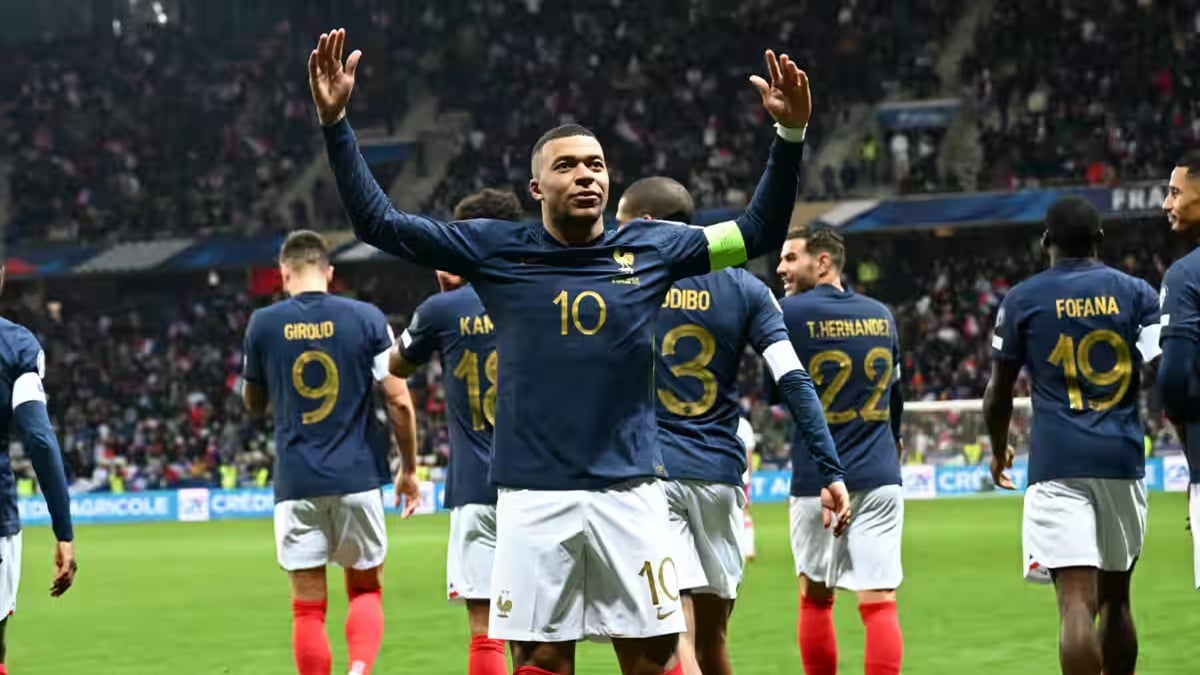
Structural pressure currently rests on the shoulders of the team’s generational talisman and its long-standing manager. Kylian Mbappé faces his ultimate leadership calibration as he transitions from a primary weapon to a cultural figurehead. Furthermore, his role requires a level of structural patience rarely seen in his earlier, more mercurial phases. He must now catalyze a frontline that is rapidly evolving around his central presence.
Simultaneously, Didier Deschamps embarks on what many consider his “last dance.” To maintain the system’s baseline, Deschamps must resist conservative paralysis. He needs to lead against the shadow of his own legacy while ensuring the organic adjustment of the game remains fluid. Precision in management will determine if this campaign becomes a masterpiece or a cautionary tale of stagnation.
The New Wave: Engineering Defensive and Creative Precision
To survive the 2026 tournament, Les Bleus must move beyond the muscle memory of previous cycles. The emerging talents are no longer understudies; they are now absolute pillars of the system. Specifically, the following players must absorb the vacuum left by departing veterans:
- William Saliba: The Arsenal standout must anchor the backline with flawless distribution and high-press resistance.
- Bradley Barcola: He adds a vertical, unpredictable element to the flank, essential for dismantling deeply entrenched defenses.
- Maghnés Akliouche & Rayan Cherki: These technical vanguards carry the burden of delivering instant creative output under knockout-stage scrutiny.
Tactical Evolution: From Chaos to Controlled Order
Historically, Deschamps utilized a low block and vertical counter-attacks to dominate. However, the 2026 tactical landscape demands a shift toward total possession and geometric dominance. Opponents now willingly cede the ball, forcing the France 2026 favorites to break down low-block systems through precision rather than raw speed. Relying solely on individual brilliance from figures like Ousmane Dembélé creates a dangerous predictability that modern analysts can easily exploit.
The Situation Room Analysis
The Translation (Clear Context)
While commentators talk about “pressure,” the architectural reality is a matter of system efficiency. France isn’t just playing against 11 men; they are playing against the “favoritism tax.” This means every error is magnified, and every tactical choice is scrutinized by data-driven opponents who have calibrated their entire defensive strategy specifically to stop French transitions.
The Socio-Economic Impact
For the Pakistani citizen, the trajectory of the French team serves as a baseline for institutional excellence. The way France integrates youth (Saliba, Barcola) into a high-pressure environment provides a roadmap for Pakistani sports academies and professional sectors. It demonstrates that long-term success is not accidental but is a result of a calibrated pipeline of talent and disciplined leadership.
The Forward Path (Opinion)
This development represents a Momentum Shift. While the “burden” is heavy, the infusion of technical vanguard players like Akliouche suggests that France is not merely trying to maintain their status but is actively re-engineering it. If they master the transition from counter-attacking to game dictation, they will set a new global standard for the next decade.