
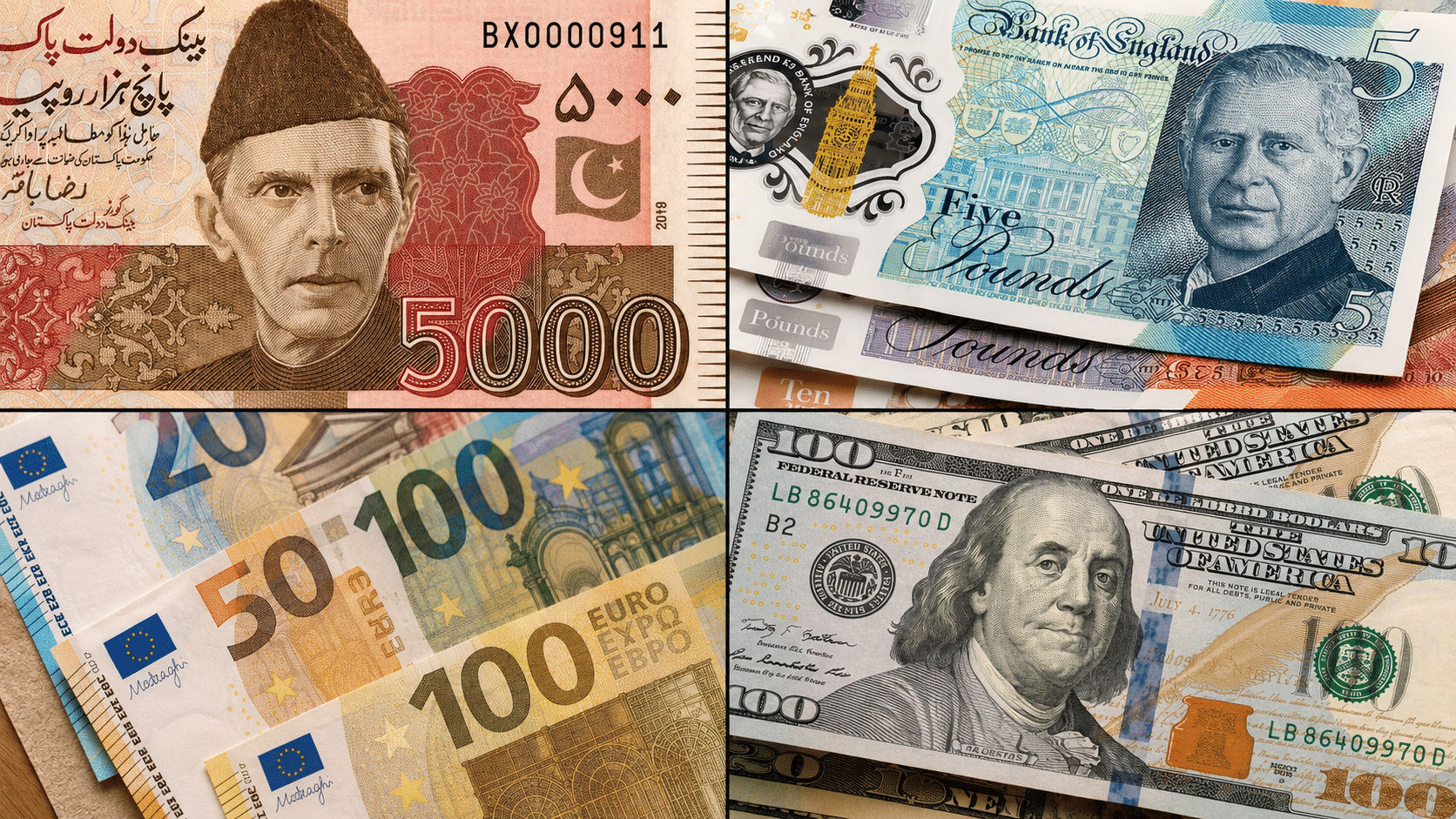
The Pakistani rupee performance continues to exhibit a calibrated structural resilience, securing its 201st consecutive daily gain against the US Dollar (USD) this Monday. By closing at 277.95 after a precision gain of one paisa, the PKR maintains a trajectory established on December 25, 2025. This persistent winning streak highlights a sustained baseline of stability in the interbank market, providing a catalyst for predictable trade settlements.
Analyzing the Pakistani Rupee Performance Against Global Currencies
While the PKR demonstrated strength against the USD, it encountered divergent pressure from other major international currencies. Consequently, the rupee closed in the red against the British Pound (GBP), the Euro (EUR), and the Australian Dollar (AUD). Specifically, the PKR shed 45 paisas against the GBP and a marginal half-paisa against the EUR. In contrast, the currency remained strategically stable against the UAE Dirham (AED) and the Saudi Riyal (SAR), reflecting the tight calibration of our regional economic corridors.
Interbank Exchange Rate Matrix (July 2026)
- USD: 277.95 (Gained 0.0082)
- GBP: 374.41 (Lost 0.4477)
- EUR: 317.99 (Lost 0.0045)
- AUD: 194.53 (Lost 0.6058)
- CAD: 198.21 (Lost 0.1495)
The Situation Room: Strategic Analysis
The Translation (Clear Context)
The “Green Streak” against the USD signifies a controlled demand-supply equilibrium within the local banking system. However, the losses against the GBP and EUR indicate that global currency markets are experiencing a shift in “strength baskets.” While the PKR holds its ground against a softening dollar, it is currently catching the tailwinds of a strengthening European and British economy, which explains the divergent Pakistani rupee performance in the international market.
The Socio-Economic Impact
For the average Pakistani household, this stability against the USD acts as a buffer against fuel price volatility, as petroleum imports are dollar-denominated. Conversely, students and professionals looking toward the UK or Europe will face slightly higher costs for tuition and remittances. For the urban professional, this means that while local electronic goods (USD-indexed) might stabilize, European luxury or technical imports will require a larger PKR outlay.
The “Forward Path” (Opinion)
This development represents a Stabilization Move. A 201-day streak is not accidental; it is the result of a calibrated monetary baseline. While the gains are marginal (one paisa), the psychological impact on market certainty is significant. To transition from maintenance to a true “Momentum Shift,” Pakistan must now leverage this USD stability to hedge against the rising costs of the GBP and Euro by diversifying our export focus.








