
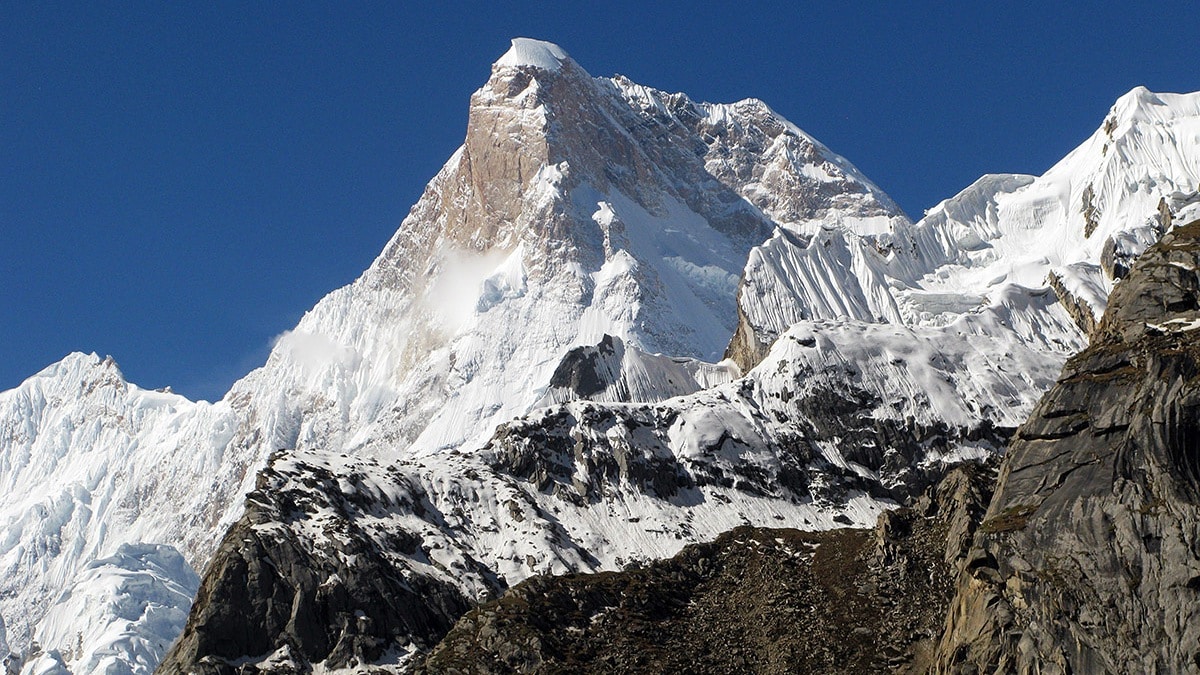
The Technical Peril of the Masherbrum Peak Expedition
A Czech mountaineer, Bansky Jaroslav, tragically lost his life during a high-stakes Masherbrum peak expedition in Pakistan’s Karakoram Range. Jaroslav fell from a cliff near Camp 1 while attempting to summit the 7,821-meter peak on Thursday. Consequently, this incident marks the second fatality of the summer season in Gilgit-Baltistan. Masherbrum, also known as K1, remains one of the most technically demanding and least-climbed mountains globally. This specific expedition represented the first serious attempt to conquer the peak in nearly five decades, illustrating the extreme difficulty of the terrain.
The Translation: Decoding the Challenges of K1
In the world of high-altitude logistics, Masherbrum is categorized as a “technical” peak rather than a “commercial” one. While peaks like Everest have established paths, Masherbrum requires a calibrated approach due to its steep rock faces and unpredictable ice flows. Furthermore, the 7,821-meter elevation creates a structural barrier where the margin for error is virtually zero. Jaroslav’s team was navigating these precise variables when the accident occurred. Currently, authorities in Islamabad are coordinating with the family to finalize the recovery protocol from the 7,000-meter baseline.
The Socio-Economic Impact: Mountaineering as a Regional Catalyst
The mountaineering sector serves as a vital economic catalyst for the northern regions of Pakistan. Every Masherbrum peak expedition generates significant revenue for local communities through specialized logistics, high-altitude porter services, and the hospitality sector in Skardu. These expeditions support hundreds of households in both urban and rural Gilgit-Baltistan. Although tragedies highlight the risks, the sustained interest from foreign climbers reinforces Pakistan’s position as a global hub for extreme sports. Improving safety infrastructure is not just a humanitarian necessity but a strategic requirement for economic stability.
The Forward Path: A Stabilization Move for Safety Standards
This development represents a Stabilization Move in the context of national mountaineering policy. While the return of climbers to Masherbrum after 50 years signals a momentum shift in global interest, the fatalities underscore a need for enhanced aerial recovery systems. Pakistan must invest in precision rescue technology to match the caliber of its peaks. Consequently, we must view these challenges as a call to professionalize our mountain response units. Ensuring the safety of international athletes is paramount to maintaining the upward trajectory of Pakistan’s high-value tourism frontier.








