
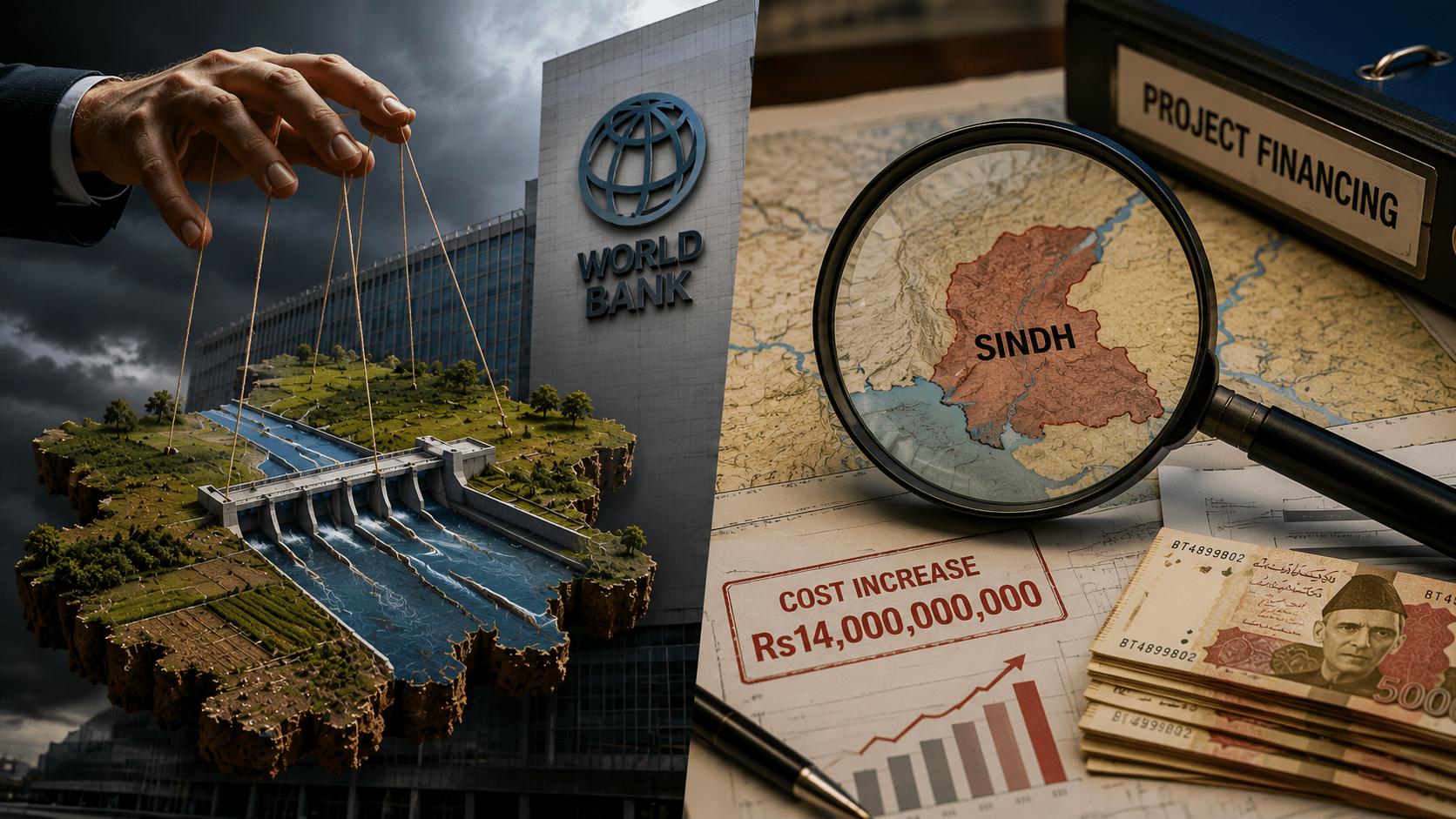
National development requires calibrated fiscal oversight to ensure systemic efficiency. Recently, the Senate Standing Committee on Economic Affairs scrutinized the Sindh Water Project, alleging that external influence from the World Bank increased costs by nearly Rs. 14 billion. This discrepancy indicates a significant deviation from the project’s original design and baseline financial projections.
Structural Anomalies in the Sindh Water Project
The Senate committee questioned whether the international lender exceeded its financing role. Specifically, lawmakers argued that the World Bank influenced technical design and implementation strategies. Consequently, these changes nearly doubled the original cost estimate. The committee chairman maintained that Pakistan could save billions if it adhered to the original local design blueprints.
Historical precedents suggest this is not an isolated incident. For example, a senator cited similar conditions during the Peshawar–Torkham project. During that period, the committee intervened to protect national financial interests. Ultimately, the committee directed the Economic Affairs Division to engage the World Bank for a precision-based review of these allegations.
The Situation Room Analysis
The Translation (Clear Context)
In technical terms, a lender’s mandate typically focuses on capital provision and risk assessment. However, the committee alleges that the World Bank functioned as a technical architect for the Sindh Water Project. By altering the project’s structural design, the lender moved the baseline cost from a localized, efficient model to a more expensive, externally-influenced framework. This shift represents a potential breach of technical sovereignty.

The Socio-Economic Impact
This financial discrepancy directly affects the daily lives of Pakistani citizens through the national debt-to-GDP ratio. Specifically, the Sindh Water Project is vital for agricultural stability in rural regions. When project costs inflate by Rs. 14 billion, the government must divert funds from other essential sectors like education or healthcare. Consequently, the inefficiency of global loans places an unnecessary burden on the Pakistani taxpayer.
The Forward Path (Opinion)
This development represents a Momentum Shift. For the first time in recent history, lawmakers are actively challenging the technical “blackmail” often associated with external financing. By asserting control over project designs, Pakistan can achieve structural efficiency and fiscal independence. Constructive negotiation with the World Bank is now the catalyst required to align international support with national interests.








