
Barclays Bank Plc has strategically upgraded Pakistan sovereign bonds to an “overweight” rating, marking a significant reversal from its previous May downgrade. This calibrated shift stems from a strengthening external position and a more favorable global oil market outlook. Consequently, the international financial community is beginning to recognize the resilience inherent in Pakistan’s current economic framework.
Calibrating the Pakistan Sovereign Bonds Outlook
The upgrade highlights a fundamental stabilization of the national economy. Barclays specifically cited improved fiscal positions and relatively steady foreign exchange reserves as primary catalysts for this decision. Furthermore, the bank noted that Pakistan’s strategic geopolitical importance ensures that multilateral and bilateral financing backstops remain intact. These structural advantages provide a necessary safety net for the country’s long-term growth trajectory.
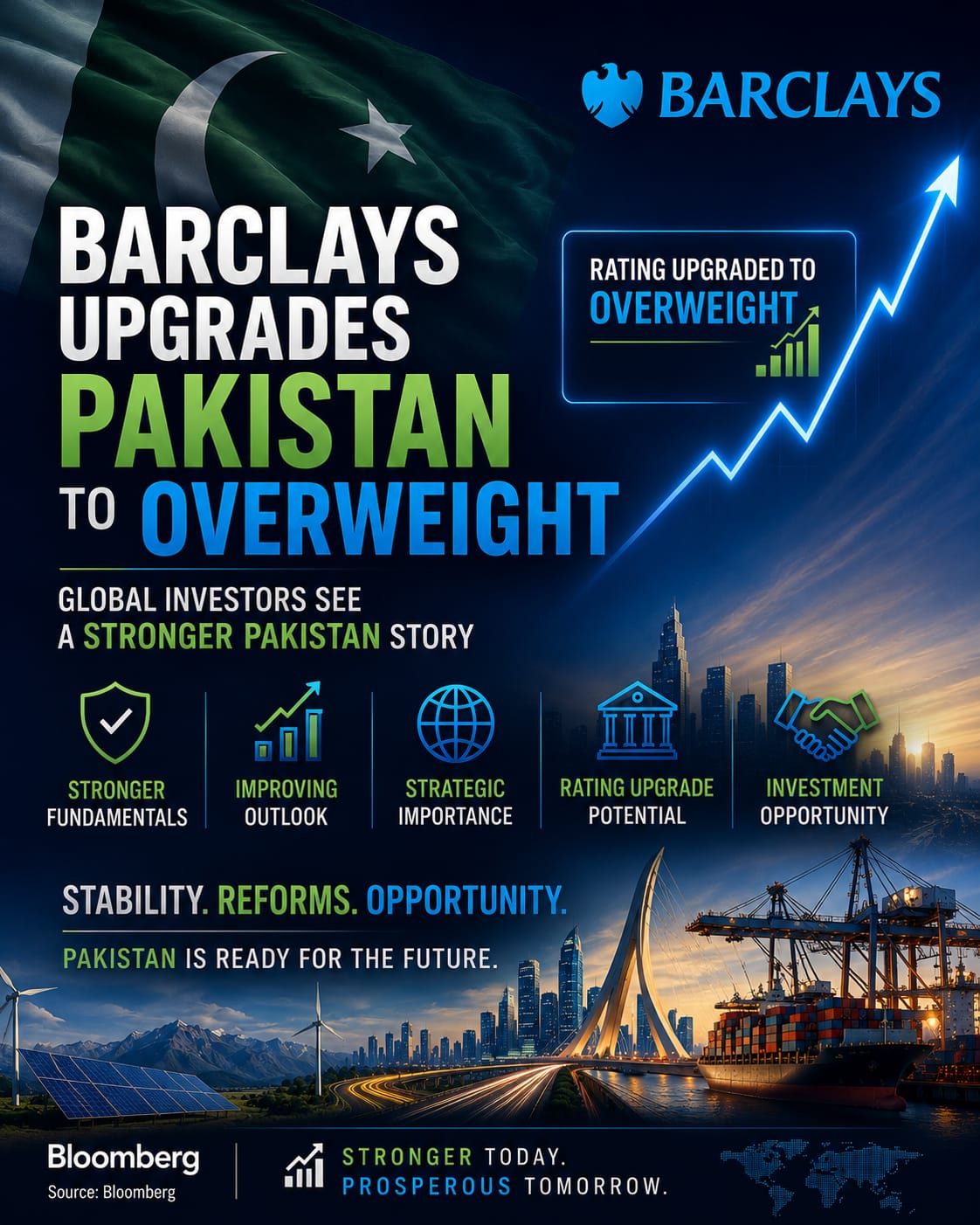
Precision in investment strategy remains paramount for institutional players. Barclays currently recommends that investors focus on specific sovereign dollar bonds to maximize potential returns. Their strategic recommendations include:
- Sovereign Dollar Bonds: Targeted maturities in 2031, 2036, and 2051.
- WAPDA Bonds: Specifically the 2031 issuance by the Water and Power Development Authority.
- Credit Default Swaps: A tactical recommendation to sell five-year Pakistan CDS.
The Translation: Deciphering Sovereign Ratings
In technical terms, an “overweight” rating suggests that a particular asset—in this case, Pakistan sovereign bonds—is expected to outperform its benchmark index. Barclays is essentially telling global investors that the risk-to-reward ratio has tilted in Pakistan’s favor. While official credit rating agency upgrades often experience a lag, the bank anticipates a positive review cycle during the second half of 2026.
The Socio-Economic Impact: From Macro to Micro
This development directly influences the daily lives of Pakistani citizens by reducing the cost of international borrowing. When the state pays less interest on its debt, more fiscal space opens for infrastructure, education, and healthcare. For the average professional or student, this translates to a more stable currency environment and a dampened inflation outlook, providing a clearer baseline for long-term financial planning.
The Forward Path: A Momentum Shift
We view this upgrade as a definitive Momentum Shift rather than a mere stabilization move. The transition from a downgrade to an overweight rating in just one month indicates that the structural reforms currently in place are yielding measurable results. To maintain this trajectory, Pakistan must continue to prioritize precision in fiscal management and strategic energy sector reforms. The data suggests that the architectural foundations of the economy are finally starting to align with global market expectations.








