
Barclays Bank Plc has recently upgraded Pakistan’s sovereign bonds to an “overweight” rating, signaling a calibrated shift in the nation’s economic trajectory. This strategic adjustment reverses a previous downgrade, as global analysts cite improved oil market conditions and a strengthening external buffer as primary catalysts. Consequently, the move establishes a more resilient baseline for Pakistan’s entry into international capital markets.
Strategic Analysis: Pakistan’s Sovereign Bonds and Global Sentiment
The bank’s analysis highlights Pakistan’s remarkable resilience within the current global financial ecosystem. Barclays noted that the national economy continues to demonstrate structural stability, supported by a precisely managed fiscal position and steady foreign exchange reserves. Furthermore, the outlook for moderate growth and controlled inflation suggests that the system is entering a phase of stabilization.
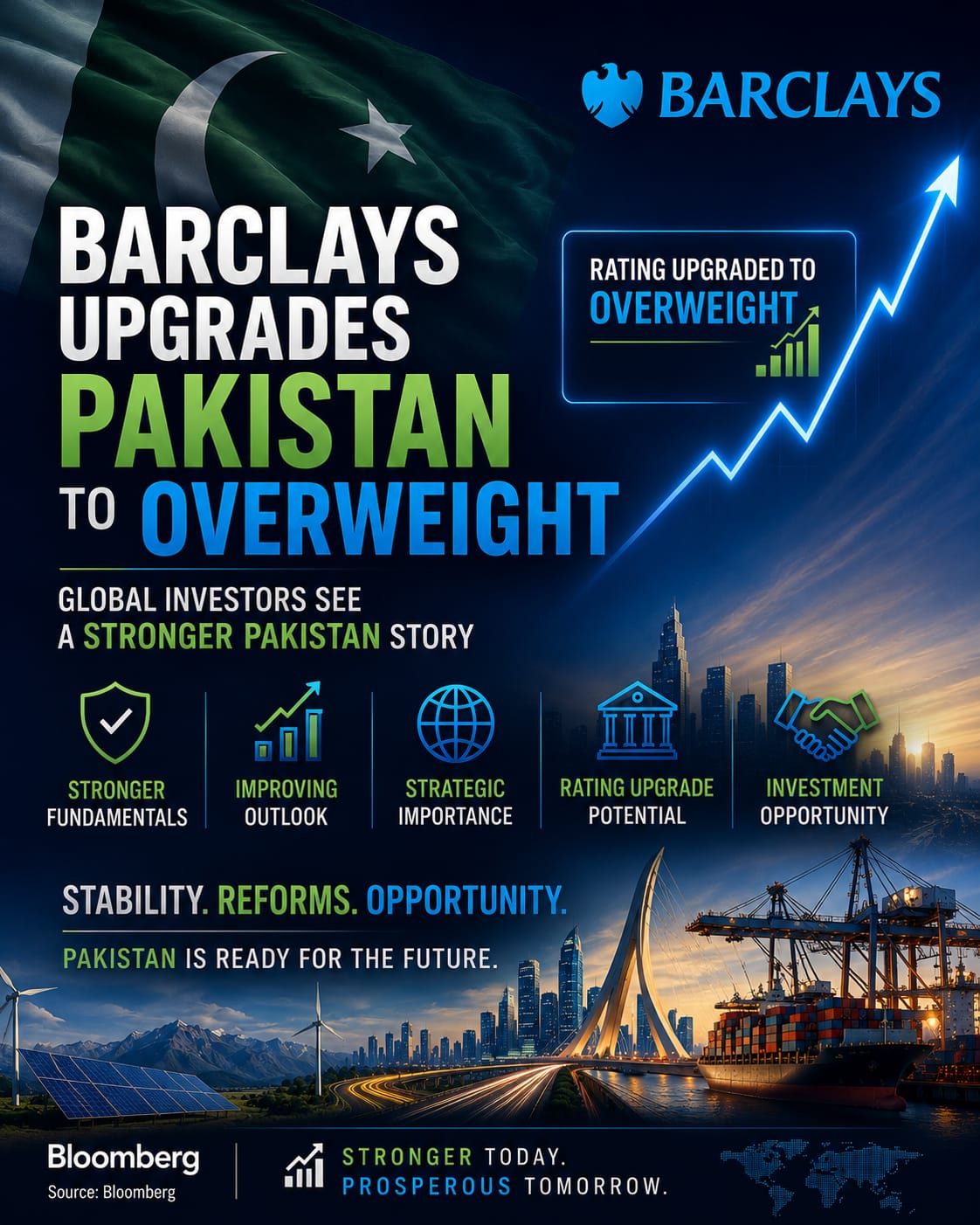
Geopolitical importance remains a significant backstop for Pakistan, maintaining access to critical multilateral and bilateral financing. Barclays specifically recommended the acquisition of Pakistan’s sovereign bonds maturing in 2031, 2036, and 2051. Additionally, they advised investors to sell five-year credit default swaps, indicating a significant reduction in perceived systemic risk.
The Translation (Clear Context)
In technical terms, an “overweight” rating means that Barclays advises investors to hold more of Pakistan’s debt than they previously did. Essentially, the bank is signaling that the risk of default has decreased while the potential for return has reached a precision baseline. This upgrade is a vote of confidence in the country’s ability to manage its debt obligations through strategic financing and improved revenue streams.
The Socio-Economic Impact
How does this macro-economic shift change the daily life of a Pakistani citizen? This upgrade functions as a stabilizer for the Pak Rupee. When international banks view Pakistan’s sovereign bonds favorably, it reduces the cost of borrowing for the state. For households and professionals, this translates into lower inflationary pressure on essential imports and energy, providing a more predictable financial environment for investment and growth.
The “Forward Path” (Opinion)
This development represents a definitive Momentum Shift. While formal credit rating agencies may not issue a full upgrade until late 2026, the market is already pricing in a more stable future. For Pakistan to capitalize on this, the state must ensure that these structural reforms are not just temporary fixes but permanent calibrations. Sustaining this fiscal discipline will be the catalyst for moving from a state of recovery to a state of sustained national advancement.








