
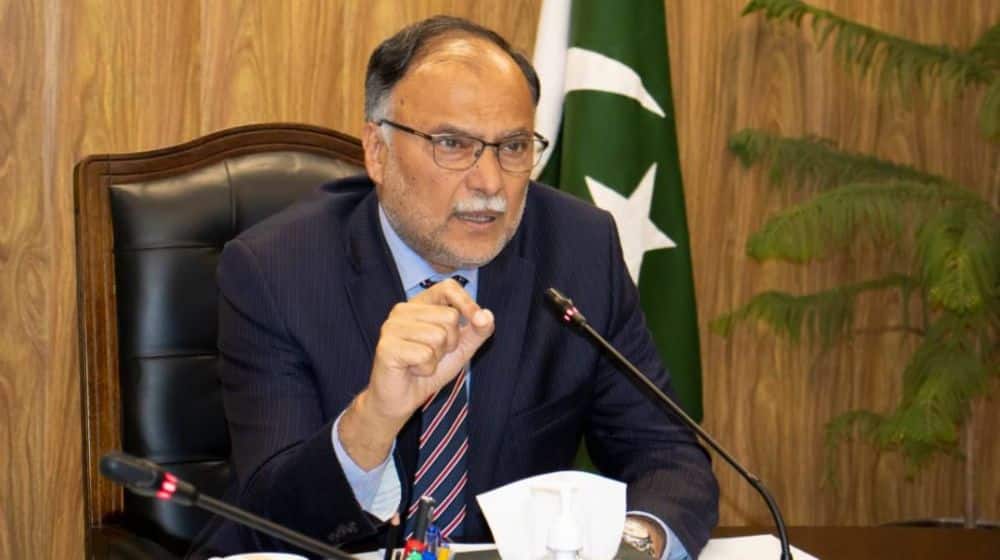
Pakistan’s fiscal architecture is approaching a critical tipping point. Planning Minister Ahsan Iqbal recently revealed that the federal government possesses virtually zero fiscal space for new Pakistan development projects for the FY2026-27 cycle. This structural limitation stems from a massive “throw-forward” liability and a steady decline in national development investment, which has shrunk from 2.6% of GDP to a meager 0.6%.
The Structural Gridlock of Pakistan Development Projects
The Ministry of Planning reported that while various ministries requested nearly Rs. 3 trillion for initiatives, the current resource baseline is insufficient. Consequently, the government must prioritize existing commitments within the Public Sector Development Programme (PSDP). Currently, a staggering Rs. 10 trillion liability hangs over the state, effectively stalling the commencement of fresh infrastructure or social ventures.
Minister Ahsan Iqbal highlighted a significant disparity in resource distribution. While the federal PSDP has remained stagnant at roughly Rs. 1 trillion since 2018, provincial budgets have expanded through the NFC framework. To maintain regional stability, the government has calibrated specific allocations for critical areas:
- Rs. 125 billion for the N-25 highway project in Balochistan.
- Rs. 100 billion for general Balochistan development.
- Rs. 150 billion for AJK, Gilgit-Baltistan, and merged districts of KP.
The Foreign Funding Bottleneck
Foreign-funded initiatives provide a necessary catalyst for growth, yet they require substantial local “rupee cover.” Although the government successfully negotiated a reduction in this requirement from Rs. 832 billion to Rs. 426 billion, the remaining obligations leave only Rs. 165 billion for the entire PSDP portfolio. This precision-focused budgeting means that the 786 ongoing Pakistan development projects will consume nearly all available liquid assets.
The Situation Room Analysis
The Translation
In simple terms, the government is operating in “debt-servicing mode” for infrastructure. Imagine a household that has started ten construction projects but can only afford the interest on the loans taken to build them. This “throw-forward” liability means we are paying for yesterday’s promises with tomorrow’s growth potential. The shift from 2.6% to 0.6% of GDP spending indicates that development is no longer the primary driver of our national economy; debt and administration are.
The Socio-Economic Impact
For the average Pakistani citizen, this fiscal crunch translates to a stagnation in quality of life. Without new Pakistan development projects, the expansion of the national power grid, the construction of modern healthcare facilities, and the upgrading of digital infrastructure will slow down significantly. Urban centers may face increased congestion, while rural areas might see a delay in vital connectivity projects, further widening the economic divide.
The Forward Path: A Stabilization Move
This development represents a Stabilization Move rather than a momentum shift. While the discipline to avoid un-funded populist projects is strategically sound for fiscal health, the lack of new investment acts as a brake on national progress. Pakistan must find a way to pivot from purely state-funded development to private-public partnerships (PPPs) to bypass this federal funding vacuum. Without a structural reform in how we finance our future, the “next generation” faces a baseline of maintenance rather than innovation.








