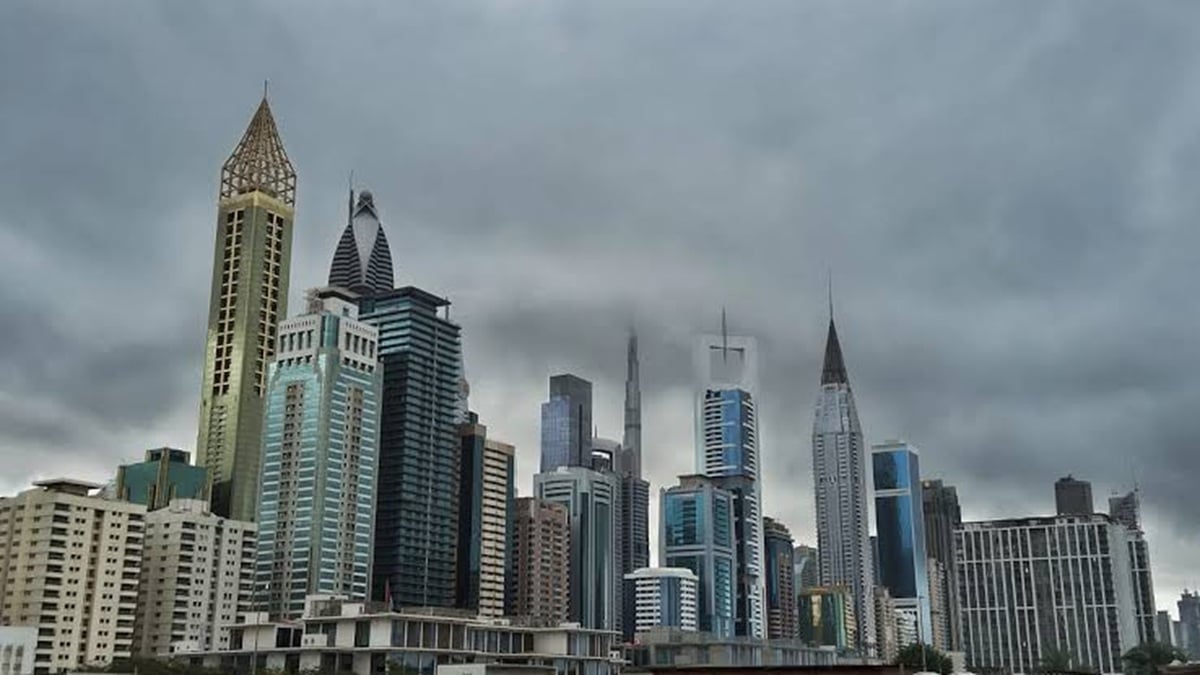
The National Centre of Meteorology (NCM) has issued a precision-based UAE rainfall prediction for a three-day period beginning Tuesday. Consequently, structural changes in the regional weather patterns will introduce heavy rain, dusty winds, and a calibrated temperature decline across the Emirates. This meteorological event requires strategic preparation from residents and logistical operators alike.
Precision Analysis: Understanding the UAE Rainfall Prediction
While Monday begins with generally fair conditions, the atmosphere will transition toward significant instability by Tuesday afternoon. The NCM data indicates that humid conditions will serve as a catalyst for fog and mist in coastal regions. Furthermore, convective clouds will dominate the eastern areas, triggering the first wave of rainfall during the midweek cycle.

By Wednesday, the atmospheric pressure will sustain these rain-bearing clouds, specifically targeting the eastern territories. Notably, Thursday will mark a sharp shift as temperatures drop significantly, particularly in western districts. Strong northwesterly winds, reaching gusts of 40 kph, will likely cause blowing dust and reduced visibility in exposed zones.
The Translation: Breaking Down the Data
In “Next Gen” terms, the NCM is describing a classic convective cycle fueled by rising humidity and shifting pressure gradients. When the NCM mentions “convective clouds,” they refer to moisture-rich air rising rapidly, which acts as a primary engine for heavy, localized downpours. The transition from mist to heavy rain highlights a rapid cooling of the lower atmosphere, requiring a baseline adjustment in daily commuting and outdoor activity schedules.
The Socio-Economic Impact
This weather shift directly influences the daily operations of the Pakistani diaspora and local residents in the UAE. Logistics and delivery sectors will likely face delays due to blowing dust and moderate-to-rough sea conditions in the Arabian Gulf. For households, the temperature drop offers a brief reprieve from cooling costs, but the mist and fog present structural risks to morning transportation efficiency. Students and professionals should anticipate calibrated delays in transit systems during peak rain hours.
The Forward Path: Strategic Opinion
This development represents a Stabilization Move. While heavy rainfall often causes temporary disruptions, these events are essential for the region’s environmental equilibrium. The UAE’s infrastructure is increasingly calibrated to manage such precipitation through advanced drainage and cloud-seeding technologies. Consequently, this period serves as a vital stress test for the nation’s system efficiency and disaster management protocols. Residents should remain disciplined and prioritize precision over speed during their commutes.