

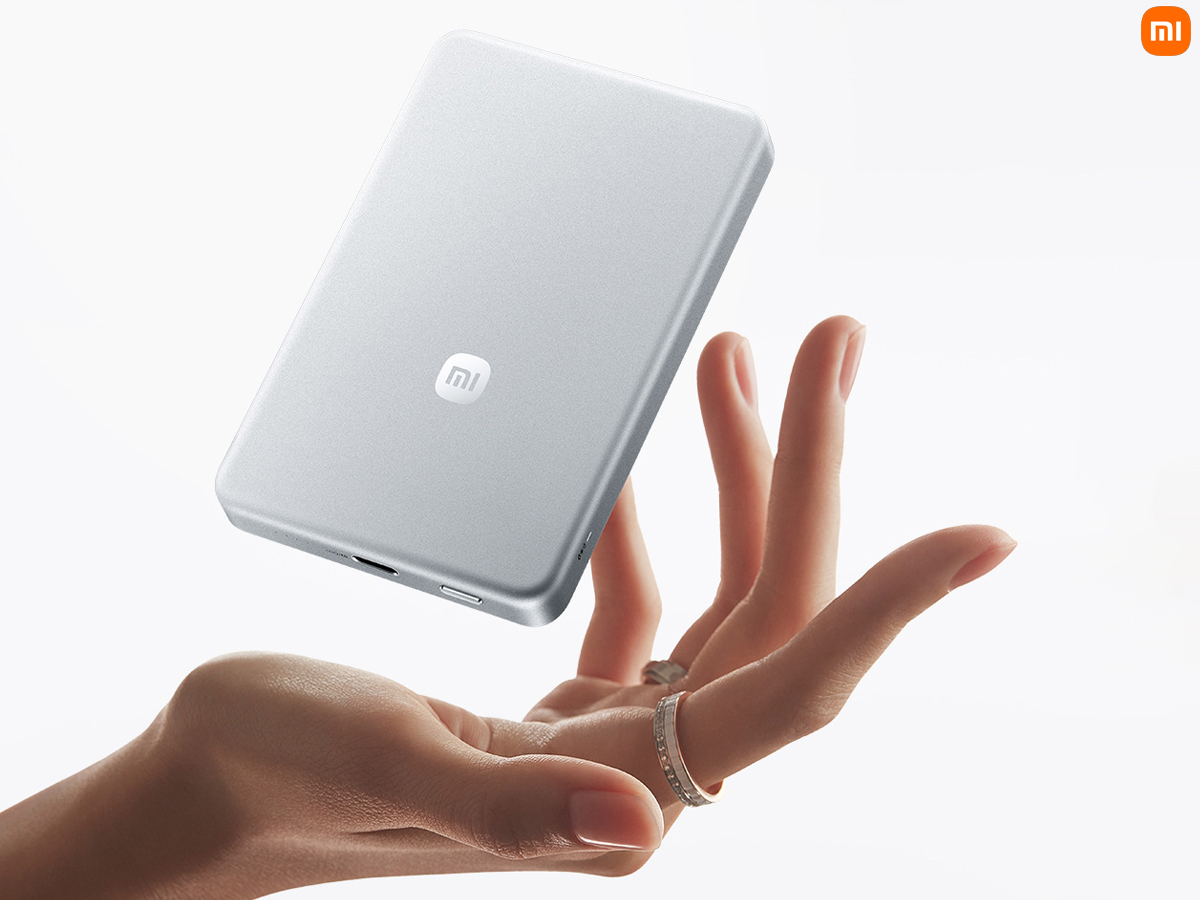
National advancement depends on high-level system efficiency. The calibration of portable energy is no longer a luxury but a structural necessity for the modern mobile workforce. Consequently, Xiaomi has officially launched its latest Xiaomi Magnetic Power Bank, a device engineered to bridge the gap between high-capacity energy storage and extreme physical portability.
Calibrated Design and Structural Engineering
This new power bank focuses on a precision-driven design language. Specifically, the device measures a mere 13.2mm in thickness and weighs only 195 grams. This compact form factor, measuring 102 x 70.5 x 13.2mm, ensures that the unit remains a baseline tool for professionals on the move. Furthermore, the Xiaomi Magnetic Power Bank utilizes two high-density 5,000mAh battery cells to achieve its total 10,000mAh capacity without increasing the footprint.

The Silicon Carbon Battery Catalyst
Xiaomi has integrated new GSR silicon carbon anode battery technology into this unit. This material offers an energy density of up to 840Wh/L and contains 16% silicon content. Historically, these specifications were reserved for flagship-grade smartphone batteries. By applying this technology, Xiaomi significantly reduces the bulk of the power bank while maintaining high-tier energy retention.
Strategic Charging Performance
The device supports a calibrated 20W magnetic wireless charging protocol, ensuring compatibility with both Xiaomi ecosystems and Apple iPhones. For users requiring maximum speed, the wired output reaches 45W. Notably, the system also supports 40W, 30W, and 27W charging variants to match specific device requirements. Users can simultaneously charge two devices through combined wired and wireless outputs, maximizing hardware utility.

Thermal Management and Safety Protocols
To ensure structural integrity during high-load operations, Xiaomi implemented an NTC intelligent temperature control chip. This is augmented by graphene heat dissipation material and thermally conductive silicone. These components work in tandem to prevent overheating. Additionally, the battery cells have successfully passed needle penetration and heavy pressure compression tests, confirming their durability in extreme conditions.
The Situation Room Analysis
The Translation
In simple terms, Xiaomi is using “Silicon Carbon” technology to pack the power of a standard bulky brick into a device as thin as a modern smartphone. The shift from graphite to silicon anodes allows for higher energy density, meaning more “juice” per square millimeter. This represents a precision engineering shift in how we carry portable power.
The Socio-Economic Impact
For the Pakistani student or professional dealing with frequent mobility and a digital-first workflow, this device stabilizes the workday. It removes the “low battery anxiety” that often bottlenecks productivity in urban centers. By providing 45W speeds, it ensures that even during short breaks, users can gain significant charge, effectively increasing the net productive hours of the local workforce.
The Forward Path (Opinion)
This development represents a Momentum Shift. Xiaomi is not just releasing another battery; they are normalizing flagship-grade battery chemistry in affordable peripherals. As this technology scales, we expect to see a total transformation in portable electronics, where weight-to-power ratios are no longer a compromise for the consumer.








