
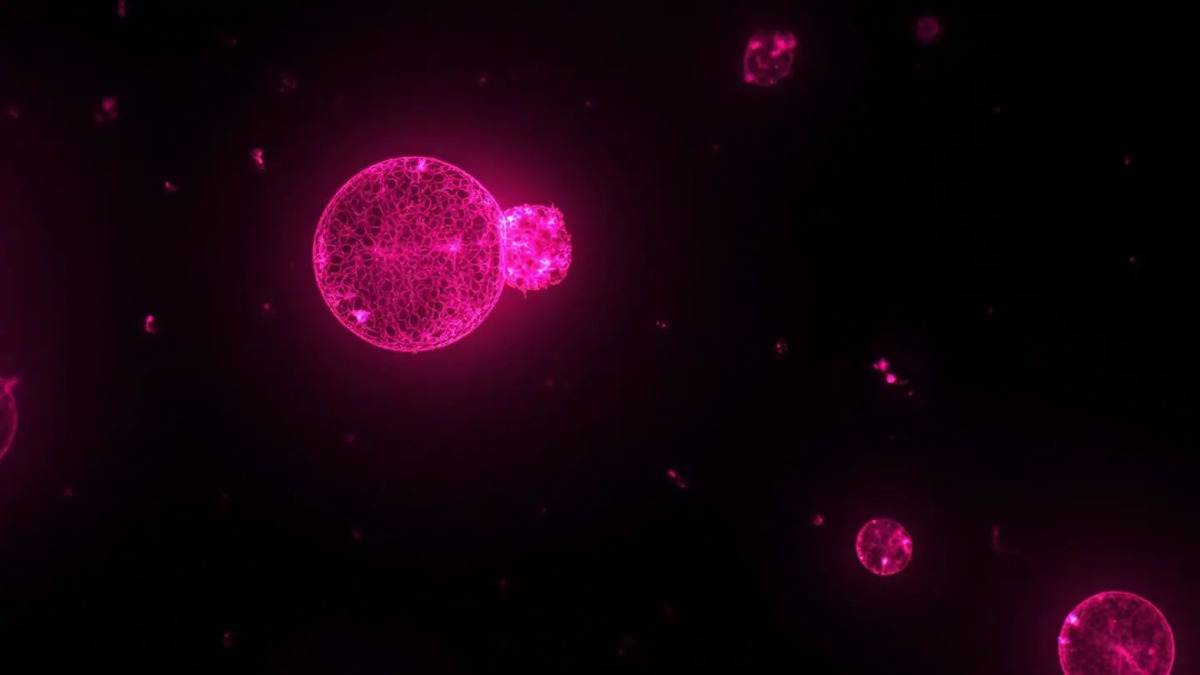
Scientists have engineered the world’s first synthetic cell built entirely from nonliving chemicals, establishing a baseline for programmable life. This prototype, designated “SpudCell,” possesses the calibrated ability to feed, grow, and reproduce, mirroring natural biological systems with structural precision. Consequently, this breakthrough transforms our understanding of cellular mechanics and serves as a strategic catalyst for future medical and environmental innovations.
Architecting Life: The Blueprint of SpudCell
Synthetic biologist Kate Adamala and her team at the University of Minnesota assembled this synthetic cell one molecule at a time. Unlike traditional biological modifications, SpudCell features a fully defined chemical mixture. Furthermore, researchers maintain absolute control over every concentration within the cell. This precision allows for a more rigorous study of genetic engineering compared to the chaotic complexity of natural organisms.
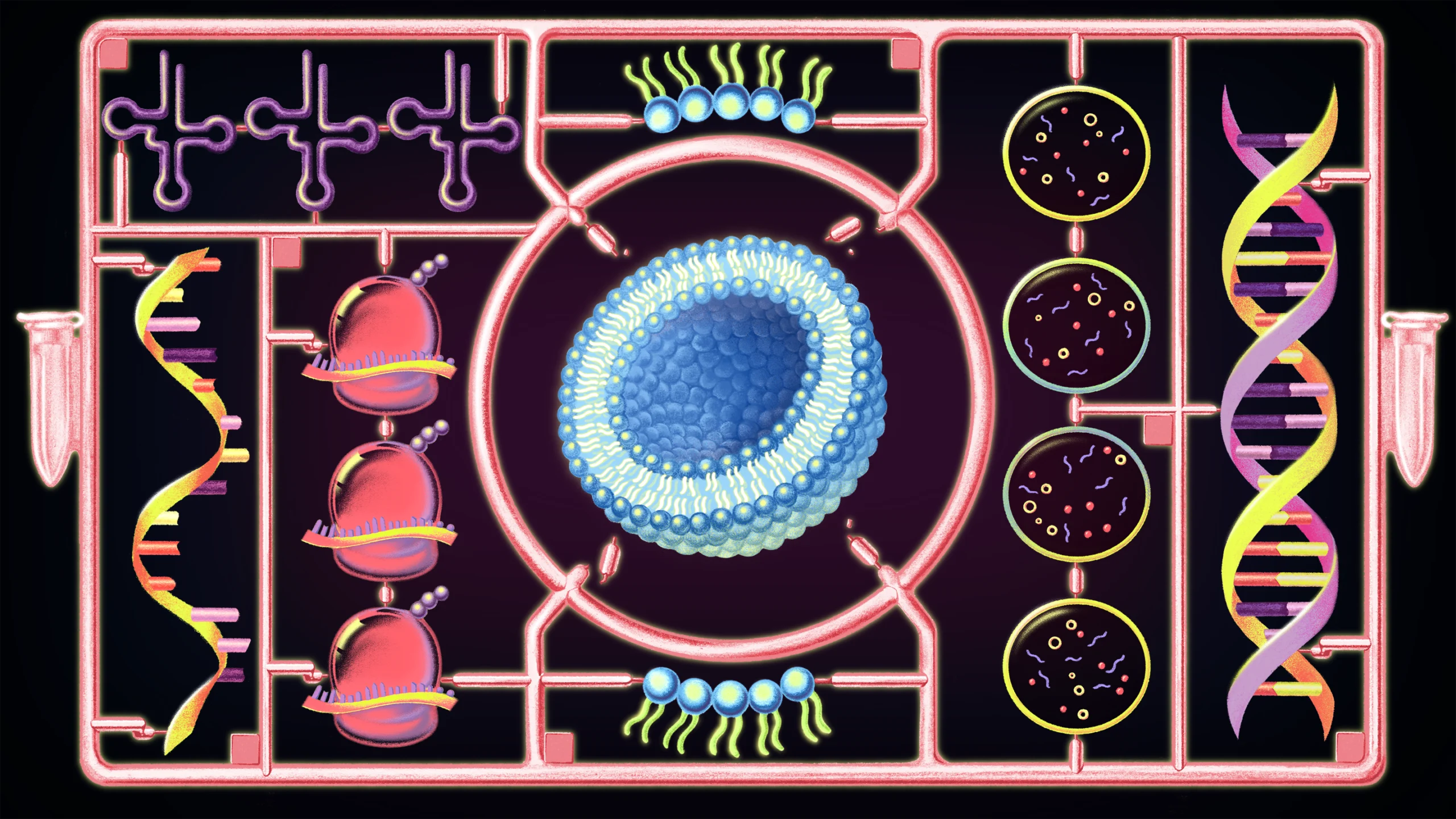
Structurally, SpudCell is far leaner than its biological counterparts. It contains only 150 to 200 distinct molecules, whereas natural cells host billions. Similarly, its genome consists of approximately 90,000 base pairs. In contrast, common bacteria like E. coli possess over 4.6 million base pairs. This minimalist design ensures that every component serves a specific, calibrated function within the system.
Operational Mechanics: Feeding and Reproduction
The synthetic cell can sustain its lifecycle for approximately five generations. Each reproductive cycle requires 12 hours at a constant temperature of 30 degrees Celsius. While this is significantly slower than the 30-minute division of E. coli, the achievement remains historic. SpudCell achieves division without a traditional cytoskeleton; instead, it generates proteins that create membrane pressure until a daughter cell forms.

However, the prototype remains dependent on external support. It cannot yet manufacture its own ribosomes—the machinery required for protein synthesis. Therefore, researchers must provide ribosomes harvested from E. coli to maintain the cell’s metabolic baseline. This structural limitation ensures that the cell cannot survive or evolve independently outside a controlled laboratory environment.
The Situation Room Analysis
The Translation (Clear Context)
In traditional biology, we “edit” life by changing existing DNA. In “bottom-up” synthetic biology, we “build” life from inert chemicals. Think of it as the difference between remodeling an old house and 3D-printing a new one from scratch. This ensures we understand every single “nail” and “beam” in the structure, making the synthetic cell infinitely more predictable and safer to program than natural bacteria.
The Socio-Economic Impact
For the citizens of Pakistan, this technology represents a future of localized, high-precision manufacturing. Programmable cells could lead to decentralized production of life-saving medicines and low-cost cancer treatments. Additionally, deploying these cells for carbon capture could mitigate the severe environmental shifts affecting our agricultural sectors. It moves our industrial baseline from heavy machinery to precision bio-reactors.

The “Forward Path” (Opinion)
This development represents a Momentum Shift. While SpudCell is currently fragile, the transition to an open-source platform through the Biotic organization ensures rapid global iteration. By treating biology like an operating system, we are no longer observing life—we are architecting it. The shift from biological discovery to biological design is now officially underway.
Strategic Safeguards and Open-Source Frontiers
Safety remains a primary structural concern in synthetic biology. Consequently, researchers have integrated safeguards directly into the genome of the synthetic cell. These controls prevent the cell from surviving in the wild. Moreover, the Biotic organization plans to distribute this technology as a shared platform, allowing nonprofit researchers to innovate without the barriers of high licensing fees.
:focal(454x307:455x308)/https://tf-cmsv2-smithsonianmag-media.s3.amazonaws.com/filer_public/af/04/af04437b-8b2a-4766-8abe-f11b209a657c/spudcell.jpg)
In conclusion, the successful creation of SpudCell validates the feasibility of precision-engineered life. Although it currently lacks independent utility, it serves as the foundational architecture for future medical, industrial, and environmental solutions. The transition from organic biological evolution to intentional, synthetic design has reached a critical baseline of success.








