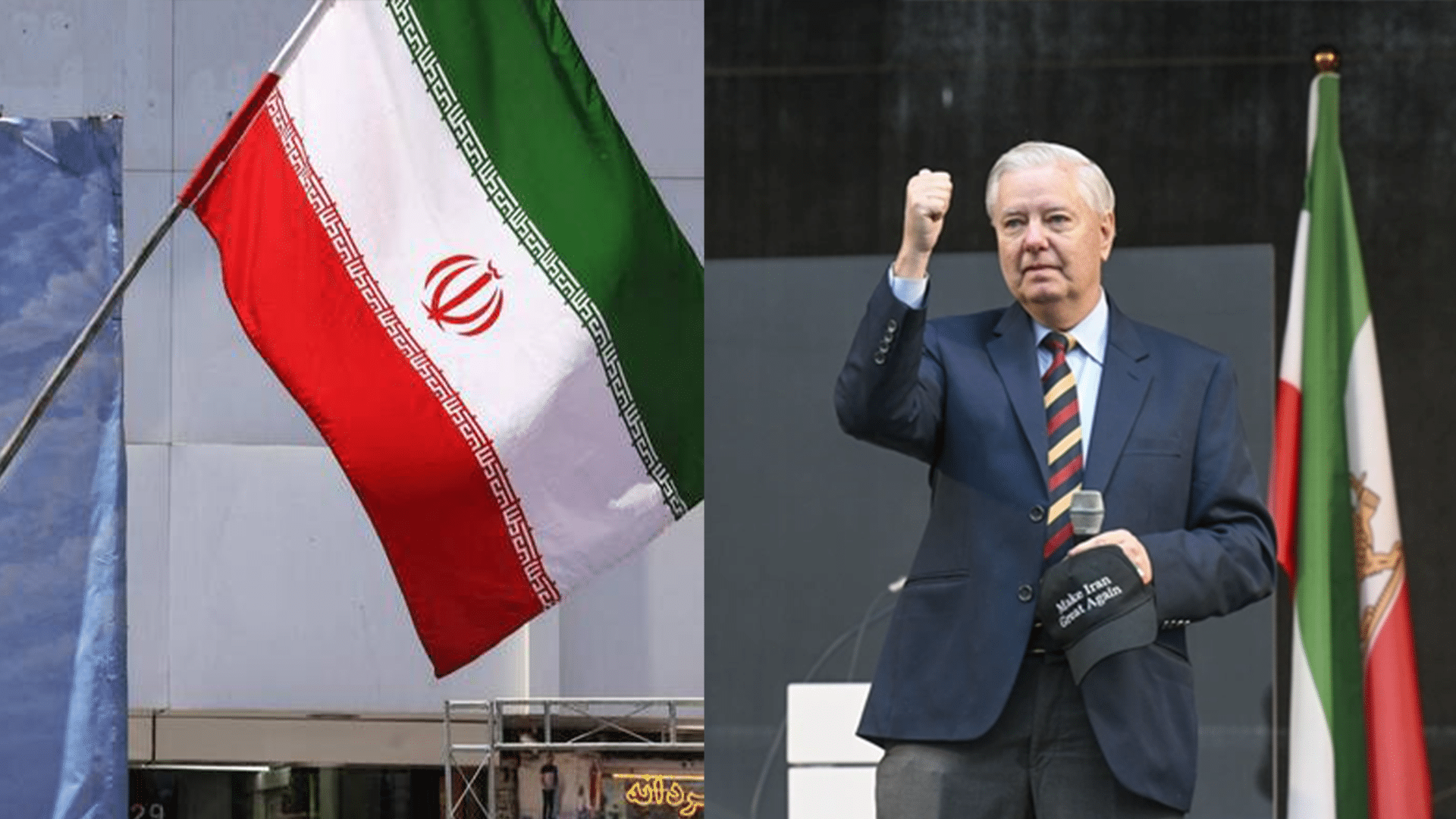
Strategic tensions in the Middle East reached a calibrated peak today as Tehran issued a definitive statement regarding the death of US Senator Lindsey Graham. Iran officials explicitly stated they will not mourn the politician, whom they characterized as a “malicious” catalyst for aggression. This diplomatic baseline underscores the deep structural rift between the two nations following years of adversarial policies. Consequently, the Iranian people view the Senator’s passing through the lens of long-standing systemic conflict.
Analyzing the Lindsey Graham Iran Narrative
Foreign Ministry spokesman Esmaeil Baghaei articulated that Graham’s political philosophy relied heavily on “aggression and intimidation.” Furthermore, Baghaei noted that the Senator maintained a consistently hostile approach toward Iranian sovereignty. He specifically highlighted Graham’s vocal support for recent US-Israel military campaigns against the country. In contrast to standard diplomatic condolences, Iranian state television aired broadcasts where anchors openly welcomed the news of his death at age 71.
The Translation (Clear Context)
The Iranian Foreign Ministry’s rhetoric clarifies a fundamental opposition to Graham’s legislative legacy. By labeling his entire being as “malicious,” Baghaei identifies Graham not just as a political opponent, but as a structural architect of the US-Israel military alignment. This precision in language signals that Tehran views Graham’s “hot-tempered” advocacy as a primary driver of regional instability. Therefore, their refusal to mourn is a calculated rejection of the “tougher policy” Graham championed for decades.
The Socio-Economic Impact
For the average Pakistani citizen, these hardening diplomatic lines often translate into regional market volatility and energy price fluctuations. As Iran remains a neighboring economic entity, heightened US-Iran friction limits the potential for regional trade corridors and stability. Specifically, this friction impacts:
- Energy Security: Delays in regional pipeline projects and energy cooperation.
- Market Stability: Increased volatility in fuel prices affecting urban and rural households.
- Trade Corridors: Strategic uncertainty for professionals engaged in cross-border logistics.
The Forward Path (Opinion)
This development represents a Stabilization Move in Iranian domestic rhetoric rather than a momentum shift. While the language is sharp, it reinforces existing geopolitical baselines rather than introducing new conflict parameters. For Pakistan, maintaining a precision-balanced neutral stance remains the most strategic trajectory to avoid secondary fallout from these persistent adversarial cycles between Tehran and Washington.