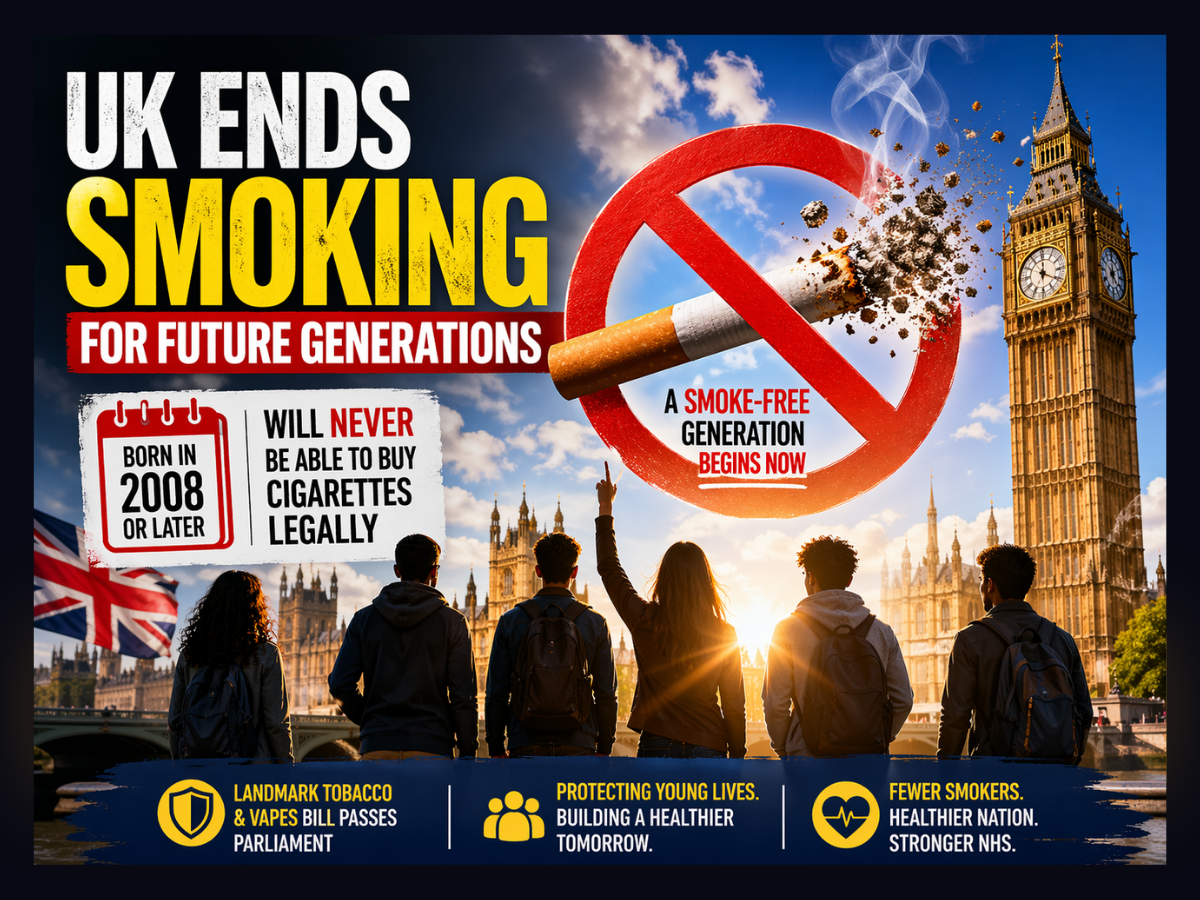
The UK Parliament has ratified a structural healthcare catalyst through the approval of the Tobacco and Vapes Bill. This legislative blueprint establishes a permanent UK smoking ban for individuals born after 2008, effectively creating a rolling age limit that ensures younger generations never legally enter the tobacco market. By prioritizing long-term systemic health over short-term commercial interests, the government aims to eliminate the primary driver of preventable mortality.
The Strategic Implementation of the UK Smoking Ban
Health Secretary Wes Streeting defines this measure as a historic pivot in public health policy. Consequently, the legislation targets anyone born on or after January 1, 2009. Once this bill receives royal assent, it will fundamentally redefine the national health baseline. Furthermore, the government will gain calibrated powers to expand indoor smoking restrictions to outdoor environments, specifically targeting playgrounds and areas adjacent to schools and hospitals. This precision approach ensures that the UK smoking ban protects vulnerable citizens from second-hand environmental hazards.
The Situation Room Analysis
The Translation: Precision Policy Breakdown
The Tobacco and Vapes Bill is not merely a restriction; it is a calibrated legal blockade against nicotine addiction. Instead of a static age limit, the UK is implementing a dynamic exclusion zone. Specifically, the legal age for purchasing tobacco will increase by one year every single year. Therefore, a child who is 15 today will never reach the legal age to purchase cigarettes. Additionally, the bill introduces rigorous controls on vaping aesthetics, including flavor profiles and packaging, to reduce their appeal as a transitionary drug for minors.
The Socio-Economic Impact: Benefits for the Citizenry
The economic vitality of a nation correlates directly with the health of its workforce. Currently, smoking accounts for approximately 75,000 annual deaths in England, placing a massive structural strain on the National Health Service (NHS). Consequently, this ban functions as a fiscal safeguard for the public treasury. For the average Pakistani citizen observing these global shifts, the logic is clear: preventive healthcare is more cost-effective than reactive treatment. This move will likely increase urban air quality and reduce the long-term healthcare costs for households.
The Forward Path: Next Gen Perspective
This development represents a definitive Momentum Shift in global health governance. While New Zealand previously attempted and then repealed similar measures, the UK’s commitment signals a resilient stance against the tobacco industry’s influence. Strategically, this move positions the UK as a pioneer in systemic prevention. As other nations like the Maldives adopt similar frameworks, we are witnessing the emergence of a global standard for nicotine-free development. This is a bold, necessary evolution for any nation seeking to optimize its human capital.
- Target Demographics: Individuals born after January 1, 2009.
- Vaping Regulations: Stricter limits on flavors, packaging, and marketing.
- Extended Zones: Expansion of smoke-free areas to outdoor public hubs.
- Economic Goal: Reduction of the 25% mortality rate linked to tobacco.