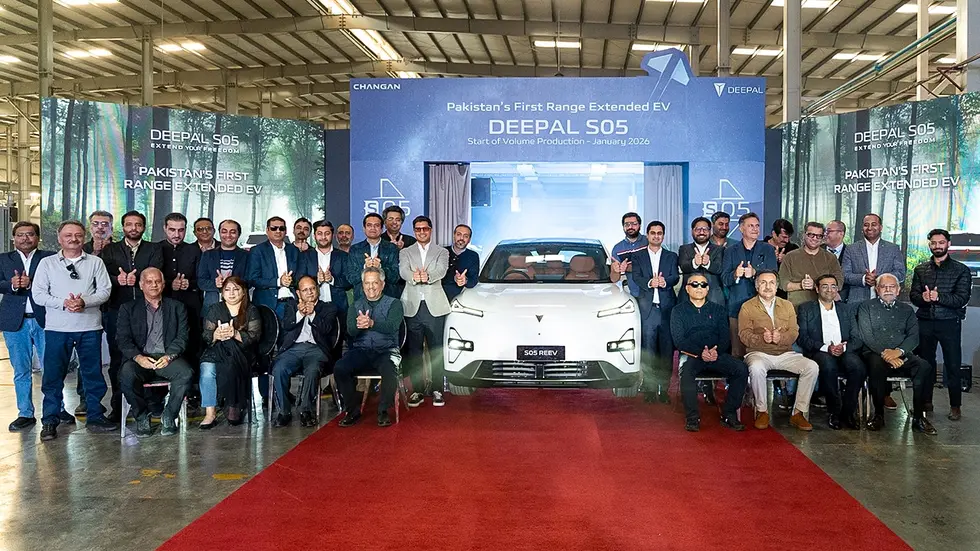
National advancement is intrinsically linked to robust industrial performance and systemic efficiency. Currently, the Pakistan Auto Sector Stability is compromised by structural challenges, including inconsistent policies, underutilized manufacturing capacity, and a reliance on imported used vehicles. This dynamic significantly hinders the sector’s growth trajectory and its pivotal contribution to the nation’s GDP and employment. A recent engagement by Indus Motor Company highlighted these critical issues, underscoring the urgent need for a calibrated, long-term policy framework to restore market confidence and unlock inherent potential.
Strategic Imperative: Calibrating Pakistan’s Automotive Trajectory
The Translation: Decoding Automotive Challenges
Pakistan maintains its unique position among only 16 global nations capable of manufacturing a comprehensive range of vehicles, from passenger cars to heavy-duty buses. Seven of the top ten global automotive brands now operate within its borders, signaling substantial investment potential. However, this inherent capability is undermined by operational inconsistencies. Mr. Ali Asghar Jamali, CEO of Indus Motor Company, precisely illustrated this disparity by comparing Pakistan’s automotive growth—a mere 15% over the past decade—against India’s 60%, the Philippines’ 71%, and Vietnam’s staggering 180%. Consequently, frequent regulatory shifts, high volumes of used car imports, and an intricate taxation structure have collectively stalled progress. This directly impacts Pakistan Auto Sector Stability.
The Socio-Economic Impact: Recalibrating Daily Life
The automotive sector is a core economic engine, contributing approximately 2.8% to Pakistan’s GDP and supporting 1.8 million livelihoods. Yet, the current installed capacity of 600,000 vehicles annually is utilized at only 30%, a sharp decline from 84% in 2017–2018. This underutilization has direct implications for every Pakistani citizen. Fewer locally manufactured vehicles mean higher prices due to import reliance, reduced job opportunities for skilled professionals and laborers, and a stifled ecosystem of ancillary industries. For students aspiring to careers in engineering or manufacturing, these trends dampen future prospects. Furthermore, the national economy experiences a diminished tax base and increased foreign exchange pressure from CBU imports, which jumped from 0.03% to 0.78% between 2023 and 2026. This fundamentally affects household purchasing power and overall economic resilience.
The Forward Path: Strategic Moves for Momentum
A significant “Momentum Shift” has been initiated with the government’s strategic decision to abolish the baggage scheme for used car imports. This move, lauded by industry leaders like Mr. Jamali, is poised to redirect demand towards locally assembled vehicles, thereby stimulating industrial growth and fostering employment. It represents a precise structural adjustment aimed at enhancing domestic production and optimizing idle capacity. For sustained Pakistan Auto Sector Stability, however, a more comprehensive “Stabilization Move” is required: a clear, long-term automotive policy framework for 2026–2031, characterized by minimal amendments. This predictable environment is crucial for protecting existing investments and attracting new foreign direct investment, enabling systematic localization efforts and establishing a resilient industrial foundation.

Indus Motor Company: A Catalyst for Localized Progress
Indus Motor Company’s 35-year tenure in Pakistan exemplifies significant contributions to national development. Their strategic investments total $736 million, with an additional $300 million earmarked for the next five years. Crucially, their localized production efforts have prevented $6.5 billion in foreign exchange outflows and generated $6.3 billion in taxes, demonstrating a profound economic impact. The extensive ecosystem, encompassing dealerships and vendor networks, supports over 55,000 individuals directly and indirectly. This robust operational model, recognized globally as a “Zero Defect Facility” by Toyota Motor Corporate Japan, underscores the potential for high-quality domestic manufacturing.
Furthermore, the company operates Pakistan’s largest sheet metal parts plant and a 6.6-megawatt roof-mounted solar power system, integrating sustainable practices into its industrial footprint. Their corporate social responsibility initiatives, benefiting over 200,000 individuals last year, span vital areas such as education, healthcare, and community development. Consequently, this demonstrates a holistic commitment to national prosperity beyond mere manufacturing. The need for a stable and predictable policy environment, as advocated by Mr. Jamali, is therefore not just an industry demand but a structural necessity for accelerating Pakistan’s industrial evolution.
These strategic initiatives are further supported by a focus on operational excellence, including advanced dealership management and customer retention programs. By implementing sophisticated fixed operations retention strategies and optimizing service department processes, Indus Motor Company exemplifies how precision and efficiency can drive long-term value. This dedication to robust internal systems complements the broader call for external policy stability, ensuring that local manufacturing capabilities are maximized and sustained for national economic benefit.