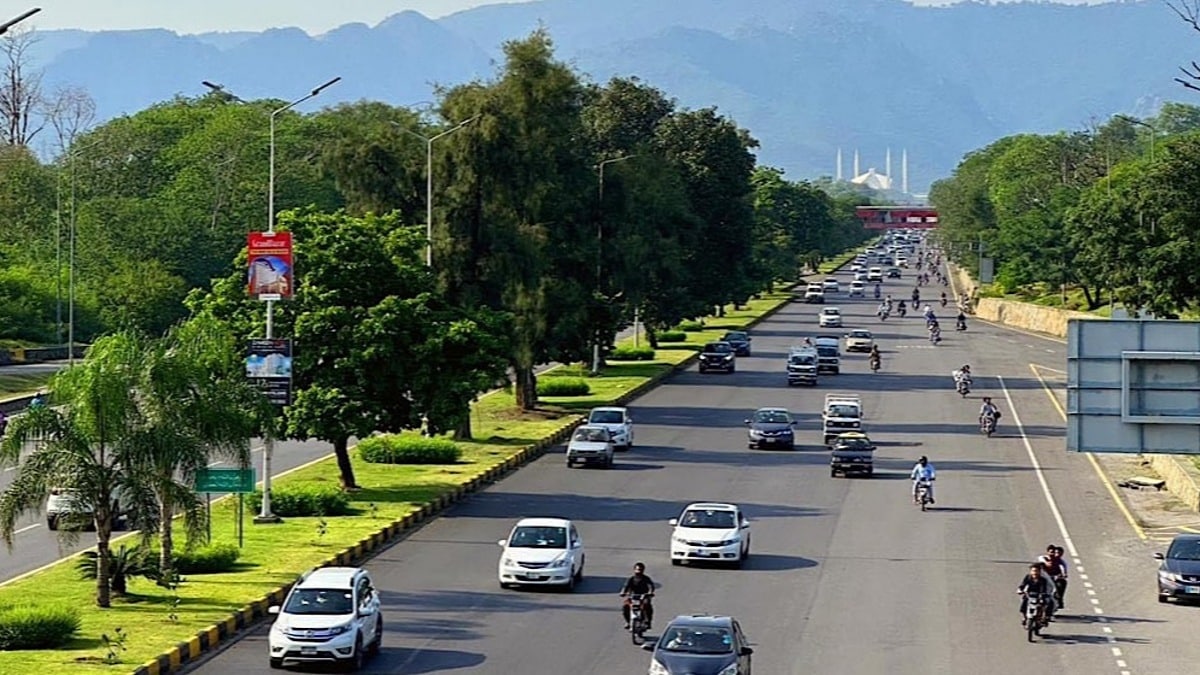
The federal government has calibrated the Islamabad vehicle tax for the 2026-27 fiscal year, transitioning several categories from flat fees to an invoice-value percentage. This structural adjustment aims to synchronize revenue generation with the actual market value of private and commercial assets. Consequently, vehicle owners in the Islamabad Capital Territory (ICT) must prepare for a shift in annual maintenance budgeting as the new Finance Bill redefines the fiscal baseline for motor vehicle registration and upkeep.
Calibrated Rates for Private Motor Vehicles
The new framework segments taxation based on engine displacement and the documented invoice value of the vehicle. This precision-driven approach ensures that luxury assets contribute proportionally to the national exchequer. The specific breakdown includes:
- Under 1000cc: A standardized flat token tax of Rs. 20,000.
- 1001cc to 2000cc: Owners will pay 0.25 percent of the vehicle’s invoice value.
- 2001cc and Above: These high-capacity vehicles will incur a tax of 0.35 percent of the invoice value.
By tying the Islamabad vehicle tax to the invoice value, the government creates a dynamic revenue stream that adjusts with inflation and market price hikes. This shift marks a departure from legacy flat-rate systems that often failed to account for the actual economic value of modern luxury cars.
Revised Taxation for Commercial Cabs and Public Transport
Furthermore, the Finance Bill 2026-27 updates the fiscal obligations for commercial motor cabs. The state has designed these rates to maintain commercial viability while ensuring systemic efficiency. Public transport operators must align their operational costs with the following revised annual fees:
- Cabs up to 1000cc: Rs. 600
- Cabs 1001cc to 1300cc: Rs. 1,000
- Cabs 1301cc to 1500cc: Rs. 1,700
- Cabs above 2500cc: Rs. 4,200
The Situation Room Analysis
The Translation (Clear Context)
The government is pivoting from “fixed” taxation to “ad valorem” (value-based) taxation. Previously, two cars with the same engine size paid the same tax regardless of their price. Now, the Islamabad vehicle tax logic dictates that a premium 1500cc sedan with a higher invoice price will contribute more than a budget-friendly 1500cc variant. This aligns the tax burden with the owner’s documented purchasing power.
The Socio-Economic Impact
For the average Pakistani citizen in ICT, the cost of car ownership is rising. While the flat rate for small cars (under 1000cc) provides a predictable baseline, the invoice-based tax for mid-range vehicles creates a variable cost that may discourage the purchase of high-invoice imported models. Professional transporters may see a marginal increase in overhead, which could eventually translate to slightly higher fare structures for commuters.
The Forward Path (Opinion)
This development represents a Momentum Shift in Pakistan’s fiscal policy. By integrating invoice values into the tax calculation, the FBR is building a more sophisticated, data-driven revenue model. While the increased cost is a short-term hurdle for consumers, the structural integrity of a value-based tax system is a necessary evolution for national economic stabilization. Precision in taxation is the catalyst for a more equitable fiscal future.