
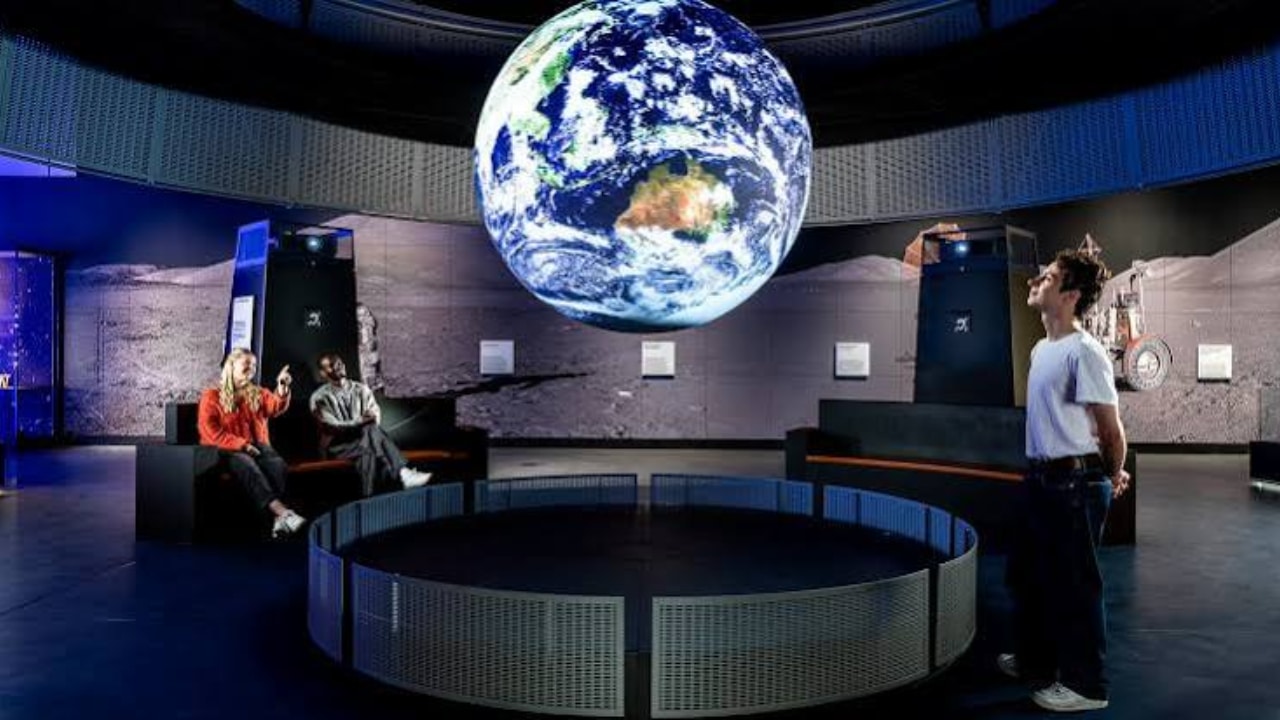
The recent inauguration of the Space Gallery PMNH represents a calibrated effort to align Pakistan’s educational infrastructure with global scientific standards. Established through a strategic collaboration between the Pakistan Space and Upper Atmosphere Research Commission (SUPARCO) and the Pakistan Science Foundation (PSF), this facility acts as a catalyst for STEM-driven curiosity. Consequently, the gallery serves as a precision-engineered environment where students and researchers can engage with the complexities of orbital mechanics and satellite technology.
Engineering the Future: Inside the Space Gallery PMNH
Federal Secretary for the Ministry of Science and Technology, Shahid Iqbal Baloch, officially opened the doors to this modern facility. The gallery functions as a structural bridge between theoretical science and practical application. Furthermore, the installation includes a variety of sophisticated assets designed to stimulate innovation among the youth:
- Satellite Systems: Detailed models explaining Pakistan’s orbital assets.
- Rocket Technology: Insights into the propulsion systems driving national space missions.
- Interactive Displays: Digital interfaces that simulate space exploration environments.
- Resource Management Exhibits: Data showing how space tech monitors local agriculture and weather patterns.

The Translation: Making Space Science Accessible
The Space Gallery PMNH effectively decodes complex aerospace engineering into accessible learning modules. While “space science” often feels distant, this gallery demonstrates how SUPARCO’s work directly influences terrestrial systems. Specifically, it explains the logic of satellite-based navigation and the strategic necessity of environmental monitoring. This clarity ensures that visitors understand the technical precision required for sustainable progress in a technology-driven global landscape.

The Socio-Economic Impact: Space Tech as a National Utility
How does the Space Gallery PMNH impact the daily life of a Pakistani citizen? The facility highlights the role of satellites in disaster management, agriculture, and resource management. For the average household, this technology facilitates accurate weather forecasting and improved communication networks. For students in urban and rural Pakistan, the gallery provides a baseline for future careers in high-tech industries, potentially shifting the national labor force toward high-value scientific research.
The Forward Path: A Momentum Shift in National Science
This development represents a significant Momentum Shift for Pakistan’s scientific community. By investing in the Space Gallery PMNH, the government is moving beyond passive maintenance and toward an active, structural pursuit of innovation. While the gallery is a recreational success, its true value lies in its role as a strategic hub for academic inspiration. Ultimately, this move signals a calibrated commitment to ensuring Pakistan remains competitive in the emerging space economy.








