
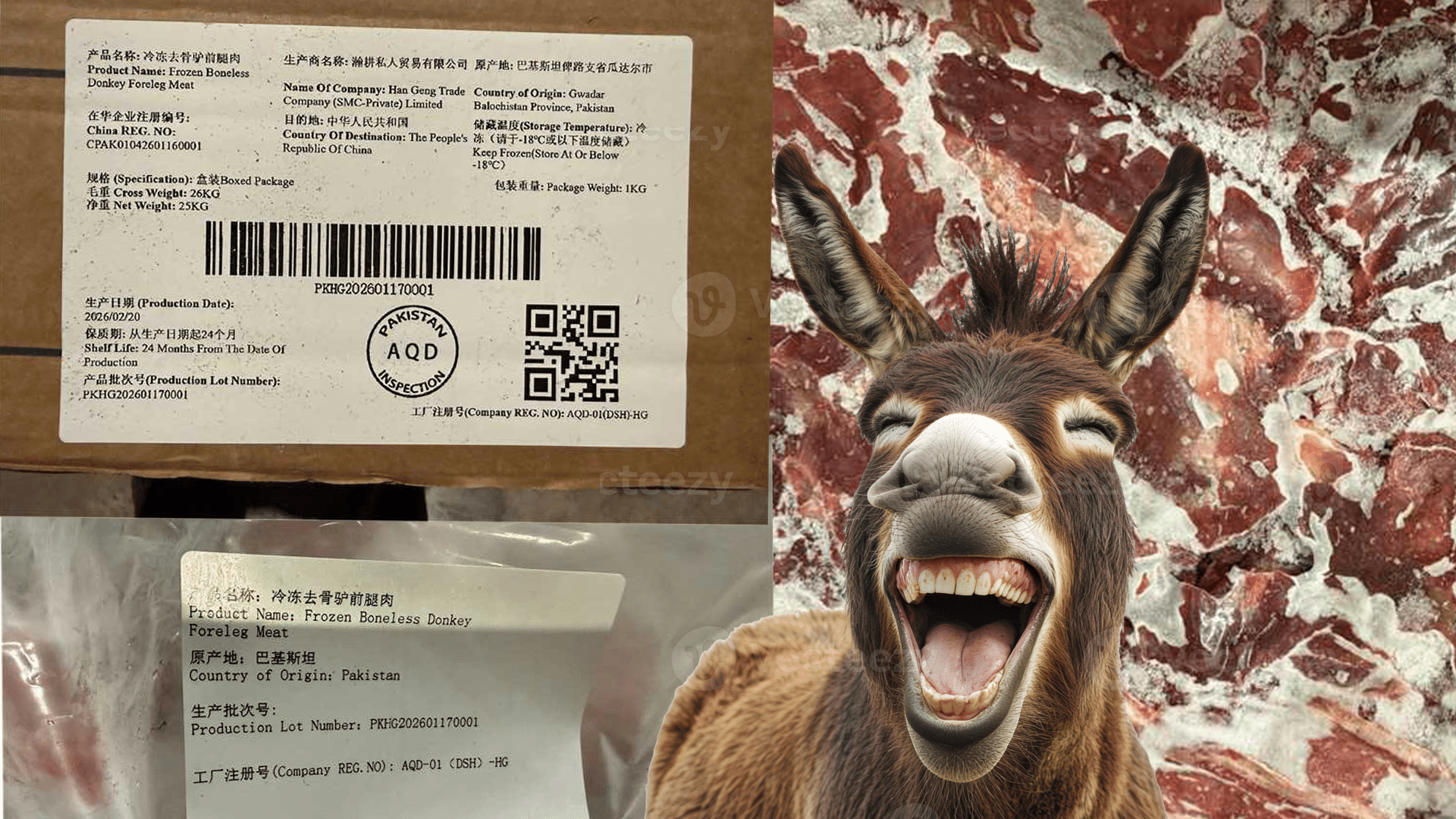
National advancement requires the calibrated diversification of export portfolios to leverage untapped global demand. Pakistan has officially initiated its inaugural donkey meat exports to China, marking a structural milestone for the Gwadar Free Zone and CPEC Phase 2. This strategic shipment, processed by Hengeng Trading Enterprise, signifies the integration of Pakistan’s livestock sector into the high-value Chinese medicinal and food markets.
Strategic Scaling: The Value of Donkey Meat Exports
The shipment originated from a precision slaughterhouse in the Gwadar North Free Zone and cleared customs at Tianjin Port. This development follows years of regulatory calibration. Consequently, Pakistan and China finalized the necessary export protocols in 2024. The Ministry of National Food Security and the CPEC Authority facilitated this transition, amending export policies to allow shipments from approved facilities.
Hengeng Trading Enterprise, a key Chinese investor, established a $50 million facility dedicated to processing these assets. This investment specifically targets the production of donkey hides, which are vital for Ejiao—a traditional Chinese medicinal product. Furthermore, the project aligns with the broader mission to promote value-added livestock exports under the second phase of the China-Pakistan Economic Corridor.
The Translation: Contextualizing the Trade
While unconventional to some, the “donkey economy” represents a multi-billion dollar global sector with high precision requirements. China remains a primary consumer, utilizing hides for medicinal catalysts and meat for specialized food markets. By establishing a localized, high-tech slaughterhouse, Pakistan transforms raw livestock into a calibrated export commodity, moving beyond traditional agricultural exports.
Socio-Economic Impact: Local Gains
How does this trade shift influence the daily lives of Pakistanis? The impacts are primarily structural and economic:
- Employment Catalyst: The $50 million investment in Gwadar creates specialized jobs for local professionals and technicians.
- Livestock Baseline: Rural farmers gain access to a formalized supply chain, increasing the baseline value of their livestock.
- Foreign Investment: The successful entry into the Chinese market serves as a proof-of-concept for other international agricultural investors.
The Forward Path: Momentum Shift
This development represents a Momentum Shift for Pakistan’s export strategy. It validates the utility of the Gwadar Free Zone as a functional production engine rather than just a transit point. To maintain this trajectory, Pakistan must continue to calibrate its quarantine standards and slaughterhouse protocols. This move effectively expands the digital and agricultural frontier, proving that strategic trade diversification is the primary catalyst for national economic stability.








