
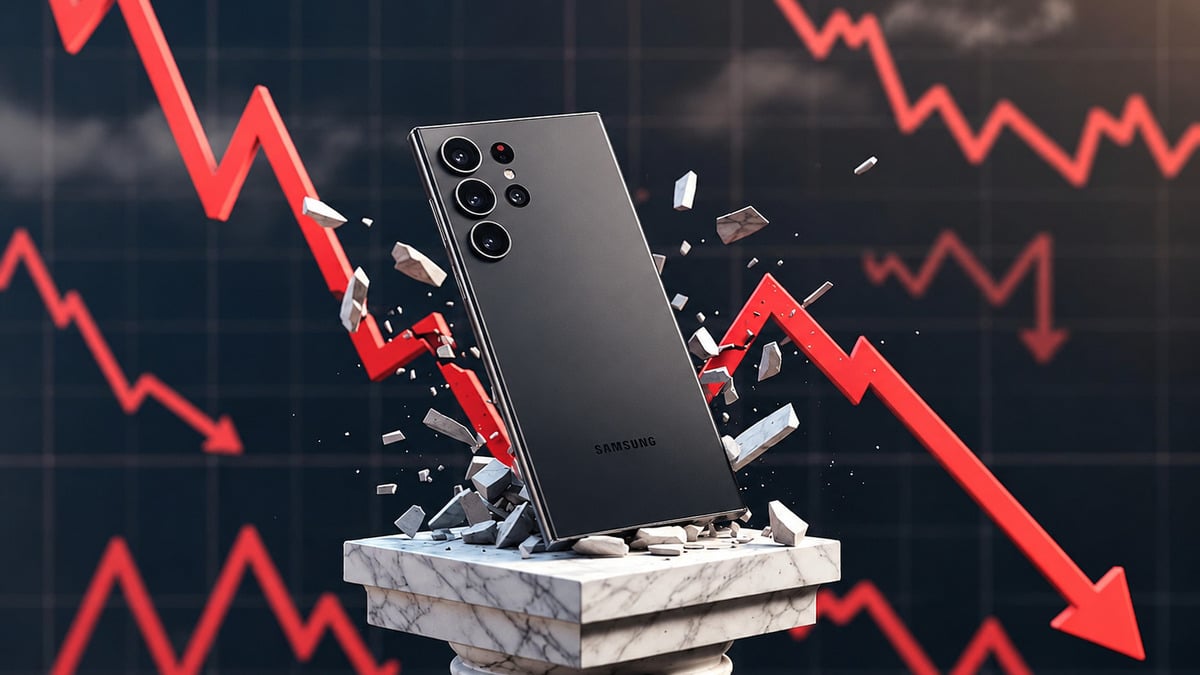
The global tech architecture is shifting as the Samsung mobile business prepares for a potential first-ever operational loss in Q2 2026. While the parent corporation expects record-breaking total profits, the MX division faces a calibrated deficit between $364 million and $729 million. This divergence highlights a precision crisis within the company’s internal supply chain and global market positioning.
The Cost Calibration of the Samsung Mobile Business
Precision data from industry analysts suggests that Samsung’s overall operating profit may hit KRW 89.4 trillion. This 19-fold jump stems primarily from the semiconductor division’s dominance. However, the Samsung mobile business now suffers from the very demand it helps create. Rising prices for DRAM and NAND flash memory have increased production costs significantly, creating a structural bottleneck for smartphone profitability.

Analyzing the Component Inflation Surge
The financial pressure on mobile devices is quantifiable and severe. DRAM now accounts for 23% of premium smartphone component costs, a sharp increase from 14% just one year ago. Consequently, even strong sales of the Galaxy S26 series cannot fully offset these rising expenses. Analysts believe that these higher component costs were fully reflected in the Q2 results, weakening the strategic efficiency of the MX division.
- DRAM Costs: Increased from 14% to 23% of total bill of materials.
- Memory Boom: High AI demand is driving up prices for NAND and DRAM.
- Production Pressure: Efficiency measures are now a baseline requirement for survival.
Historical Context: Surviving the Note 7 Baseline
To understand the gravity of this shift, one must look at the 2016 Galaxy Note 7 battery crisis. Even during that catastrophic product failure, the mobile division managed to maintain a small operating profit. Therefore, a projected loss in 2026 suggests that component inflation represents a more dangerous structural threat than isolated hardware malfunctions. The current situation demands a tactical re-evaluation of how Samsung balances its internal chip sales against its hardware manufacturing.
The Situation Room: Strategic Breakdown
The Translation (Clear Context)
Samsung is currently a victim of its own success. The semiconductor arm is charging higher prices for the essential “brains” and “memory” of smartphones to capitalize on the AI boom. While this makes the corporation billions, it forces the Samsung mobile business to buy parts at inflated rates. Essentially, the company’s left hand is charging the right hand more than the market can bear, leading to an internal profitability vacuum.
The Socio-Economic Impact
For the average Pakistani consumer, this shift signals a transition toward more expensive technology. As global leaders like Samsung face thin margins, they are less likely to offer aggressive pricing on mid-range or budget devices. Students and professionals in Pakistan may see a baseline price hike in reliable tech, making digital inclusion more expensive as manufacturers pass these component costs down to the end-user.

The Forward Path (Opinion)
This development represents a Momentum Shift. Samsung cannot rely on its traditional hardware-first strategy if it remains vulnerable to its own supply chain fluctuations. We expect a strategic pivot toward service-based revenue and software ecosystems to stabilize the Samsung mobile business. If the company fails to calibrate its internal pricing model, it risks losing market share to competitors with more diverse or vertically integrated supply alternatives.








