
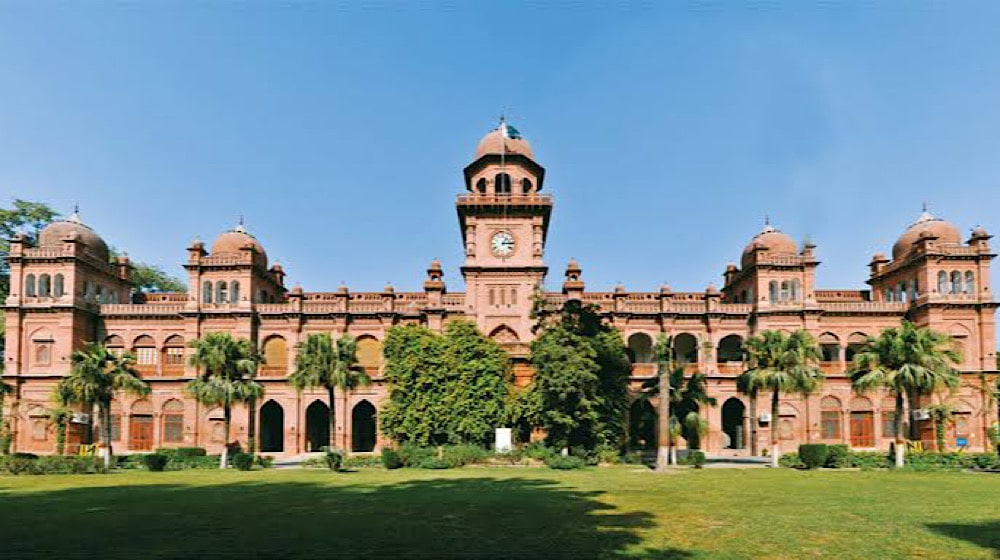
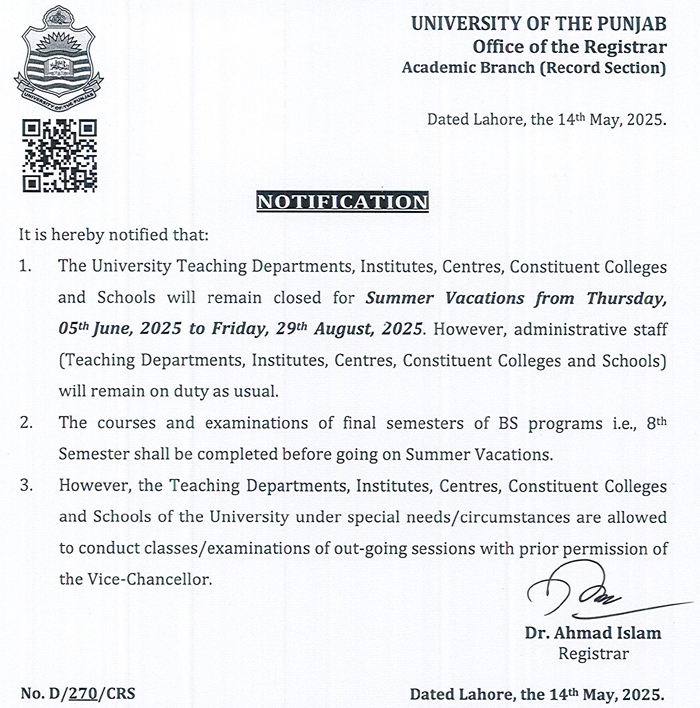
The University of the Punjab has strategically calibrated its academic calendar by announcing the official Punjab University summer vacations for 2026, effective from June 1. This systemic pause follows a formal notification from the Registrar’s Office, establishing a definitive baseline for the upcoming seasonal break that concludes on August 28, 2026. Consequently, all teaching departments, institutes, centers, and constituent schools will pause operations to optimize institutional efficiency during the peak heat months.
Strategic Implementation of Punjab University Summer Vacations
According to the official directive, academic departments will remain closed throughout the designated three-month window. In contrast, administrative staff must continue their duties to ensure structural continuity and baseline operations. Furthermore, the university administration has mandated that all departments complete final semester BS program courses and examinations, specifically eighth-semester classes, before the summer hiatus begins.
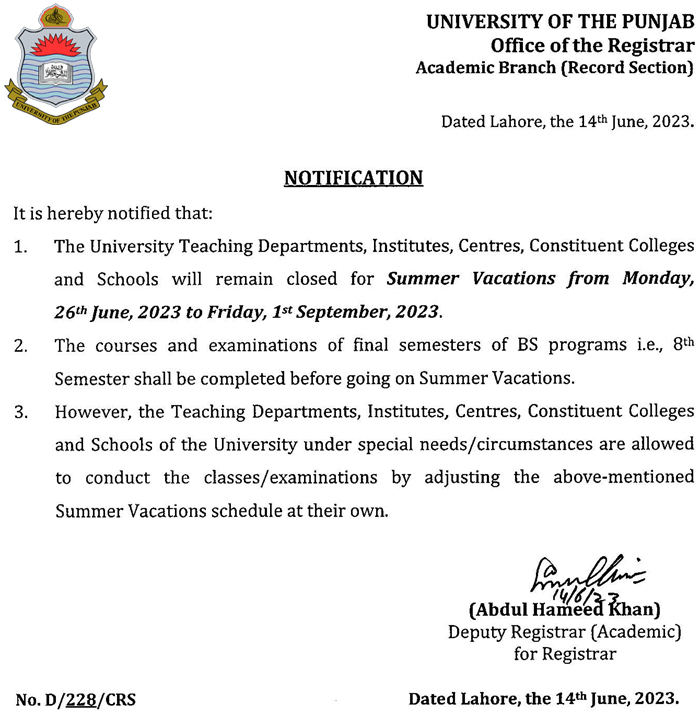
The Academic Branch issued this notification on May 18, distributing the mandate to faculty deans and department heads for immediate implementation. For sessions with special academic requirements, the Vice Chancellor retains the authority to approve continued classes or examinations during the holidays, ensuring that outgoing cohorts meet their degree completion catalysts without delay.
The Situation Room Analysis
The Translation (Clear Context)
This announcement is not merely a break but a structural reset of the university’s operational capacity. By aligning the Punjab University summer vacations with the peak of the summer season, the institution mitigates the load on power grids and urban infrastructure. The directive to complete BS final exams before June 1 is a precision move designed to prevent academic backlog, allowing graduates to enter the job market or pursue higher research without seasonal delays.
The Socio-Economic Impact
The decision directly impacts the daily lives of thousands of students and faculty members across Pakistan. For urban households, this synchronized break allows for planned mobility and reduced household expenditure on commute and campus-related costs. For graduating professionals, the expedited exam schedule serves as a catalyst for earlier career entry, potentially increasing the domestic productivity baseline by three months compared to delayed academic cycles.
The “Forward Path” (Opinion)
This development represents a Momentum Shift toward better system efficiency. By enforcing rigorous deadlines for final semester completion before the break, Punjab University is prioritizing graduate output. This disciplined approach ensures that the academic engine remains calibrated with the fiscal and professional year, rather than drifting into a state of maintenance. It is a strategic move that balances well-being with academic rigor.








