
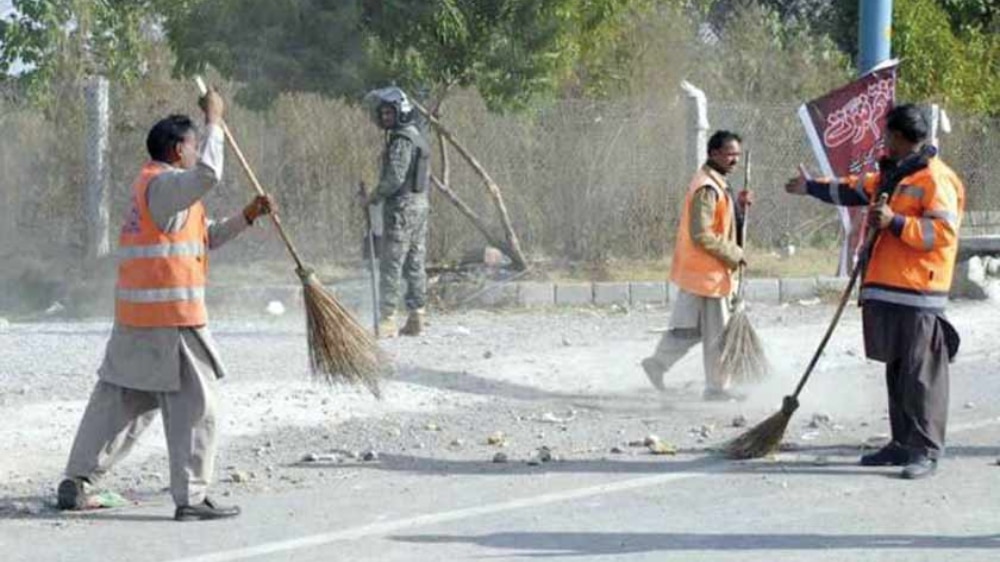
The Punjab government achieved a historic Punjab cleanliness record during Eid-ul-Azha, exceeding its operational targets by 103%. This milestone, driven by the “Suthra Punjab” initiative, utilized drone technology and digital monitoring to manage 120,000 tons of waste across the province. Consequently, the administration has established a new baseline for large-scale public service operations in Pakistan.
Advanced Monitoring for a Punjab Cleanliness Record
Punjab Chief Minister Maryam Nawaz Sharif personally calibrated the operation through a digital command center. Meanwhile, the Punjab Safe Cities Authority deployed drone cameras to identify animal waste in narrow urban corridors. These drones enabled sanitation teams to execute precision removals in densely populated areas. Furthermore, teams covered 1.881 million square kilometers, ensuring no sector remained neglected during the three-day operation.
Operational Scale and Logistics
- Waste Management: Authorities collected and transferred over 120,000 tons of waste to designated points.
- Infrastructure: Sanitation crews washed more than 1,000 kilometers of roads using rose-infused water.
- Site Coverage: Teams completed thorough cleanup operations at 1,200 sacrificial sites province-wide.
The “Situation Room” Analysis
The Translation (Clear Context)
Instead of traditional manual oversight, the government implemented a “command and control” architecture. By integrating the Punjab Safe Cities Authority’s drone network, officials calibrated real-time responses to waste accumulation. This transition from reactive cleaning to data-verified logistics represents a structural optimization of public resources. Effectively, 103% efficiency indicates that the system outperformed its own projected capacity through better coordination.
The Socio-Economic Impact
This operational success directly improves the daily lives of citizens by mitigating public health risks. Rapid waste removal prevents the catalyst for water-borne and vector-borne diseases often seen after Eid. Consequently, the systematic washing of roads preserves urban hygiene and social dignity for both urban and rural households. For the Pakistani professional, this demonstrates that state infrastructure can indeed operate with private-sector precision.
The Forward Path (Opinion)
This development represents a significant Momentum Shift. By transitioning from seasonal cleanup to a tech-integrated, proactively monitored system, Punjab has raised the bar for civic governance. This shift suggests that precision technology, when applied to public services, can successfully bridge historical efficiency gaps. We view this as a catalyst for future digital governance across all provincial sectors.








