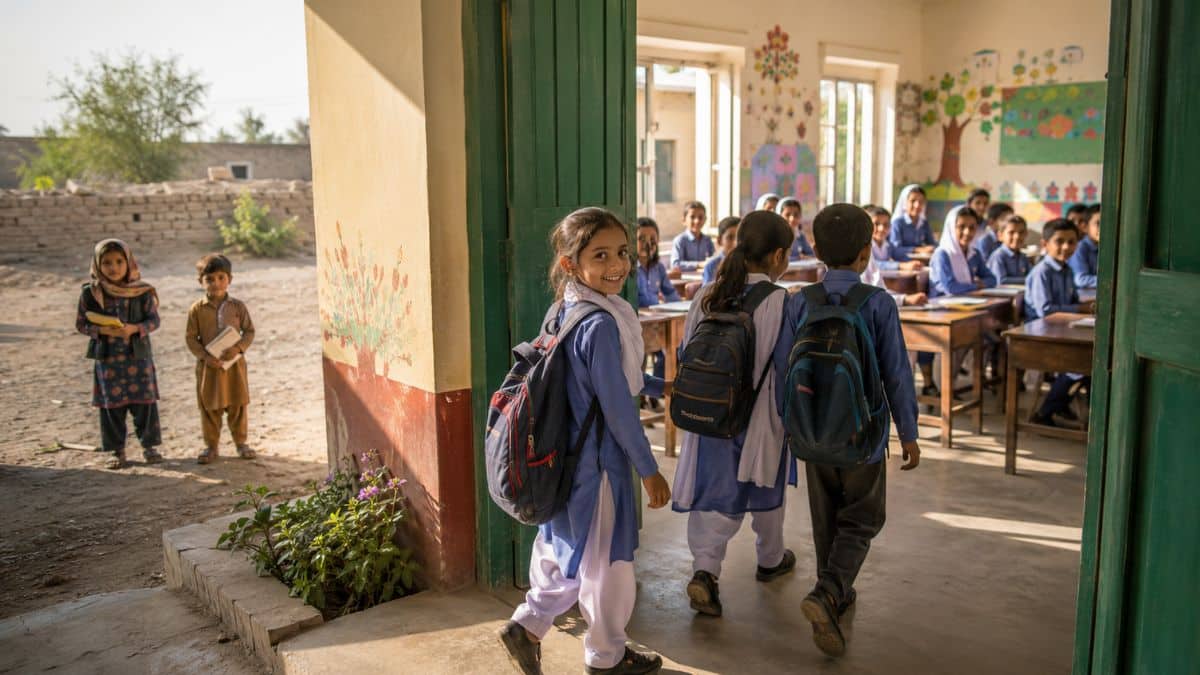
Education serves as the primary catalyst for national structural efficiency and social equity. Consequently, the Islamabad Capital Territory Private Educational Institutions Regulatory Authority (ICT-PEIRA) has accelerated its enforcement of the Right to Free and Compulsory Education Act, 2012. Under the calibrated leadership of Chairman Dr. Ghulam Ali Mallah, the Authority recently convened to address the widespread non-compliance regarding mandatory free education scholarships. Despite previous notifications, numerous private institutions have failed to submit data verifying that 10% of their student body receives need-based aid.
Strategic Enforcement of Free Education Scholarships
The Authority has established June 30, 2026, as the absolute deadline for all defaulting institutions to submit comprehensive scholarship data. To maintain systemic integrity, ICT-PEIRA will restrict registration and renewal services for any school that remains non-compliant. Furthermore, the names of these defaulting institutions will be publicly displayed on the official ICT-PEIRA website. This level of transparency ensures that both the public and relevant examining boards are aware of which institutions are failing to meet their legal and social obligations.

The Translation: Decoding the Legal Framework
The ICT-PEIRA Act of 2013 provides the regulatory teeth necessary to enforce the 2012 Right to Education mandate. While “10% Need-Based Scholarships” might sound like an optional corporate social responsibility (CSR) initiative, it is actually a statutory requirement. Schools must allocate a tenth of their enrollment capacity to students who cannot afford the tuition. Dr. Mallah emphasized that the current priority focuses on Out-of-School Children (OOSC) identified through ongoing enrollment campaigns. By integrating these children into existing private frameworks, the state optimizes current resources rather than waiting for new infrastructure.
The Socio-Economic Impact: Precision Inclusion
This policy directly alters the daily life of thousands of families across Islamabad by lowering the barrier to entry for quality schooling. For the average urban household struggling with inflation, these free education scholarships represent a bridge to upward mobility. By prioritizing OOSC, the government is strategically targeting the most vulnerable demographic. This precision approach reduces the socio-economic gap between private and public education tiers, fostering a more cohesive national identity among the youth. Consequently, compliant schools are receiving Letters of Appreciation to recognize their role in this social transformation.

The Forward Path: A Momentum Shift for Education
We categorize this development as a significant Momentum Shift for the Pakistani educational landscape. The transition from “repeated notices” to “regulatory fines and legal action” indicates a move toward high-accountability governance. If ICT-PEIRA successfully integrates 10% of the private sector capacity for the underprivileged, it will create a sustainable model for educational equity. However, the success of this shift depends on the District Administration’s ability to enforce these sanctions without disrupting the academic year for existing students. This structural recalibration is a necessary step toward a more literate and capable Pakistan.