
Pakistan Petroleum Limited (PPL) has strategically calibrated its operations to initiate PPL Gas Production at the Faiz X-1 Deep (Basal Sand) well. Located in the Gambat South Block, this structural milestone adds 3.6 million standard cubic feet per day (MMSCFD) of gas and 750 barrels per day (BPD) of condensate to the national grid. By activating a reservoir originally drilled in 2014, PPL demonstrates a disciplined approach to asset optimization and domestic energy scaling.
Strategic Expansion: Scaling PPL Gas Production in Sindh
The project reached feasibility after PPL established critical connectivity with neighboring pipeline infrastructures. Historically, the well remained dormant due to the absence of a delivery network, which rendered the site commercially unviable. However, recent technical and economic re-evaluations acted as a catalyst for renewed investment. Consequently, the company executed precise well interventions and installed surface facilities to bridge the gap between extraction and distribution.
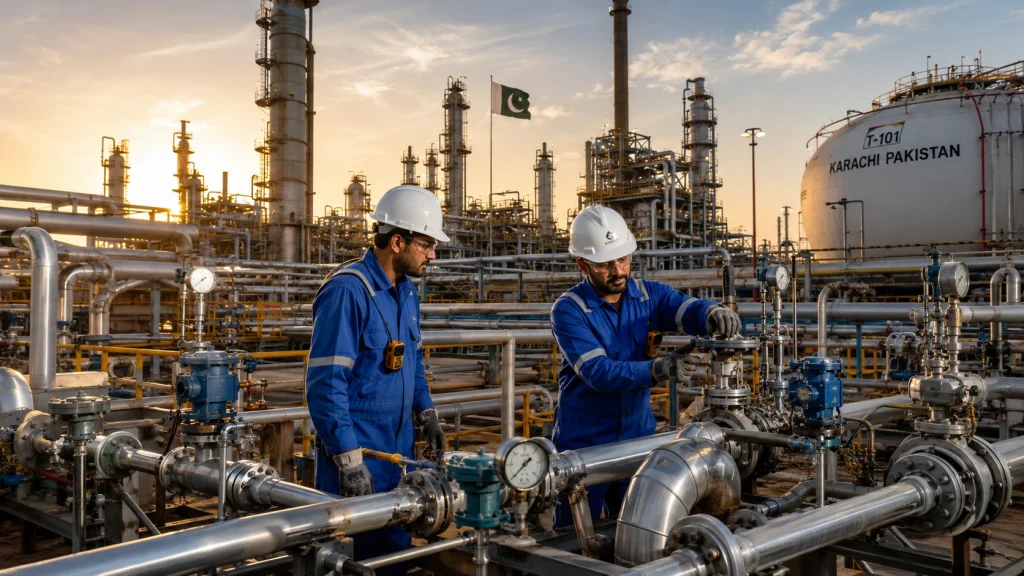
Following the construction of a 4.5-kilometer feeder pipeline, PPL successfully connected the well to the existing Gambat South Gas Processing Facilities. Commissioning officially commenced on February 25, 2026, with production levels gradually ramping up to their current baseline. This additional output reflects a precision-driven strategy to monetize existing discoveries while addressing the nation’s rising energy demand.
The Translation: Breaking Down the “Stranded Asset”
In simple terms, PPL has revived a “stranded asset.” Although the well was drilled over a decade ago, it lacked the physical “plumbing” to transport gas to consumers. By constructing the necessary pipeline links and re-testing the reservoir’s pressure, PPL converted a legacy expense into a productive revenue stream. This process is essential for maximizing the value of every dollar already spent on exploration.
The Socio-Economic Impact: What This Means for Pakistanis
This development directly stabilizes the energy baseline for Pakistani households and industrial sectors. By increasing indigenous hydrocarbon output, the state reduces its heavy reliance on expensive imported energy. Furthermore, every cubic foot of local gas produced helps mitigate external account pressures. This shift potentially protects citizens from the volatile price surges often associated with global energy markets.
The Forward Path: A Momentum Shift for Energy Security
In my expert assessment, this development represents a clear Momentum Shift. While new exploration is vital, the ability to operationalize dormant wells through surgical infrastructure upgrades is far more cost-effective. This structural efficiency signals that Pakistan is moving toward a more mature, data-driven management of its natural resources. Expect continued intensification of drilling and appraisal activities as other E&P companies follow this blueprint for energy security.








