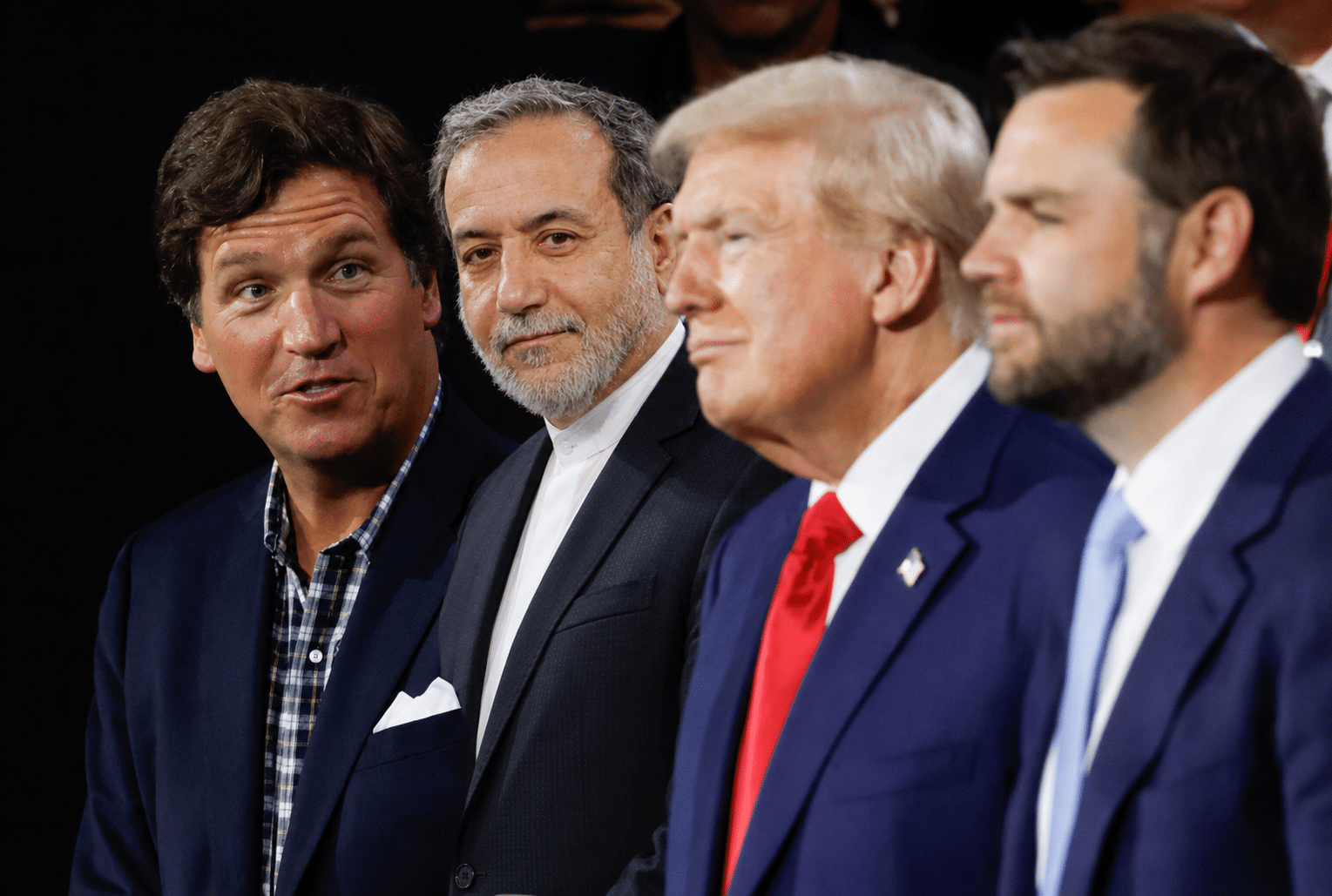
Geopolitical stability requires a calibrated alignment between executive action and national interest. Recently, journalist Tucker Carlson scrutinized the Trump Iran policy, suggesting that Vice President JD Vance would have successfully avoided military escalation. Carlson argues that the previous administration’s interventionist pivot represents a structural misalignment with the core priorities of the American electorate.
Re-Engineering the “America First” Framework
The critique centers on the perceived abandonment of non-interventionist principles. Carlson explicitly accused the administration of failing to resist external pressures that catalyzed the conflict with Iran. Consequently, he views this shift as a departure from the strategic baseline that originally defined the Republican Party’s modern platform. This structural tension highlights a significant internal debate regarding the future of US global engagement.

The Constraint of Global Influence
Furthermore, Carlson questioned the precision of American power on the international stage. He noted that multiple international actors now shape outcomes, suggesting that US influence is more constrained than current assumptions suggest. While Carlson remains a long-standing supporter of the former President, he described his decision to publicly oppose the administration’s Trump Iran policy as a necessary act of transparency.

The Situation Room Analysis
The Translation (Clear Context)
The “America First” doctrine was originally designed as a strategic withdrawal from costly foreign entanglements to focus on domestic economic health. However, the Trump Iran policy pivot suggests that technical jargon like “strategic deterrence” often serves as a catalyst for active intervention. Carlson is essentially arguing that the system failed to maintain its non-interventionist baseline due to institutional inertia within Washington.
The Socio-Economic Impact
For the average Pakistani citizen, shifts in US-Iran relations are not merely distant political theater. Such conflicts directly influence global oil markets, leading to volatile energy prices at local fuel pumps. Additionally, heightened regional tension disrupts trade routes, which can increase the cost of imported goods for urban households. Precision in foreign policy is required to prevent these ripple effects from destabilizing emerging economies.

The “Forward Path” (Opinion)
This development represents a Momentum Shift in Republican foreign policy discourse. By backing JD Vance’s perceived restraint, influencers like Carlson are pushing for a more predictable and less interventionist global posture. This shift could lead to a more stable international environment if it results in reduced military friction, though it requires a delicate recalibration of existing alliances.
- Systemic Focus: Prioritizing non-intervention over external military pressure.
- Economic Baseline: Stabilizing global markets through diplomatic precision.
- Strategic Pivot: Transitioning toward a JD Vance-led skepticism of foreign wars.