

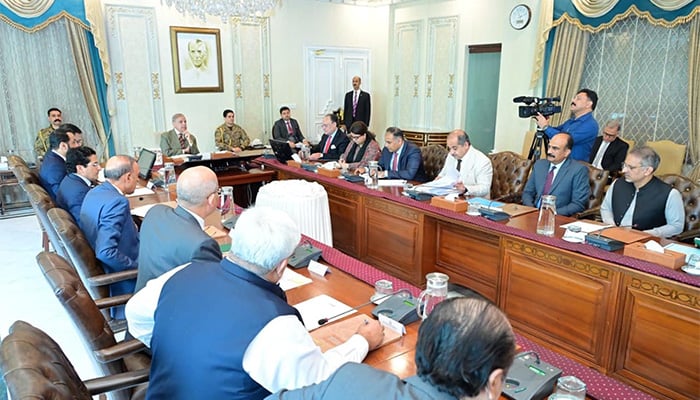
Prime Minister Shehbaz Sharif has calibrated a new economic baseline by ordering the 100% digitization of digital remittances Pakistan. This strategic pivot aims to transition the remaining 8% of manual transactions into a fully traceable, efficient digital framework. During a high-level meeting in Islamabad, the Prime Minister emphasized that technological precision is the catalyst for national financial security and system transparency.
The Strategic Transition to Digital Remittances Pakistan
Data indicates that 92% of remittances already flow through digital channels. Consequently, the government is focusing on the final conversion phase to ensure absolute structural integrity. Workers’ remittances achieved a calibrated record of $41.6 billion during the 2025-26 fiscal year, serving as the primary pillar for Pakistan’s external financial sector. Furthermore, the expansion of the Roshan Digital Account framework now allows foreign investors to participate directly in the nation’s digital ecosystem.
Measuring Digital Payment Adoption and Scale
The transition toward a cashless economy is accelerating rapidly. Specifically, the number of merchants utilizing QR code-based payments surged by 300% to two million within a single year. Mobile banking users also witnessed a significant increase, growing from 95 million to 137 million. To maintain this momentum, the Prime Minister has directed financial institutions to accelerate digital payment adoption through aggressive awareness campaigns and infrastructure upgrades.
- BISP Integration: 10 million beneficiaries now receive payments via digital wallets.
- NADRA Progress: 99% of all authority payments are now fully digitized.
- Transaction Volume: Pakistan recorded 11.9 billion digital transactions in the last fiscal year.
The Situation Room: Structural Analysis
The Translation (Clear Context)
Digitizing remittances is not merely about removing paper; it is about architectural transparency. By moving digital remittances Pakistan to a 100% threshold, the government eliminates the “grey” channels that often delay funds or incur hidden costs. This move standardizes the flow of capital, ensuring that every dollar entering the country is accounted for within the formal banking system, which strengthens the national credit rating and liquidity.
The Socio-Economic Impact
For the average Pakistani household, this shift translates to speed and security. Families in both urban centers and rural villages will no longer rely on physical collection points, reducing the risk of theft and the burden of travel. For the 10 million BISP beneficiaries, digital wallets offer financial autonomy and immediate access to support. This systemic change lowers the cost of receiving money, effectively putting more disposable income back into the hands of citizens.
The Forward Path (Opinion)
This development represents a Momentum Shift. The 300% increase in QR merchant adoption proves that the baseline infrastructure is ready for a cashless future. While the upcoming third-party assessment in November will provide a technical roadmap, the current data suggests Pakistan is no longer just experimenting with fintech—it is institutionalizing it. This is a critical step toward structural economic stability.








