
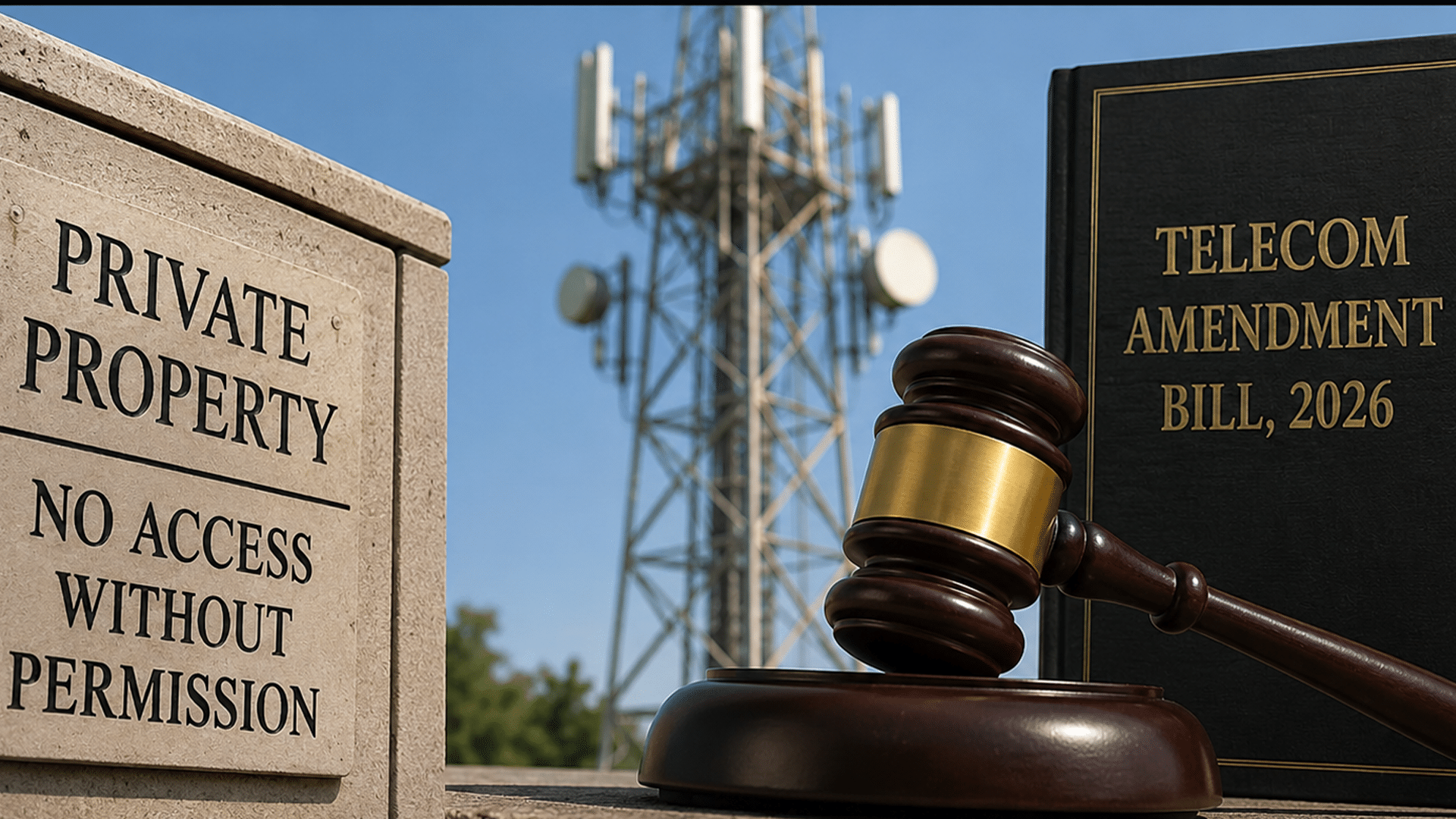
The architectural progress of Pakistan requires a strategic balance between infrastructure expansion and individual rights, specifically concerning the Telecom Amendment Bill. Prime Minister Shehbaz Sharif recently established a 10-member high-level committee to evaluate the controversial Right of Way (RoW) provisions within the Pakistan Telecommunication (Re-organization) (Amendment) Bill, 2026. This legislative recalibration follows significant pushback from lawmakers and stakeholders regarding the potential occupation of private property by telecommunication companies.
Structural Review of the Telecom Amendment Bill
The Federal Minister for Law and Justice chairs this new committee, which operates under a strictly calibrated mandate to protect constitutional property rights. Consequently, the panel must analyze the legal implications of allowing telcos access to individually owned land and housing societies. The primary objective is to determine if the current bill lacks sufficient legal safeguards for the average citizen.
- Property Access: Evaluating the legality of telcos entering collectively owned premises.
- Financial Oversight: Reviewing mechanisms for compensation, rent, and infrastructure fees.
- Deemed Approval: Investigating the “deemed approval” clause to prevent administrative overreach.
Furthermore, the committee serves as a catalyst for legislative precision, ensuring that digital expansion does not bypass the rule of law. The National Assembly passed the bill on June 11, but the Senate’s intervention highlighted the need for deeper structural scrutiny.
.webp)
The Situation Room: Strategic Analysis
The Translation (Clear Context)
In technical terms, the “Right of Way” is the legal permission to install fiber cables, towers, and poles on land. The original draft of the Telecom Amendment Bill simplified this process to accelerate 5G deployment. However, the logic failed to account for the autonomy of private homeowners. Essentially, the government is now attempting to “debug” the legislation to ensure that “speed to market” for telcos doesn’t mean “violation of privacy” for residents.
The Socio-Economic Impact
This development directly affects every Pakistani property owner. If the bill remains uncorrected, telcos could theoretically install hardware on your property with minimal notice. Conversely, a well-calibrated bill provides a baseline for fair compensation. For students and professionals, this review ensures that the infrastructure supporting their digital life is built on a stable, legal, and ethical foundation rather than through forced occupation.
The Forward Path (Opinion)
This review represents a Momentum Shift toward mature governance. While digital infrastructure is a critical catalyst for Pakistan’s economy, ignoring property rights creates long-term legal instability. By pausing the Telecom Amendment Bill for a three-day intensive review, the administration is prioritizing systemic efficiency over hasty implementation. This precision is exactly what a modernizing Pakistan requires.








