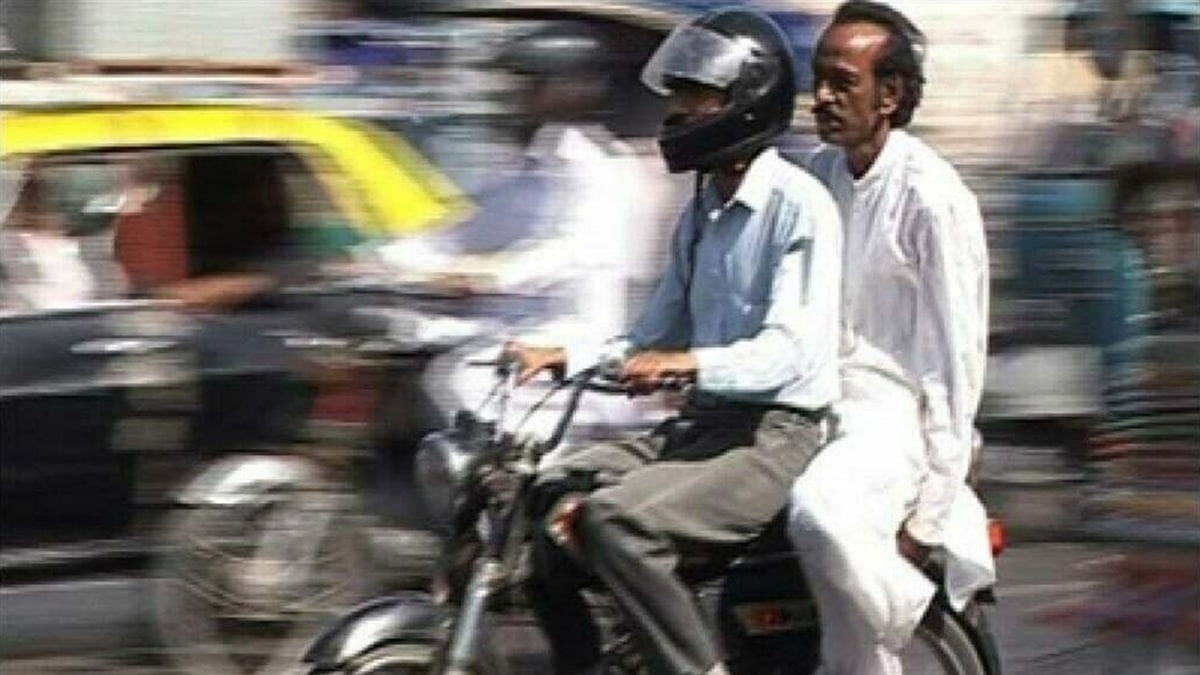
Maintaining the structural stability of public order requires calibrated administrative interventions. Consequently, the Punjab government has implemented a pillion riding ban across the province on June 25 and 26. This strategic measure aligns with the security protocols for the 9th and 10th of Muharram processions. By invoking Section 144, the Home Department aims to neutralize potential threats and ensure the safety of citizens during high-density religious gatherings.
Strategic Implementation of the Pillion Riding Ban
The Punjab Home Department issued a formal notification to maintain public peace and protect lives. Specifically, the administration identified potential threats from anti-social elements and violent extremists who might incite sectarianism. Therefore, the state has prohibited carrying weapons, raising provocative slogans, and displaying inciting signage. Moreover, the ban extends to the digital frontier, strictly prohibiting the spread of sectarian hatred via social media platforms.
Operational precision remains critical for the success of these measures. Authorities have also banned the construction of fortified positions, or morchas, on rooftops along the procession routes. Furthermore, citizens may not sit or stand on roofs located on either side of the designated paths. These spatial restrictions ensure that law enforcement maintains a clear line of sight and prevents unauthorized aerial advantages.
Authorized Exemptions and Legal Enforcement
Despite the province-wide restrictions, the administration has calibrated the pillion riding ban to minimize the impact on vulnerable groups. Specifically, the ban does not apply to women, children, and senior citizens. Furthermore, journalists and uniformed law enforcement personnel remain exempt to ensure the flow of information and security. However, any unauthorized violation will trigger legal action under Section 188 of the Pakistan Penal Code.
The Situation Room: Analysis
The Translation
This administrative move is not merely a restriction but a calculated risk-mitigation strategy. By limiting mobility on two-wheeled vehicles, the state reduces the capability for rapid, unidentifiable movement in crowded areas. This architectural approach to security prioritizes “contained environments” over open mobility to prevent the catalyst of sectarian friction during sensitive periods.
The Socio-Economic Impact
The pillion riding ban directly impacts the baseline mobility of the urban working class, who rely heavily on motorcycles for daily commuting. While students and professionals may face logistical delays, the safety of the broader community remains the priority. Households should plan for reduced transport availability on June 25 and 26, as the restriction often correlates with localized cellular service suspensions and roadblocks.
The Forward Path
We categorize this development as a Stabilization Move. While effective for immediate threat neutralisation, the recurring reliance on Section 144 highlights a need for more advanced, tech-driven surveillance and crowd management systems. Future security frameworks should aim for precision monitoring that allows for public safety without broad-spectrum mobility restrictions.