
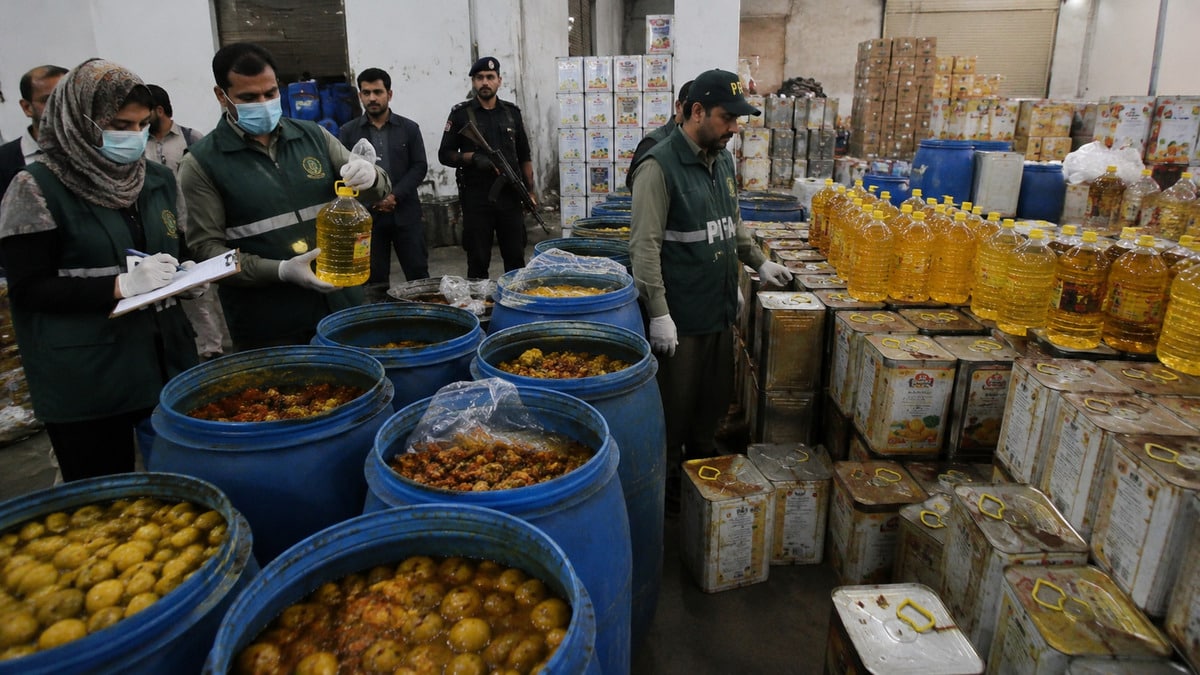
The Punjab Food Authority (PFA) recently executed a calibrated operation in Multan to uphold rigorous food safety standards, resulting in the immediate destruction of 30,000 units of hazardous inventory. Led by Director General Syed Musa Raza, the surprise inspections targeted three critical production facilities. Consequently, the team eliminated 18,000 kilograms of fungus-infested pickles and 12,000 liters of substandard animal fat oil. This strategic move reinforces the baseline for public health and systemic efficiency within Pakistan’s food supply chain.
Strategic Crackdown on Industrial Malpractice
Syed Musa Raza supervised inspections at Basti Ali Wala, Gardezi Mor Adda Lar, and Khanewal Road. During these raids, officials identified a fat-rendering unit operating without a valid food license or environmental registration. This facility was processing animal fat into loose cooking oil, posing a severe biological threat to consumers. Furthermore, the PFA team discovered a manufacturing site storing 18,000 kilograms of foul-smelling, hazardous pickles in unhygienic conditions. The authority destroyed the contaminated stock on-site to prevent market entry.
Accountability and Legal Enforcement
Precision enforcement extended beyond destruction. The authority registered a formal case against the owner of the fat-rendering unit for structural violations of the law. Additionally, a sweets production unit received a fine of Rs. 100,000 for utilizing substandard ingredients in Sohan Halwa preparation. Director General Raza emphasized that food business operators must strictly comply with established legal frameworks or face stringent litigation. This zero-tolerance policy serves as a catalyst for industrial reform across Punjab.
- Total Pickles Destroyed: 18,000 Kilograms
- Total Oil Seized: 12,000 Liters
- Primary Violations: Lack of licensing, fungal infestation, and animal fat rendering.
- Financial Penalties: Rs. 100,000 fine for substandard sweets production.
The Situation Room Analysis
The Translation: Technical Clarity
The seizure of “fat-rendering” products indicates an illegal extraction process where waste animal tissues are processed into industrial-grade oils and sold as edible products. This practice bypasses all food safety standards and introduces heavy toxins into the human diet. Similarly, the “fungus-infested” pickles represent a failure in atmospheric control and preservation chemistry. The PFA’s intervention halted the distribution of materials that are biologically unfit for human metabolism.
The Socio-Economic Impact
Illegal food production creates a “shadow economy” that undermines legitimate businesses adhering to safety protocols. For the average Pakistani household, these crackdowns reduce the long-term burden on the healthcare system by preventing foodborne illnesses and chronic toxicity. By stabilizing the quality of the supply chain, the PFA protects the purchasing power of citizens, ensuring that the currency spent on nutrition actually yields health benefits rather than medical liabilities.
The Forward Path: Momentum Shift
This development represents a Momentum Shift in Punjab’s regulatory landscape. Rather than reactive monitoring, the PFA is moving toward a precision-led surprise inspection model. To sustain this progress, Pakistan must integrate digital tracking for food licenses and environmental clearances. High-frequency crackdowns in industrial hubs like Multan signal to the market that the era of unmonitored production is ending. The focus now transitions from mere stabilization to the active advancement of national health metrics.








