
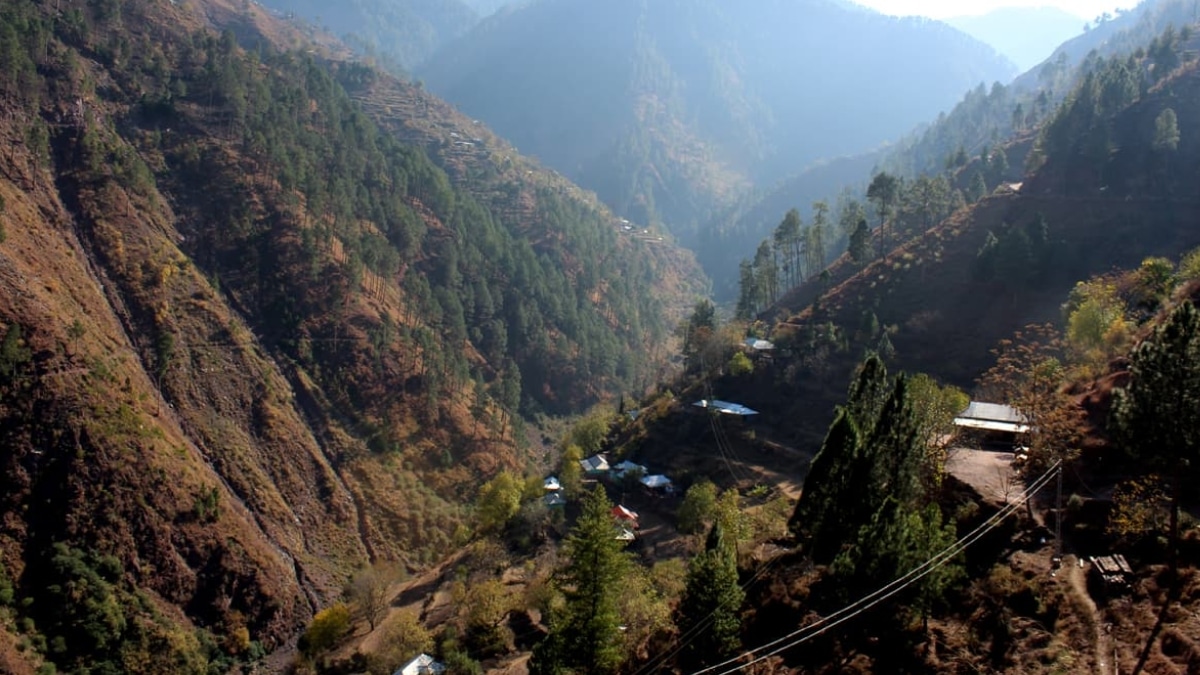
The Peshawar High Court (PHC) has issued a calibrated legal mandate for Galiyat forest restoration, signaling a structural shift toward ecological preservation in Pakistan. A bench comprising Justice Syed Arshad Ali and Justice Faheem Wali directed the Khyber Pakhtunkhwa government to restore forest boundaries in Galiyat within a three-month window. This directive demands a comprehensive progress report by September 16, specifically targeting regions including Dungagali and the disputed Hilda Estate.
Precision Mapping and the Challenge of Encroachment
Data provided by the Forest, Climate Change, and Wildlife Secretary, Junaid Khan, reveals a complex landscape of land management. According to a 2015-16 survey by the Survey of Pakistan, authorities identified 7,616 kanals of encroached land within the Gallies Reserved Forests. While anti-encroachment operations successfully retrieved 6,632 kanals, subsequent surveys in 2020-21 highlighted persistent unauthorized occupation.
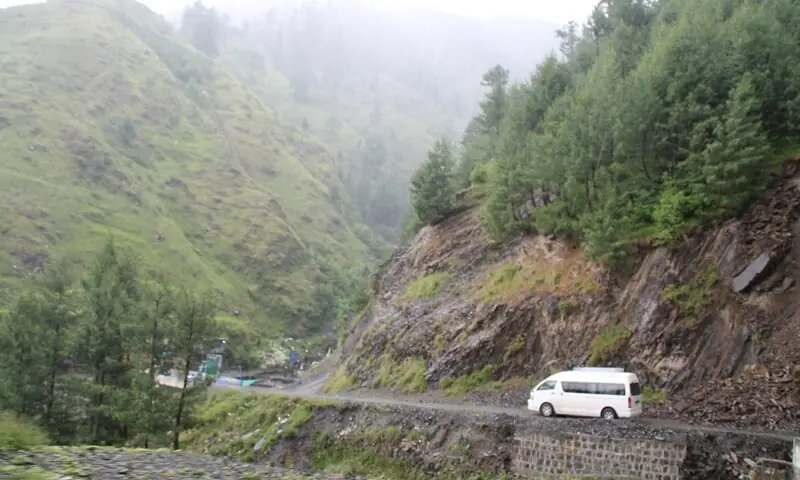
Currently, the remaining encroached land stands at 159 kanals. However, the path to full recovery faces significant technical hurdles. Specifically, 113.5 kanals are currently entangled in discrepancies between revenue and forest department records. Furthermore, another 45.45 kanals remain locked in litigation, slowing the momentum of the Galiyat forest restoration initiative.
Strategic Shifts in Development Policy
The court emphasized that the aesthetic and environmental integrity of Nathiagali is under threat. Justice Arshad Ali remarked that the proliferation of hotels acts as a catalyst for environmental degradation. He warned that without structural intervention, these scenic locations could transform into heat-stressed urban zones. Consequently, the Galiyat Development Authority (GDA) has suspended the issuance of new No Objection Certificates (NOCs) to calibrate construction with ecological limits.
- Original Status: PHC demands restoration to 2015-16 Survey of Pakistan maps.
- Record Synchronization: The Forest Secretary must formally resolve discrepancies with the Revenue Department.
- New Governance: Fresh building rules restrict construction permits strictly to non-forest land.
The Translation (Clear Context)
In technical terms, the Galiyat region is suffering from “cadastral conflict.” This occurs when two different government departments—Forestry and Revenue—maintain maps that claim the same piece of land. One map labels it a protected forest, while the other labels it private property. The PHC is now forcing a reconciliation of these records to eliminate the “legal gray zones” that encroachers exploit to build unauthorized hotels.
The Socio-Economic Impact
For the average Pakistani citizen, this ruling is a safeguard against the “urban heat island” effect. If Galiyat loses its forest cover to concrete hotels, the natural cooling system of northern Pakistan fails. This would lead to higher temperatures and increased flash flood risks for local communities. While hotel developers may see a short-term slowdown, the long-term benefit ensures that Galiyat remains a viable, breathable tourism destination for future generations of students and families.
The “Forward Path” (Opinion)
This development represents a Momentum Shift. For decades, “development” in Pakistan was inaccurately measured by the number of concrete structures built. By questioning whether hotel construction alone constitutes progress, the PHC is introducing a more sophisticated, STEM-driven definition of national advancement. The success of this move depends entirely on the technical precision of the record synchronization required over the next 90 days.








