
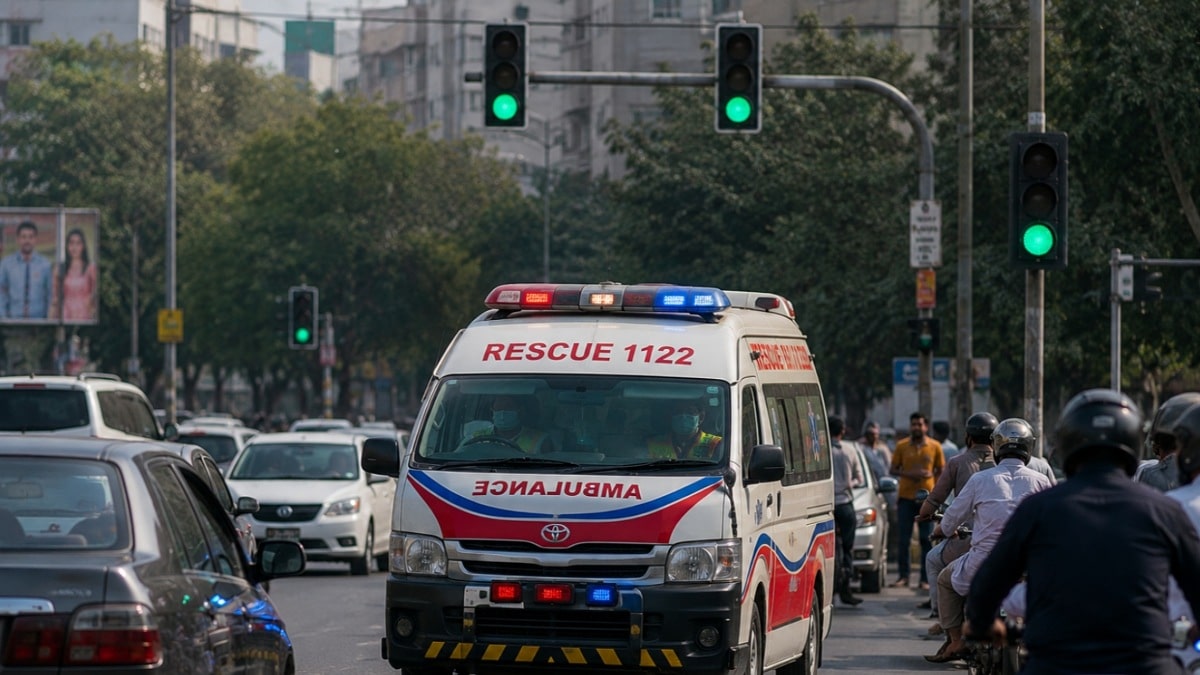
The Emergency Services Academy has officially launched WHO-backed emergency care courses to synchronize Pakistan’s response protocols with international benchmarks. This strategic integration ensures that the nation’s first responders utilize a calibrated, world-class framework during critical life-saving interventions. Consequently, the Academy continues to strengthen its role as a catalyst for systemic healthcare resilience.
Calibrating Response: Why Emergency Care Courses Matter
Director General of Rescue 1122, Dr. Rizwan Naseer, confirmed the decision to adopt these emergency care courses during a recent inaugural ceremony. Historically, the Academy has already trained over 27,000 emergency professionals across the country. Furthermore, this new WHO affiliation provides responders with access to globally recognized training modules, enhancing the precision of field operations.
Notably, the Rescue 1122 Search and Rescue Team already maintains certification from the UN’s INSARAG. This existing credential reflects the organization’s commitment to high-performance standards. However, the addition of WHO-standardized medical training creates a more comprehensive safety architecture for the Pakistani public.
- Standardized Protocols: Aligning local medical response with global best practices.
- Extensive Reach: Empowering over 27,000 trained professionals with updated skill sets.
- Expert Oversight: Collaboration with WHO Pakistan Team Leader Dr. Naveed Asghar and international experts.
The Situation Room Analysis
The Translation (Clear Context)
Adopting WHO emergency care courses acts as a technical upgrade for our national safety infrastructure. Instead of relying on fragmented training methods, Rescue 1122 is implementing a unified medical language. Specifically, this means the logic used to stabilize a patient in Lahore is now identical to the precision standards used in global medical hubs.
The Socio-Economic Impact
This development directly improves the safety baseline for every Pakistani citizen. For households, it means higher survival rates during the “Golden Hour” of trauma. For professionals, it provides internationally portable skills. Therefore, the efficiency of our emergency services reduces the economic burden of preventable disability and long-term medical costs.
The Forward Path (Opinion)
This initiative represents a definitive Momentum Shift. By proactively seeking WHO affiliation, Rescue 1122 is moving beyond mere maintenance and toward architectural excellence. This move signals that Pakistan is ready to lead in regional emergency management through disciplined, STEM-driven training models.








