
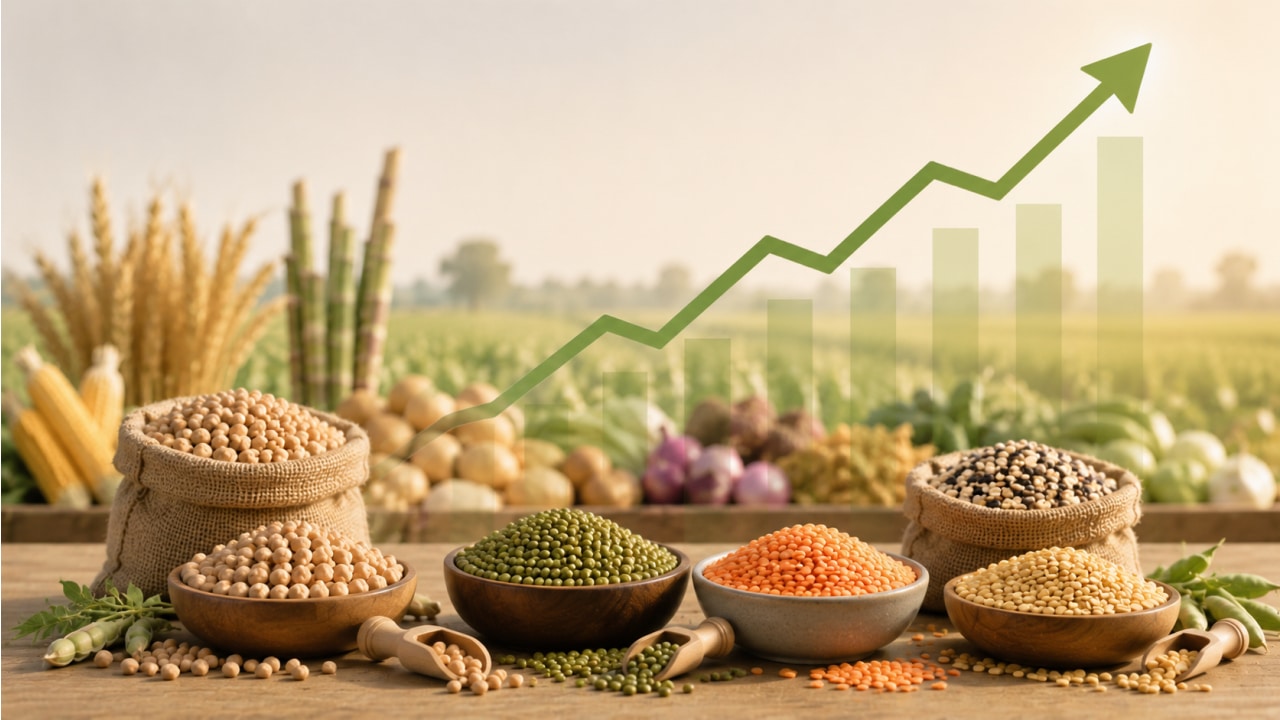
Pakistan’s pulses harvest redefined the agricultural landscape in FY2025-26, marking a significant structural recalibration of the domestic food supply chain. This sector emerged as the fastest-growing crop category, surging by 31.4% according to the latest Economic Survey. Consequently, this precision growth acted as a primary catalyst for the “other crops” segment, which expanded by 2.43% following several years of flood-related volatility.
Analyzing the Record-Breaking Pulses Harvest
The calibrated expansion of the pulses sector reflects a high-efficiency recovery across the agricultural baseline. Specifically, gram production delivered the most impressive results, surging 50.4% to 258,600 tons. This outcome resulted from a strategic expansion of cultivated area, which grew from 707,000 hectares to 782,000 hectares. Furthermore, moong production rose 15.2% to reach 151,100 tons, signaling a broad-based advancement in crop yields.

Diversified Growth Across Major Crop Categories
While Pakistan’s pulses harvest led the momentum, other agricultural segments demonstrated varied degrees of stabilization. Sugarcane production increased by 6.2% to 89.45 million tons, while wheat output rose 4.3% to 29.61 million tons. In contrast, maize and cotton experienced minor contractions of 2.7% and 0.5%, respectively. Despite these fluctuations, the overall crops sub-sector recorded a positive growth of 1.44%, rebounding from the previous year’s contraction of 1.01%.
- Potato Production: Climbed 27.6% to 12.78 million tons.
- Chillies: Increased by 23.5% due to improved farm inputs.
- Bajra: Rose by 7.2%, contributing to livestock fodder security.
The “Situation Room” Analysis
The Translation (Clear Context)
The “Next Gen” logic behind these numbers indicates a successful adaptation to climate challenges. While the previous year was defined by flood-induced disruption, the FY2025-26 data shows a precision-led recovery. The 31.4% spike in pulses is not merely an accident of nature; it is the result of strategic government support measures and the calibrated availability of farm inputs. This shift demonstrates that when the agricultural baseline is fortified with resources, the system achieves rapid equilibrium.
The Socio-Economic Impact
For the average Pakistani household, this data translates to improved food price stability. Pulses serve as the primary protein source for millions; therefore, a 31.4% production increase helps mitigate inflationary pressures on essential groceries. For the rural professional, the expansion of cultivated area for gram means increased employment opportunities and a more resilient income stream. This agricultural surge directly strengthens the purchasing power of the rural economy, which fuels demand across other industrial sectors.
The “Forward Path” (Opinion)
This development represents a Momentum Shift. Pakistan is moving beyond simple recovery and into a phase of structural growth. The precision shown in pulse and potato yields suggests that localized agricultural strategies are working. However, to maintain this trajectory, we must address the 8% decline in masoor and the minor dips in cotton. The next strategic step requires integrating STEM-driven predictive analytics to ensure that all pulse varieties achieve the same baseline efficiency as gram.








